Sziget 2026: The Island of Freedom at Thirty-Three — Florence, Twenty One Pilots, Bring Me the Horizon, and Five Days on the Danube
Sziget 2026 (Aug 11–15, Budapest) — full lineup analysis: Florence + The Machine, Twenty One Pilots, Bring Me the Horizon, Skrillex, Jorja Smith, Skepta. The Island of Freedom, its 33-year history, and why Óbuda Island remains Europe's most ambitious festival site.
By Gabin Fay
There is a particular moment on the HÉV suburban train — Line H5, rattling north out of Batthyány tér — when the Danube comes into view on your left and the city begins to recede behind you. After about fifteen minutes you step off at Szentlélek tér and cross a pedestrian bridge, and the island is in front of you: 108 hectares of leafy, slightly industrial terrain embedded in the river between Óbuda and the far bank, unremarkable for eleven months of the year, and then, in the second week of August, host to one of the most densely human experiences available on this continent. Fifty-three separate performance venues. Art installations that take three days to properly walk through. A circus tent from which extraordinary things emerge at unanticipated hours. Wellness zones, debate arenas, a dedicated LGBTQ+ sanctuary called the Magic Mirror, and somewhere in the middle of all of it, a Main Stage capable of accommodating 60,000 people standing in a field. The field is on an island. The island is in Budapest. And in August 2026, for the thirty-third time since a group of friends decided this was a reasonable thing to do, Sziget Festival opens its gates.
The 2026 edition runs August 11 to 15, Tuesday to Saturday, with a Day 0 on Monday August 10 that opens the gates early with a programme oriented around legacy artists and community ritual. The main headliners are Florence + The Machine (Thursday), Twenty One Pilots (Wednesday), Bring Me the Horizon (Friday), and Skrillex (Saturday), with Lewis Capaldi also confirmed as a Thursday or Wednesday co-headliner and Jorja Smith closing the Saturday programme alongside Skrillex. Below them, the bill includes Zara Larsson, Underworld, Wolf Alice, Skepta, Peggy Gou, Biffy Clyro, Tash Sultana, Soulwax, Loyle Carner, Nia Archives, Sub Focus, Dom Dolla, Richie Hawtin, and over two hundred further confirmed acts across electronic, rock, indie, hip-hop, and club music.
→ Sziget 2026 — the 50-track lineup playlist (generated by Playgen)
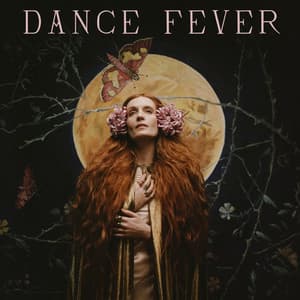
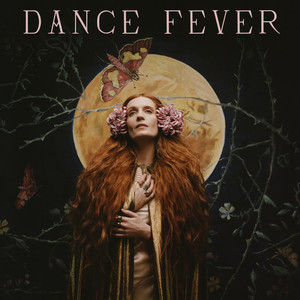 Florence + The Machine — Dance Fever (2022). Thursday's Main Stage headline act, returning to Budapest.
The Origin Story: Diáksziget, 1993, and the Post-Iron Curtain Summer
To understand what Sziget is, you need to understand what Hungary was in 1993. The country had officially concluded its transition to a democratic republic in 1989, the year the Iron Curtain fell. The Soviet-era infrastructure of subsidised arts, youth camps, and state-sponsored summer cultural programming had collapsed along with the political system that funded it. For young Hungarians in the early 1990s, the summer landscape was not one of opportunity but of absence. There was nothing to do, in the specific sense of there being nothing organised, nothing funded, nothing designed to bring young people into contact with music and culture on a large scale.
Károly Gerendai, a Budapest-based music promoter, understood the gap. He and co-founders Péter Müller Sziámi and Balázs Szekfű conceived what they called Diáksziget — Student Island — as a response to that absence: an event on Óbuda Island in the Danube that would function simultaneously as a music festival, an art space, a cinema, a theatre programme, and a social gathering place for a generation that had grown up in a context where such things were organised by the state and suddenly weren't. The concept, as Gerendai described it in later interviews, was "born from the idea of all our friends hanging out together and looking for a place where we could create a festival, enjoy good music and feel good during the summer holidays." Not a business plan. Not a cultural manifesto. Friends, a river island, and a problem to solve.
The first Diáksziget opened in August 1993 and ran for a week, between August 19 and 25. It cost around 300 Hungarian forints (approximately one Euro at the time) for a daily ticket. It attracted 43,000 visitors — mostly Hungarian, mostly young — and offered approximately 200 concerts, 40 theatre productions, and an open-air cinema showing 80 films. The president of Hungary, Árpád Göncz, served as the event's patron, which gave the enterprise a political legitimacy it needed to survive in a country still navigating the machinery of a post-communist administrative landscape. The first year ran well over budget. It would take until 1997 to repay the losses.
None of this deterred anyone. The second year, 1994, drew 100,000 visitors — more than double the inaugural attendance. That year the event operated briefly under the name Eurowoodstock, celebrating the 25th anniversary of the original Woodstock by booking performers from the 1969 festival: Blood, Sweat & Tears, Ten Years After. MTV provided global coverage. The international dimension, from the second year, was already present. By 1996, the festival had drawn 206,000 visitors. By 1997, it had crossed 250,000. The 1997 edition remains one of the most frequently cited in the festival's long history: headlined by David Bowie, whose Earthling Tour set on the Sziget main stage — a blend of glam classics and the drum-and-bass inflected material from the album he'd released that February — was experienced by a crowd that had, in many cases, never seen anything like it. Bowie at Sziget in 1997 is one of those performances where the cultural and political context of the audience makes the music mean something it couldn't mean elsewhere. These were young Eastern Europeans at the first major international rock festival in their post-Soviet history. The Jean Genie in Budapest in August 1997 was not the same as The Jean Genie anywhere else.
Between 1996 and 2001 the event was known as Pepsi Sziget, under a major sponsorship arrangement. In 2002 it formally became Sziget Fesztivál — Island Festival in Hungarian — and began the process of internationalisation that would bring it to its current status as one of the largest music and cultural events in Europe. By 2001, total attendance was 360,000. By 2018, it had reached its historic peak of 565,000 visitors across the full run. Nearly ten million people have attended Sziget since 1993. The island they gathered on has not changed. What happens on it has grown beyond anything Gerendai or his co-founders could have mapped in 1993.
The Island of Freedom: What the Phrase Actually Means
Sziget's marketing has long described the festival as the "Island of Freedom." This is the kind of phrase that sounds like copy and sometimes is, but in the case of Sziget it has a structural and historical basis that makes it more than a slogan.
The festival operates as what its organisers describe as a temporary nation — a space with its own norms, its own economy, its own geography, and its own culture of self-expression. Visitors who return year after year call themselves Szitizens — a portmanteau that collapses "Sziget" and "citizen" into something that signals a genuine sense of belonging to a recurring community. Some Szitizens have attended ten, fifteen, or twenty consecutive editions. They have friendships that exist primarily in the context of this island in August; relationships that were formed in the camping areas; routines that are replicated annually with the precision of religious observance. Arriving at Sziget for the tenth time and finding the same people in the same corner of the campsite is a specific experience available at almost no other festival in Europe.
The freedom dimension is not merely semantic. In 2001, while Hungary was navigating a period of political conservatism under the Orbán government's first administration, Sziget launched the Magic Mirror stage — a dedicated performance and community space for LGBTQ+ culture. The political context made this a genuinely significant act: the Magic Mirror opened in a country where political rhetoric was increasingly hostile to LGBTQ+ visibility, and it has operated continuously since 2001, becoming one of the festival's defining cultural commitments. Regular attendees consistently describe the Magic Mirror as one of the festival's most important contributions: a space where, regardless of what is happening in Hungarian political life outside the festival perimeter, the culture inside is explicitly welcoming.
In 2002, Sziget launched the Roma Tent, celebrating Roma music and culture — another politically charged programming decision in a country where Roma communities faced (and continue to face) substantial structural discrimination. In 2009, the festival partnered with Rock Against Racism. In 2016, a Tent Without Borders addressed refugee issues and migration during one of the most acute periods of the European migration crisis, which Hungary was experiencing very directly. In 2026, the island remains what Gerendai's founding concept intended: a place where the standard operating conditions of the country outside the perimeter do not entirely apply.
The demographic reality of Sziget reinforces this. Approximately half of all visitors in any given year originate from outside Hungary, with significant contingents from the Netherlands, Belgium, the UK, Germany, Italy, France, Ireland, and Romania. Over 100 nationalities have been represented in recent editions. The festival functions as a gathering point for European (and increasingly global) youth culture in a way that makes it genuinely multicultural in composition rather than just in aspiration. When you walk through the Global Village at Sziget — a zone where cultural presentations, gastronomic stalls, and workshops from dozens of countries coexist — you are in something that looks less like a festival than like a compressed simulation of Europe itself.
Tuesday, August 11: Zara Larsson, Underworld, Wolf Alice Open the Main Programme
Day 1 of the main festival (following Day 0 on August 10) establishes the tonal range Sziget is working with in 2026. Three artists in different genres share the headline billing on the first night.
Zara Larsson opening a Sziget main day is a statement about the festival's commitment to pop with genuine festival weight. The Swedish singer has been making pop music professionally since winning a national talent competition at ten years old, releasing her first album at fifteen. By the time she released Poster Girl (2021) and Venus (2024), her work had moved from radio pop into something more durably constructed — pop built around her vocal control and a production sensibility that holds up at festival scale. Venus is her most recent and most confident record: twelve tracks that move through electropop, dance music, and balladry without losing compositional coherence.
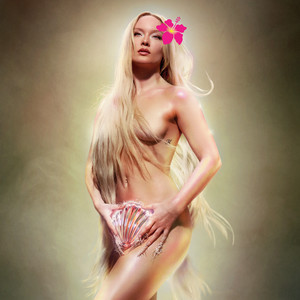 Zara Larsson — VENUS (2024). Tuesday night on the Main Stage.
Underworld on the same night represent a fundamentally different proposition. Karl Hyde and Rick Smith have been the most important British electronic act of the 1990s and one of the most consistently relevant of the three decades since. Dubnobasswithmyheadman (1994) is the foundational record — a techno album from a band that didn't sound like a techno act, built around Hyde's stream-of-consciousness vocal style and Smith's production, which drew from house, ambient, and rave music simultaneously without fully committing to any of them. "Mmm Skyscraper I Love You." "Cowgirl." "Dark & Long." These are tracks that expanded what was understood to be possible in electronic music: they had narrative, they had texture, they had duration that justified itself rather than simply repeating. The 1994 Trainspotting soundtrack version of "Born Slippy .NUMA" became the most commercially significant electronic music moment of British mid-90s culture, but the Underworld catalogue that surrounds it — Second Toughest in the Infants (1996), Beaucoup Fish (1999), A Hundred Days Off (2002) — is the more durable argument for what the band achieved. Playing Sziget in 2026, Hyde and Smith bring thirty-plus years of live performance experience and one of the most technically demanding and emotionally intelligent electronic live sets in the world.
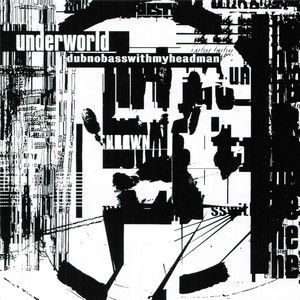 Underworld — Dubnobasswithmyheadman (1994). The record that built the live set.
Wolf Alice, the London four-piece fronted by Ellie Rowsell, complete the Tuesday main programme. Their arc from the acoustic-folk of early EPs to the grunge noise of My Love Is Cool (2015) to the genre-fluid ambition of Visions of a Life (2018) and the Mercury Prize-winning Blue Weekend (2021) is the most compelling individual band trajectory in British guitar music of the last decade. Blue Weekend in particular arrived as a mature statement: "The Last Man on Earth" is a piano ballad that would fit on a Fleetwood Mac record; "Smile" is a grunge song descended from Nirvana; "No Hard Feelings" is dream-pop. The album won the 2021 Mercury Prize partly because it was impossible to put a category on it. Live, Wolf Alice are a different proposition than their studio work — Rowsell uses the stage as an emotional instrument, and the band plays with an intensity that their more delicate recorded moments don't entirely prepare you for.
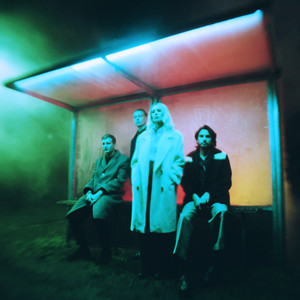 Wolf Alice — Blue Weekend (2021). Tuesday night at Sziget 2026.
Also confirmed for Tuesday: Vintage Culture, the Brazilian electronic producer whose mainstay-house approach has made him one of the most booked festival DJs in the world; Ashnikko, the American hyperpop-adjacent artist whose WEEDKILLER (2023) is one of the stranger major-label pop records of the 2020s; and the first wave of acts across Sziget's secondary stages.
Wednesday, August 12: Twenty One Pilots and Biffy Clyro
Wednesday belongs primarily to Twenty One Pilots, Tyler Joseph and Josh Dun's duo from Columbus, Ohio, who have spent the last decade building one of the most dedicated fanbases in contemporary pop while systematically defying genre categorisation. The project started in 2009 as a solo outlet for Joseph's songwriting and evolved, after Dun joined in 2011, into the combination of Joseph's compositional range — which moves through rap, ukulele-folk, piano balladry, and stadium-anthemic rock without apparent difficulty — and Dun's drumming, which is technically demanding in a way that is rare in pop contexts.
The album Blurryface (2015) made them global stars. Trench (2018) introduced a detailed narrative mythology — the city of Trench, the Banditos, a character named Nico — that their fanbase engaged with as a continuous world-building project. Scaled and Icy (2021) and Clancy (2024) extended the narrative. Clancy is the more recent and the more substantial of those two: Joseph described it as the conclusion of the decade-long conceptual series, and while the record is denser and less immediately accessible than Blurryface, it rewards the attention that the committed listener brings to it. Live, Twenty One Pilots are one of the most purely theatrical acts in contemporary pop: they build runway structures into the crowd, they play drums in the audience, they use theatrical lighting rigs to create genuine visual events out of songs that, on record, are intimate and relatively small-scale. The Wednesday Sziget set will be one of the largest of their year.
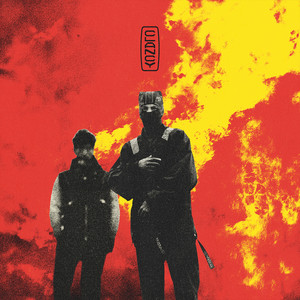 Twenty One Pilots — Clancy (2024). Wednesday Main Stage headline.
Biffy Clyro playing Wednesday represents the most straightforwardly rock booking of the first half of the festival. The Kilmarnock trio — Simon Neil, James Johnston, Ben Johnston — are one of those bands that exist in a slightly frustrating critical position: enormous in the UK, where they fill arenas and headline festivals, known but not quite as celebrated as they deserve elsewhere. Their musical arc is internally consistent in a way that rewards the listener who follows it: Puzzle (2007) and Only Revolutions (2009) are the documents that established their ambition, moving from the angular post-hardcore of their early records toward something more orchestrally layered without losing the punk energy underneath. Infinity Land (2004), the album before that transition, shows you what they were before they became what they became, and it is a better album than it gets credit for.
The Myth of the Happily Ever After (2021) was made in isolation during the pandemic and released simultaneously with their eighth album A Celebration of Endings — they recorded both at the same time, in their home studio in Ayrshire, and released them as companion pieces. The Myth is the darker, stranger of the two: an acoustic and orchestral set that exposed the songwriting without the guitar amplification and found it sufficient. The live Biffy Clyro set draws from all phases: the early angular math-rock, the big-rock arena anthems of Only Revolutions and Opposites, and the recent material. They are one of the loudest bands that will be on any stage at Sziget 2026.
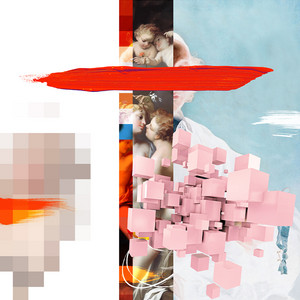 Biffy Clyro — The Myth of The Happily Ever After (2021). Wednesday night.
Wednesday secondary acts include Tash Sultana, the Melbourne multi-instrumentalist and loop artist whose Terra Firma (2021) built on the viral success of a bedroom recording to become a genuine album-length artistic statement. Sultana builds her sets from scratch in real time, using a loop station and approximately seventeen instruments to construct walls of sound that have no precedent in how a solo artist is supposed to perform at festival scale. Also Wednesday: Parcels, the Brisbane five-piece whose funky cosmopolitan sound draws from Daft Punk and AM-radio soul; Chet Faker, the Melbourne producer who has become one of Australia's most significant musical exports; and Natasha Bedingfield, whose Unwritten (2004) remains one of the most enduring songs of the post-2000 British pop landscape.
Thursday, August 13: Florence + The Machine and Lewis Capaldi
Thursday is, by the logic of headliner weight, the festival's emotional centrepiece. Florence + The Machine return to Sziget — this is not their first time on the island — as the headline act for Thursday night, and the significance of this booking is inseparable from the context of the intervening years.
Florence Welch has been making music under the Florence + The Machine moniker since 2008. Lungs (2009) arrived fully formed: an album of gospel-influenced art rock with Welch's voice as the central instrument, a voice that operates in a dramatic register unusual in pop music — genuinely theatrical without being theatrical in the bad sense, powerful without being demonstrative for demonstration's sake. Ceremonials (2011) pushed the scale further, adding orchestral arrangements and a darker lyrical register. How Big, How Blue, How Beautiful (2015) was the most emotionally direct: a record about grief and recovery, specifically the grief of a relationship ending, made with an exquisite command of when to hold back and when to release.
Dance Fever (2022) arrived after the pandemic and after a period during which Welch had been publicly open about mental health struggles and the experience of having all live performance cancelled at a moment when she had been planning an album tour. The record it produced is arguably her most consistent: "Free," the opening track, is a statement of intention that lands with the physical immediacy of something she had been holding since 2020. "King" — about choosing art over conventional domesticity, specifically the possibility of children — is the most discussed song she has made since "Dog Days Are Over." The Dance Fever tour, which included headline slots at festivals across Europe, confirmed that Welch's stage presence had lost nothing in the interval: she performs in the mode of someone who understands that the physical act of performance is a form of prayer, and the audience receives it accordingly.
At Sziget, the Main Stage's 60,000-person capacity gives that communion a scale it finds at few other festivals. The 2026 set will draw from the full catalogue — the Lungs era songs remain as structurally effective as they were in 2009, and the more recent material adds layers of thematic weight that the back catalogue contextualises.
Lewis Capaldi is the other Thursday headline act, and his presence at Sziget 2026 is a statement about the emotional landscape of the festival as much as the commercial one. The Scottish singer-songwriter from Bathgate released Divinely Uninspired to a Hellish Extent in 2019 to become one of the most commercially successful British debut albums of the decade: "Someone You Loved," "Grace," "Hold Me While You Wait" — songs that operated in the tradition of post-breakup adult pop and connected with audiences on a scale that surprised everyone, including the label. His second album Broken By Desire to Be Heavenly Sent (2023) arrived in a context where he had been publicly diagnosed with Tourette syndrome and had spoken with unusual candour about the anxiety of performing and the mental health pressures of his sudden success.
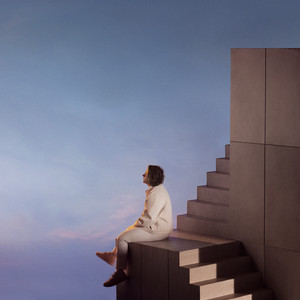 Lewis Capaldi — Broken By Desire to Be Heavenly Sent (2023). Thursday, Main Stage.
The Thursday billing is completed by Richie Hawtin, who takes the Delta District (Sziget's dedicated electronic music hub, housing three separate stages) for one of the festival's more significant DJ sets. Hawtin's Minus label and his Plastikman project have been at the centre of minimal techno for thirty years; his Sziget appearances are consistently among the best-attended electronic sets of any festival.
Friday, August 14: Bring Me the Horizon, Skepta, Peggy Gou
Friday is the day the 2026 Sziget lineup most resembles a cross-genre cultural document. Three acts whose worlds rarely overlap — stadium-metalcore, UK grime, and Korean-born house music — share the Friday headline billing in a way that captures exactly what Sziget has always intended itself to be: not a genre festival but a cultural gathering.
Bring Me the Horizon headlining Friday brings Sheffield's most globally successful heavy band to the Main Stage at a moment when the conversation about what they are has finally settled. They started in 2004 as a deathcore band; Count Your Blessings (2006) and Suicide Season (2008) are the records from that phase, and they are good records, but they are not the reason Bring Me the Horizon matter in 2026. What matters is the arc from There Is a Hell, Believe Me I've Seen It, There Is a Heaven, Let's Keep It a Secret (2010) — the album where the ambition became visible — through Sempiternal (2013) and That's the Spirit (2015) and into the POST HUMAN series. POST HUMAN: SURVIVAL HORROR (2020) and POST HUMAN: NeX GEn (2024) are the albums where Oliver Sykes and the band fully committed to the idea that metal could encompass everything: pop production, hip-hop, industrial, ambient, Japanese pop, South Korean hyperpop. The collaborators on NeX GEn include Lil Uzi Vert, Babymetal, Yungblud, and Spiritbox. The guitar work is still there. The breakdowns are still there. The record sounds like a band that decided the only artistic failure available to them was refusing to try.
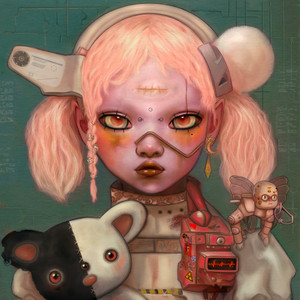 Bring Me the Horizon — POST HUMAN: NeX GEn (2024). Friday Main Stage headliner.
Skepta joining the Friday billing brings the most structurally important British grime act of the 2010s to Sziget. Joseph Junior Adenuga Jr has been making music since 2005, first as a garage and grime producer, then as an MC, and his Mercury Prize-winning Konnichiwa (2016) was the record that finally persuaded the critical establishment to engage seriously with what grime had been doing for over a decade at that point. The album is meticulous: produced largely by Skepta himself, it draws from the early grime energy of Boy Better Know — the collective he founded with his brother Jme — while adding production sophistication that made it accessible without softening it. "Shutdown," "That's Not Me," "Man" — these are tracks that work at festival scale in a way that makes the crowd participation genuinely collective rather than performative.
 Skepta — Konnichiwa (2016). Friday night, Sziget 2026.
Peggy Gou closing the electronic portion of Friday represents the most commercially successful phase of a career that has always prioritised quality over ubiquity. The Seoul-born, Berlin-based producer released "(It Goes Like) Nanana" in 2023 as what was intended to be a summer single and watched it become one of the most globally consumed house music releases in years. Her debut album I Hear You (2024) arrived with the weight of that commercial moment and mostly justified it: a record that moves through Chicago house, disco, and European club sounds without losing Gou's distinctive warmth. Her Sziget DJ set will draw from the full catalogue — the early Berlin-club material, the Kompakt releases, the I Hear You era — and the Bolt Night Stage, Sziget's electronic dance venue, will be one of the most densely attended spaces on the island on Friday night.
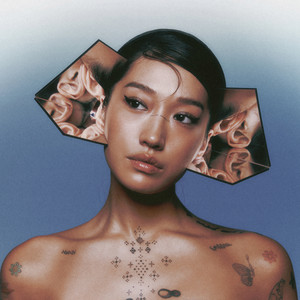 Peggy Gou — I Hear You (2024). Friday night on the Bolt Night Stage.
Friday also brings Sigrid to the Revolut Stage — the Norwegian singer-songwriter whose How to Let a Good Thing Die (2021) is the most elegant British-adjacent pop record of the early 2020s — alongside Loyle Carner, Nia Archives, and Sara Landry across the Delta District.
Saturday, August 15: Skrillex, Jorja Smith, Soulwax
Saturday closes the five-day programme with three acts who represent three entirely different traditions of electronic music, and who together make a compelling argument for why Sziget's genre scope is its most important structural feature.
Skrillex at Sziget 2026 arrives in the wake of a creative resurgence that his 2023 double-album release made available as evidence. He released Quest for Fire and Don Quixote simultaneously in February 2023 after nine years without a solo album, and the response was more complex than a simple comeback narrative. Quest for Fire is a house and garage and juke album — it draws from UK garage, Chicago footwork, and 2-step, worked through with collaborators including Four Tet, Mr. Oizo, and Porter Robinson. It is not the dubstep record his early audience expected, and that is precisely what makes it interesting. Don Quixote is broader: hip-hop-adjacent, featuring Swae Lee, Missy Elliott, Ty Dolla $ign, Kid Cudi. Together the two records constitute the most thorough artistic self-examination Skrillex has attempted, and the Skrillex b2b format of his live sets has expanded accordingly.
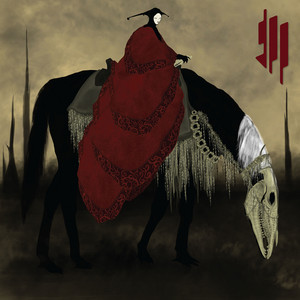 Skrillex — Quest for Fire (2023). Saturday Main Stage headliner.
Jorja Smith closing the R&B and soul programme on Saturday makes the festival's final night one of its most emotionally sophisticated. The Walsall-born singer released her debut Lost & Found in 2018 to widespread critical acclaim — a record that positioned her as the inheritor of a British soul and neo-soul tradition that runs through Amy Winehouse and Sade, while doing something that was genuinely her own. Her 2023 album falling or flying deepened that position: produced with a lightness of touch that belied its lyrical weight, it moved through jazz-inflected R&B, dancehall, Afrobeats, and British pop without losing the voice at the centre of all of it.
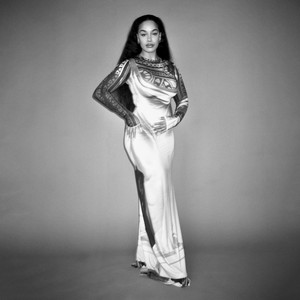 Jorja Smith — falling or flying (2023). Saturday night at Sziget 2026.
Soulwax, the Belgian brothers David and Stephen Dewaele, are one of the most technically accomplished DJ and live electronic acts in Europe. Their DJ sets — sometimes as 2manydjs, sometimes as Soulwax — are exercises in cross-genre musical intelligence, moving through disco, house, rock, new wave, and hip-hop with a confident fluency that makes the mixing itself feel like composition. Nite Versions (2005), their record of remixed versions of songs from Any Minute Now, remains one of the best dance remixes albums ever made — "E Talking," "Krack," "Another Excuse" rendered into club tracks that work as standalone pieces without the knowledge of their source material. They are confirmed for Sziget 2026 in what will be one of the later sessions, and their presence guarantees at least one night where the island's electronic programme operates at maximum quality.
Loyle Carner plays Friday but merits specific attention as one of the most significant British hip-hop artists of his generation. The London rapper's hugo (2022) — named after the poet Ted Hughes, a subject he studied at A-level — is a record about his relationship with his father, about the experience of having children, about navigating ADHD and dyslexia and the specific complexity of mixed-race British identity. It is built from samples of Elton John, of jazz records, of found sound, and it addresses its subjects with an emotional directness that is unusual in hip-hop of any register. Also confirmed: bbno$ for Saturday's pop-leaning programming, Charlotte Cardin for Friday, and Boys Noize for the Delta District.
Day 0: Faithless, Morcheeba, Goran Bregovic
The Day 0 programme on Monday, August 10 opens the gates early with a bill oriented around artists connected to the festival's earlier history and the specific geography of Central and Eastern European musical culture. Faithless — the British electronic act whose Reverence (1996) and Sunday 8PM (1998) defined a strand of intelligent dance music in the late 1990s — headline the opening session. "God Is a DJ," "Insomnia," "We Come 1": these are songs that have accumulated two decades of association with festival opening moments, and the atmosphere they generate in an outdoor setting at night is reliably that of a crowd that knows exactly what it came for.
Morcheeba complete the Day 0 main programme with the kind of trip-hop and downtempo music that belongs, historically, to the same mid-90s moment as the early Faithless records — Big Calm (1998) is the essential Morcheeba album, and Skye Edwards' voice over Paul and Ross Godfrey's dusty, blues-inflected production remains one of the more distinctive sounds of that period.
Goran Bregovic and the Wedding and Funeral Band bring the most specific geographical context to the Day 0 bill. The Sarajevo-born composer and musician has spent his career building a music that synthesises Balkan folk forms — Serbian, Bulgarian, Roma — with rock, orchestral music, and theatrical composition. His wedding and funeral orchestras, which he has been leading in various configurations since the 1980s, are the form in which those influences are most concentrated. Playing at a festival in Budapest, a city whose own Balkan cultural connections run through its Ottoman and Habsburg history, Bregovic's music has a geographical resonance that it would not carry at a festival in Manchester or Amsterdam.
The Non-Music Island: Cirque du Sziget, Magic Mirror, ArtGarden
A visitor to Sziget who spent all five days only attending concerts would miss half of what makes the festival architecturally distinctive. The island's non-musical programming is not supplementary to the music: it is simultaneous, continuous, and in some cases better attended than many of the stages.
The Cirque du Sziget is the festival's circus component: a big-top tent hosting contemporary circus companies from France, Canada, and elsewhere, featuring aerial work, acrobatics, and physical theatre at a standard that would be exceptional in a dedicated circus venue. The circus programme runs daily across the entire festival, with multiple shows per day, and it draws audiences that include both festival regulars who plan their schedules around it and people who stumbled past the tent and were stopped by what they saw through the open flap. The circus tradition at Sziget is one of the longest-running non-music programmes in European festival history; the companies that appear have included Cirque Éloize, Machine de Cirque, and other major acts from the contemporary circus world.
The Magic Mirror venue — operating since 2001 — runs drag shows, LGBTQ+ performer showcases, community discussions, and late-night party events throughout the festival. Its interior design changes each year; the specific aesthetic has ranged from maximalist glam to minimal and architectural. It is the space at Sziget where the festival's identity as a refuge from the political climate outside the island is most physically embodied. In 2024 and 2025, the Magic Mirror programming expanded to include a broader range of performers who crossed between drag, cabaret, spoken word, and music. The 2026 edition has confirmed drag shows and performance art alongside the regular evening events.
The ArtGarden and ArtFusion Field zones host workshops, interactive installations, and collaborative creative projects that run on a different time scale than the music stages. Large-scale art installations — including, in recent years, giant inflatable sculptures visible from much of the island and interactive light works that change depending on how many people are touching them — are distributed across the terrain in locations that reward walking. Part of the Sziget experience is encountering a piece of visual art you weren't looking for between stages; the placement of installations at intersections and in open spaces between performance venues is deliberately calibrated to interrupt direct paths and create accidental encounters.
The Global Village is a thematic zone that functions as an informal cultural market: food, music, workshops, and presentations from dozens of countries, with a specific focus on cultures underrepresented in the main stage programming. Roma music has been present in the Global Village since 2002. In recent years, programming has included traditional music forms from Central Asia, the Balkans, Africa, and South America running simultaneously in the same space. The Global Village runs primarily during daylight hours and functions as a social area that doesn't require being in a crowd of 60,000 people to be in the middle of something interesting.
The FutureGrounds zone hosts intellectual discussions, panel events, and talks about social issues — in 2025, topics included climate policy, digital privacy, migration, and LGBTQ+ rights in Central Europe. These events are not heavily attended relative to the music stages, but their presence is a deliberate signal about what Sziget considers the festival's purpose: not just entertainment, but the creation of conditions under which people who wouldn't otherwise share space can think together.
The Freedome Tent, a wellness and body-positive space that includes yoga sessions, meditation, non-judgemental physical expression workshops, and community discussions, has been part of the festival infrastructure since the mid-2010s. In recent years it has expanded to include morning yoga sessions that begin before the music stages open — a feature that the island's camping culture supports, because enough people are awake at 7am that an outdoor yoga session in the shadow of festival infrastructure has an audience.
Budapest as a Host City: What the Surroundings Mean
Sziget exists in an interesting relationship to the city around it. Most major European festivals occupy sites that are genuinely isolated — farmland, quarries, fields at some distance from urban infrastructure. Sziget is twenty minutes from central Budapest by suburban train, which means the city is not a logistics obstacle but a resource. Visitors who book accommodation in the seventh district (the ruin bar neighbourhood, historically the city's Jewish quarter and now its nightlife centre), or in Óbuda (the northern district immediately adjacent to the festival island), are combining the festival with one of the most culturally layered cities in Central Europe.
Budapest in August has specific qualities that are worth noting. The city's cost of living is substantially lower than comparable European capitals — London, Paris, Amsterdam — which means that visitors who combine Sziget with several days in the city spend less overall than they would at a festival in Western Europe. The ruin bars of the seventh district, which opened in the early 2000s in abandoned pre-war buildings and have become one of Budapest's most distinctive cultural exports, function as extensions of the festival atmosphere for visitors who are not on-site camping. Szimpla Kert, the original ruin bar that opened in 2002, runs a farmers' market every Sunday morning that draws a crowd that is partly locals and partly the kind of festival tourist who wants to experience the city rather than merely pass through it.
The Aquincum Museum in Óbuda, a fifteen-minute walk from the festival bridge, occupies the site of a Roman civilian town founded in the first century AD — the administrative capital of the Roman province of Pannonia. Its mosaic floors, hypocaust heating systems, and amphitheatre ruins make the argument that Budapest is one of the oldest continuously inhabited cities in Central Europe, built on top of a Roman infrastructure that pre-dates the Magyar arrival by nearly a millennium. Visiting Aquincum between festival days and then returning to watch Peggy Gou play to 20,000 people at midnight on the same island is a specific experience available at precisely one festival.
The Buda Castle complex across the river, with its Gothic church (the Matthias Church), the Fisherman's Bastion, and the former Royal Palace, and the Chain Bridge connecting Buda and Pest at the city centre, are the visual signature of the city — what appears in every photograph, what becomes the background of every festival visitor's social media documentation. The Parliament building, on the Pest bank, is one of the largest in the world and one of the most visually dramatic — a neo-Gothic structure that looks, at night, as if it's been lit from within by something specifically theatrical. None of these things are on the festival island. All of them are within thirty minutes by metro or on foot.
What the host city provides that most festival cities cannot is depth: the sense that arriving in Budapest for Sziget is not merely a festival trip but an encounter with a place that has been inhabited, sacked, rebuilt, divided, reunified, and inhabited again over two millennia, and that carries that history with a physical legibility available in relatively few European cities.
The Hungarian Acts: Budapest Park Stage and the Domestic Scene
2026 introduces a new dedicated venue for Hungarian music: the Budapest Park Stage, developed in collaboration with Budapest Park, the city's premier outdoor concert venue, which serves as a standalone venue for local artists year-round and as a Sziget satellite in August. The purpose of the stage is to give greater prominence to domestic acts who have historically been present at the festival but have not always had a high-profile platform.
Confirmed Hungarian acts for 2026 include Elefánt — one of the country's most successful indie rock bands, whose sound draws from British indie and shoegazing in a way that translates the idiom into Hungarian — Beton.Hofi, the rapper who represents the most commercially successful strand of current Hungarian hip-hop, and Analog Balaton, an electronic act whose name is a knowing reference to the Balaton lake district that functions as Hungary's summer cultural counterpart to what Sziget is in August.
Ivan and the Parazol are also confirmed: a Budapest rock band who have been making melodic guitar music since the mid-2010s with a craft and consistency that makes them reliable headliners for the domestic stage. Their catalogue spans six albums and represents a tradition of Hungarian rock that owes less to Western models than it might appear — there is a specific Magyar emotionalism in their best songs that doesn't translate directly into any English-language equivalent.
The broader Hungarian music scene is more diverse than most non-Hungarian audiences realise. The legacy of Hungarian folk music — a tradition that includes unique scales, complex rhythmic structures, and a connection to Romani music that runs deeper here than in most of Western Europe — exists alongside a contemporary electronic scene centred on Budapest clubs like Lärm and Doboz. Sziget functions as a meeting point between those worlds: the Global Village programming includes Hungarian folk music performed by artists who are otherwise invisible to the festival's international audience, while the Budapest Park Stage gives domestic commercial acts a platform adjacent to the international names.
The 7-Day Format vs. the European Norm
Sziget 2026 officially runs five days (August 11–15), with a Day 0 on August 10 that brings the effective total to six days. This remains significantly longer than most major European festivals, which operate on a three- or four-day model. Download, Rock Werchter, Primavera Sound, Lollapalooza Paris — the standard European format is a weekend, or slightly extended weekend, with a fixed start and end that allows logistical planning on a relatively compressed schedule.
The decision to run six to seven days is not arbitrary. It reflects Sziget's original conception as a community gathering rather than a commercial entertainment product. The festival's camping infrastructure supports multi-day habitation in a way that weekend festivals do not need to: the Sziget camping area, which includes pre-pitched premium tent options, wooden glamping huts, and free basic camping, accommodates people who are living on the island for the full duration. The dynamics of a festival where many attendees have been on-site for a week are different from those of a festival where most people arrive on Friday and leave on Monday.
The Szitizen culture — the returning-attendee community — is enabled by the duration. You need several days to establish the routines and encounters that make Sziget feel like a place rather than an event. You need time to discover the art installation you wouldn't have found if you were optimising a three-day schedule. You need unhurried afternoons for the Global Village, mornings for the ArtGarden workshops, evenings for shows at the Magic Mirror that start later than any rock band. The six-day format creates the conditions under which those discoveries happen.
The commercial argument against duration — that programming 200-plus artists across six days is more expensive than doing the same for four — is real. Sziget's financial situation has historically been complex: in several recent years the festival has drawn record attendance while reporting operating losses, reflecting the structural challenge of an event that is priced accessibly (full five-day passes from approximately €309, which is significantly cheaper than Glastonbury or Primavera Sound) while spending at a scale that five-day festival economics don't easily support. Gerendai's 2025 public statement that many artists had "reserved the date in pencil" for 2026 despite uncertainties was a signal that the festival's relationships with agents and managers are strong enough to absorb the occasional financial difficulty — that the booking community trusts Sziget's continued operation in a way that more financially precarious festivals cannot rely on.
Notable Moments and Legends: What Has Happened on This Island
The Sziget historical record contains a set of performances that are cited, repeatedly, as the standard against which the current year is measured. Not as competition, but as evidence of what this island is capable of producing.
David Bowie, 1997. Already noted, but worth dwelling on: the Earthling album from which Bowie was touring that summer — co-produced with Reeves Gabrels and featuring drum-and-bass programming that Bowie had been exploring with Goldie and others in the mid-90s — was not the Bowie record most of the 43,000 people in front of him had grown up with. It was new, strange, and specifically contemporary in a way that would have been inexplicable to an audience expecting Let's Dance or Heroes. Bowie gave them the current thing. The audience came to Budapest as people who had never seen Bowie, and they left as people who had seen Bowie doing something new, which is a different experience than either alternative.
Prince, 2011. The set lasted two-and-a-half hours. Prince played 28 songs across two encores. He had apparently run an extended soundcheck and was in an exceptional mood; reports from people who attended describe him as communicative and playful in a way that was not his universal public mode. He played "Purple Rain" with a live band made up largely, by accounts, of female musicians. The crowd in front of the Main Stage numbered over 90,000 — the largest crowd in the festival's history at that point. Prince came back three times at the end. Someone in the crowd had the presence of mind to record enough of it on their phone that the footage survives.
Kendrick Lamar, 2018. The year of DAMN. Lamar's Sziget performance was part of his European summer run that year, and it arrived at a moment when DAMN. had just won the Pulitzer Prize for music — the first time the prize had been awarded to a non-classical, non-jazz work. The set was constructed as a theatrical event: video backdrops, dancers, the full DAMN. narrative sequence. In a festival context — which strips away most of the theatrical control that an arena show allows — the performance retained its coherence because Lamar's stage presence is primarily vocal and physical rather than dependent on production infrastructure.
Gorillaz, 2018. The Gorillaz Humanz/The Now Now period produced some of the most diverse festival sets in recent memory: Damon Albarn switching between the Blur post-rock of the early material and the hip-hop and electronic of the later albums, with guest appearances that varied from night to night. The Sziget 2018 set featured a rotating cast of collaborators and ran through the Gorillaz back catalogue with the freedom of a band that knew exactly how much it had made.
In 2026, the festival adds to this record. Florence + The Machine. Twenty One Pilots. Bring Me the Horizon. Skrillex. Jorja Smith. The island has seen bigger names. It has not often had five days this compositionally varied, where the headline tier genuinely represents distinct artistic traditions rather than variations on the same commercial pop mode.
Predictions and Context for 2026
Some things are always uncertain about a festival this size until you are inside it.
The question of where Faithless fit in 2026's overall picture is interesting. The Day 0 booking positions them as a legacy act — which they are, but they are a legacy act with significant new material (FUTURE FAITHLESS, released in 2024, is their first studio album in over a decade and features collaborators including Jazzy) and a live show that has evolved beyond nostalgia. Whether Day 0 turns out to be an afterthought or an event in itself depends partly on weather and partly on how many of the full-festival ticket holders choose to arrive early.
The Budapest Park Stage is the structural novelty of 2026, and its success depends on whether the Hungarian acts confirmed for it draw both domestic and international audiences. The best-case scenario is that international visitors who know nothing about Elefánt or Beton.Hofi are drawn in by proximity and discover something they couldn't have encountered at Glastonbury or Coachella. This has always been one of Sziget's potential functions — as a place where the international music economy intersects with music from countries that have no obvious route into it — and the Budapest Park Stage makes that function explicit.
The Delta District electronic programme is the most fully developed in Sziget's history, with Richie Hawtin, Peggy Gou, Soulwax, Dom Dolla, Dixon, Nia Archives, Boys Noize, Joris Voorn, and Sara Landry spread across the three electronic stages. For the subset of Sziget visitors who come primarily for club music rather than for the Main Stage programming, this is the most compelling electronic lineup since the early 2010s.
Whether 2026 generates a moment comparable to Bowie in 1997 or Prince in 2011 — something that becomes part of the island's mythology — is not predictable. Those moments require a specific convergence of artist, audience, and context that cannot be engineered. What 2026 has, structurally, is the preconditions: a diversity of acts genuinely capable of doing something unexpected, an audience of over 500,000 that spans seventy countries, and a six-day duration that allows enough time for something unplanned to happen and be witnessed.
The island in the Danube was always the right venue for experiments. In August 2026 — for the thirty-third time, or the thirtieth, or whatever the correct count is after the pandemic disruptions of 2020 and 2021 — it opens again.
Sources
Sziget Festival 2026 official lineup: szigetfestival.com/en/programs-lineup-2026
Sziget Festival 2026 first headliner announcement, Billboard: billboard.com/music/concerts/sziget-2026-festival-florence-machine-lewis-capaldi-sombr-1236132176/
Sziget 2026 lineup updates, NME: nme.com/news/music/bring-me-the-horizon-wolf-alice-sziget-festival-2026-lineup-additions-3927074
Sziget 2026 lineup updates, Radio X: radiox.co.uk/festivals/sziget-2026-headliners-line-up-stage-times-ticket-info/
Skepta, Jorja Smith additions: fabfestivals.com/skepta-jorja-smith-join-new-sziget-festival-2026-lineup-additions/
Sziget 2026 day-by-day schedule: openairguide.net/festivals/ungarn/sziget/_runningorder
Sziget Festival history, NME: nme.com/features/music-features/a-brief-history-of-sziget-festival-hungary-budapest-david-bowie-prince-3435971
Diáksziget 1993 origins: lostandfoundinbudapest.wordpress.com/2018/05/12/diaksziget-25-years-of-history/
Sziget Festival Wikipedia: en.wikipedia.org/wiki/Sziget_Festival
Károly Gerendai Wikipedia: en.wikipedia.org/wiki/Károly_Gerendai
Sziget 2026 guide for first-timers, Hotpress: hotpress.com/culture/sziget-2026-what-to-know-and-expect-as-a-first-time-explorer-23137977
Budapest context and city guide: hungaryunlocked.com/sziget-festival-budapest/
Florence + The Machine, Dance Fever: open.spotify.com/album/4ohh1zQ4yybSK9FS7LLyDE
Twenty One Pilots, Clancy: open.spotify.com/album/1KFWgQTw3EMTQebaaepVBI
Bring Me the Horizon, POST HUMAN: NeX GEn: open.spotify.com/album/1k7OXnGQPV4zF3seDwRroD
Lewis Capaldi, Broken By Desire to Be Heavenly Sent: open.spotify.com/album/0ECSyPejfD7oL95dD3jgoi
Jorja Smith, falling or flying: open.spotify.com/album/3cCpJc6LhvskN7i9w3WkaA
Skepta, Konnichiwa: open.spotify.com/album/6s4vWWWxNrGcKhrOFYRZzk
Underworld, Dubnobasswithmyheadman: open.spotify.com/album/5rjMqBWOQQSS4glQ8PWInj
Wolf Alice, Blue Weekend: open.spotify.com/album/1VCTWaze9kuY5IDlbtR5p0
Peggy Gou, I Hear You: open.spotify.com/album/5pnr4GOQkBuGuYPeiLw1T6
Skrillex, Quest for Fire: open.spotify.com/album/7tWP3OG5dWphctKg4NMACt