Roskilde 2026: The Non-Profit Festival That Rewrites the Rules Every Summer
Roskilde 2026 (27 June–4 July, Denmark) — 177 artists, a brand-new Orange Stage, The Cure, Gorillaz, Clipse, and Jennie making K-pop festival history. Full lineup analysis and deep dive.
By Gabin Fay
Every profit made at Roskilde Festival goes to charity. Not most of it, not a disclosed percentage allocated through a corporate foundation at arms length — all of it. The entire surplus generated across eight days of concerts, camping fees, food stalls, merchandise, and the various microcosms of commerce that spring up across an eighty-hectare site southwest of Copenhagen is funnelled through the Roskilde Foundation into humanitarian and cultural projects around the world. By 2026, cumulative donations since the foundation's 1972 takeover exceed €64 million. The festival is staffed largely by approximately 32,000 volunteers who show up before, during, and after the event to run everything from recycling stations to audience safety monitoring. There is no shareholder. There is no investor seeking a return. The whole thing runs on a combination of Danish civic idealism, volunteer labour, and the stubborn conviction of its founders — two high school students in 1971 — that a music festival could be, structurally, something fundamentally different from a commercial entertainment product.
That structural difference shapes everything about what Roskilde feels like, books, and prioritises. The 2026 edition — running from 27 June to 4 July in Roskilde, Denmark — contains 177 artists from 37 countries, an expanded and rebuilt Orange Stage making its debut, two brand-new stages (Fauna and Lagune), the return of the festival's own Cinema, and a lineup that spans K-pop history (Jennie headlining, the first K-pop artist ever to top a Danish festival), post-punk myth (The Cure on the new Orange Stage), hip-hop institution (Gorillaz, Clipse), Irish rap-politics (Kneecap), and a cross-section of emerging names from Greenland, Ukraine, Egypt, and Brazil that you won't find on the bill at any festival that needs to justify its programming to a profit-seeking board. This is what a festival looks like when it doesn't owe anything to anyone except its audience and the causes it supports.
→ Roskilde 2026 — the 50-track lineup playlist (generated by Playgen)
 The Cure — Disintegration (1989). Opening night of the new Orange Stage.
The Origin: Two Schoolboys, a Borrowed Field, and an Idea About What a Festival Should Be
The first Roskilde Festival took place on 28 and 29 August 1971, in a field on the outskirts of Roskilde — a cathedral city of around forty thousand people, roughly thirty kilometres west of Copenhagen, at the edge of the fjord that carries its name. The event was organised by Mogens Sandfær and Jesper Switzer Møller, both high school students, along with promoter Carl Fischer. They called it the Sound Festival. It ran for two days, featured approximately twenty bands spanning folk, jazz, rock, and pop, and attracted somewhere between ten thousand and thirteen thousand visitors. By any measure, it was a modest local event.
The founding impulse was explicitly countercultural — inspired by the great Anglo-American festivals of the late 1960s and early 1970s: Newport, Isle of Wight, and above all Woodstock, which by 1971 had already become the template against which all European outdoor festivals measured themselves. The Danish hippie movement of the period was smaller and less documented than its British or American counterparts, but it was real, and the Sound Festival was one of its most concrete expressions: a gathering organised not by a promoter seeking profit but by young people who wanted the thing to exist and figured out how to make it exist.
In 1972, control of the festival passed to the newly formed Roskilde Foundation — a non-profit organisation chartered to support music, culture, and humanist causes. The transition was both administrative and philosophical. The 1972 edition, briefly renamed the Fantasy Festival, raised 50,000 Danish kroner (equivalent to approximately 330,000 DKK in 2020 terms) that was donated to local projects for children and young people. The pattern was established in the second year: whatever money comes in gets given away. The Foundation has never deviated from this.
Since 1973, the practical organisation of the festival has been handled by the Roskilde Festival Group — a separate entity from the Foundation, which manages logistics, booking, site infrastructure, and the volunteer coordination that makes the whole operation function. The relationship between the two bodies is the structural secret of Roskilde's longevity: one holds the money and the mission, the other does the work.
By the early 1990s, the festival had grown from a two-day local event into one of the largest music festivals in Europe. By 1995, attendance exceeded 100,000 for the first time, necessitating the construction of a dedicated railway station adjacent to the site — a piece of infrastructure that no other European festival has. The Dyrskuepladsen site, a former agricultural fairground, became the permanent home. Today, if Roskilde's temporary population during the peak days were counted as a municipality, it would be the fourth-largest city in Denmark.
The Orange Stage: Fifty Years of Danish Rock History Under a Single Canopy
The Orange Stage is the symbolic centre of Roskilde Festival — the largest stage, the most anticipated performances, the image that appears in every photograph of the event. Its origin story is itself a piece of rock mythology.
In 1978, the Roskilde Festival organisation acquired the touring stage structure that The Rolling Stones had used on their 1976 European tour — a modular canopy system with distinctive curved orange supports and an orange canvas roof that gave the stage its name and its colour. This was not a neutral piece of infrastructure; it was a physical artefact of the tour that had produced Black and Blue and toured the biggest rock band in the world across the continent. Installing it in a Danish festival field was a statement about cultural ambition, about what Roskilde believed it could become.
The stage has been rebuilt and upgraded several times in the decades since — its third version served from 1998 to 2024 — but the design language has remained constant: the curved arched supports, the orange canvas, the immediate visual impact of arriving at the festival site and seeing that structure at the end of the main field. In 2026, a fourth generation of the Orange Stage debuts. The new version is approximately thirty percent taller than its predecessor, enabling entirely new technical possibilities for sound, light, and scenography. The area in front of the stage has been redesigned to increase capacity and improve sightlines. It remains, unmistakably, the Orange Stage: the aesthetic language of the original structure is preserved, even as the engineering underneath it is rebuilt for the current decade.
The Orange Stage has hosted an extraordinary range of headliners over fifty years: Bob Dylan, The Rolling Stones, Prince, Bruce Springsteen, U2 (who have played Roskilde multiple times since 1981, when their appearance was the making of their European profile), Radiohead, Metallica, Pearl Jam, Foo Fighters, Charli XCX, Olivia Rodrigo, Nine Inch Nails. The diversity of that list is not accidental. It reflects a booking philosophy that has consistently refused to define itself by genre — the Orange Stage has headlined punk, metal, rap, pop, electronic music, and rock without treating any of those categories as primary. In this, it differs fundamentally from genre-specific festivals like Hellfest or Download: the Orange Stage is explicitly an omnivorous space, a stage that reflects the full breadth of contemporary music rather than a curated segment of it.
30 June 2000: The Pearl Jam Tragedy and Its Aftermath
The night of 30 June 2000 is the defining event in Roskilde Festival's history, and it remains the most significant crowd-crush disaster in European festival history. Pearl Jam had taken the stage at the Orange Stage in front of an estimated 45,000 to 50,000 people — nearly three-quarters of the entire festival's ticketholders, converged into a single crowd because Pearl Jam in 2000 was the biggest rock band in the world and the audience wanted to be there. The crowd had been building for hours. It was dense and pressing forward continuously.
Approximately thirty minutes into the set, wave-like crowd surges — the physics of human bodies packed beyond safe density, responding to the music and to each other — created a compression point near the front of the crowd. People began to fall. A depression formed: a space where those who had gone down could not get up again because the crowd pressure kept them pinned. Nine young men died. Eight suffocated in the crush. A ninth died five days later in hospital. The victims ranged in age from seventeen to twenty-six: three Danes, three Swedes, one German, one Dutch, one Australian. They had come to a rock festival in Denmark and did not go home.
Pearl Jam were informed of deaths during the concert. They played on, because no one on stage or in production had a clear picture of what was happening in the crowd. When they were told at the end of the set, they were visibly devastated. The band has returned to Roskilde in subsequent years — most recently in 2022 — to perform at the memorial and to support the festival's continued operation. Eddie Vedder's relationship with the event is complex and documented: grief, responsibility, and a sustained commitment to ensuring the safety reforms that followed were real.
The reforms were real. In the wake of the 2000 tragedy, the festival undertook a comprehensive redesign of its crowd management protocols — expanded emergency exits, hard and soft crowd control barriers at measured intervals in front of the main stage, enhanced CCTV coverage across the site, designated safety staff positioned throughout the audience, and an emergency shutdown system that could halt a performance if crowd conditions reached dangerous thresholds. These innovations were adopted not only by Roskilde but by European festival organisers broadly: the safety standards that now apply across the continent's major outdoor music events trace directly to what Roskilde implemented after 2000. The festival effectively became the European laboratory for crowd safety reform.
Before the 2001 festival opened, a memorial was erected near the site where the deaths occurred. Nine trees were planted. A stone was placed among them with the inscription: How fragile we are. The memorial is permanent. It is visited every festival year by new audiences who did not attend in 2000, and by people who did.
Structure: Warm-Up Days, Four Concert Days, and Life in a Temporary City
The eight-day run of Roskilde Festival (27 June to 4 July in 2026) is structured in two phases. The first three days — what the festival calls the "warm-up" period — function as a gradual population of the site. The campsite opens to early arrivals, who begin the queuing and tent-staking rituals that are as much a part of the Roskilde experience as any headline performance. The stages are active with programming during the warm-up days, but at a smaller scale: emerging Danish and international acts, late-night club programming in the dance tents, art installations, talks, screenings in the Cinema. The warm-up days give the festival its social texture, the period when the temporary city forms before the main concerts begin.
The four main concert days — roughly 1 July through 4 July in 2026 — are when the Orange Stage headliners perform and the festival reaches its full operational scale. The estimated 130,000 attendees across the peak days occupy a campsite that covers eighty hectares divided into East and West sections. Each section contains what the festival calls an Agora: a neighbourhood hub with its own food stalls, water points, showers, charging stations, and communal areas. The Agora system was designed to distribute the social life of the festival across the site rather than concentrating everything in front of the stages — a crowd management and community-building decision that reflects the festival's broader philosophy about what a festival experience should include.
The site in 2026 includes sixteen stages and festival venues. The Orange Stage anchors the main field; Arena is the second-largest stage, capacity around 17,000, where many of the acts that sit just below the Orange Stage tier perform; Eos returns as an open-air space in the western area of the site. Two new stages debut in 2026: Fauna, a covered tent with a capacity that scales from 2,000 during early days to 5,000 at peak, offering what the festival describes as "theatre-like intimacy"; and Lagune, a covered tent in the northeastern green area seating approximately 2,000 guests, integrated into the landscape with its own scenography. The electronic and club music programming that previously ran primarily through Apollo — a stage not returning in 2026 — is distributed across multiple venues, creating a more diffuse but also more surprising dance landscape across the site.
The festival also runs its own Cinema in 2026, featuring Oscar-winning films, documentaries, and structured debates. The Cinema was a Roskilde institution that was paused in recent years and is returning for this edition, part of the broader renewal announced alongside the lineup. A roller disco and skateboarding sessions are also on the programme. This is characteristic of Roskilde's refusal to be only a music festival: the non-profit model frees the organizers to programme things that don't pay for themselves, to treat the festival as a platform for culture in a broader sense rather than as a vehicle for maximising entertainment revenue.
The Volunteer Engine: 32,000 People Who Make It Work
No account of Roskilde is complete without an account of its volunteer workforce. Approximately 32,000 volunteers — the number varies slightly year to year — work before, during, and after the festival in roles that range from stage crew to recycling management to medical services to information desks to the security and crowd monitoring that is, post-2000, one of the festival's most painstaking operations. Without this volunteer labour, the festival could not exist on its non-profit model. The ticket revenue that would otherwise pay for labour is instead donated to causes.
The volunteer experience at Roskilde is itself a kind of sub-culture. Volunteers receive their own dedicated camping area, a festival t-shirt printed each year with words chosen by the volunteers themselves to describe how they feel about the experience — a collective authorship of the festival's self-image — and a thank-you party at the end. Many volunteers return year after year, some for decades. The institutional knowledge that accumulates in a volunteer workforce of this scale, many of them long-returning participants, is part of what makes the operation function with the consistency it does.
The 2014 introduction of participatory philanthropy — giving festival attendees the ability to nominate and vote on which organisations receive festival profits — extended the volunteer and participant ownership model into the financial domain. The people who come to Roskilde don't just consume the festival; they contribute to it and, in a limited but genuine sense, govern it.
The Naked Run: A Tradition Since 1999
Since 1999, Roskilde Festival Radio has organised the Naked Run — an annual race around a fenced-in track on the campsite, conducted in a state of complete undress. The tradition takes place on the Saturday of the festival week. One male and one female winner are selected; each receives a ticket to the following year's festival. The competitive field is approximately thirty runners in a typical year, though participation in the surrounding spectacle is substantially larger.
The Naked Run is genuinely beloved — it has survived twenty-seven editions and shows no signs of discontinuation — and it serves as a concentrated expression of the festival's values: physical freedom, collective absurdity, the suspension of social propriety that a temporary autonomous zone permits. It is also, practically, a marketing moment of unusual distinctiveness. No other major European festival has anything quite like it, and it has become one of the cultural markers that distinguishes Roskilde from the rest of the festival landscape.
The tradition fits within a broader camping culture at Roskilde that has been described as among the most elaborately social in European festival life. The campsite queuing — attendees regularly wait in line for up to two days before gates open to compete for the best camping positions, then sprint across the site with their tents once the signal is given — is another Roskilde ritual that has no direct equivalent elsewhere. The competitive camping opening is a collective performance art piece that the festival has never tried to rationalise away.
The 2026 Lineup: A Map of Contemporary Music's Global Present
The 177 artists from 37 countries that constitute Roskilde 2026's programme represent the most geographically diverse lineup the festival has assembled. 37 countries means the programme includes artists from contexts that rarely appear at European festivals of this scale: Greenland (Tarrak), Egypt (Abdullah Minawy Trio), Ukraine (Heinali & Andriana-Yaroslava Saienko), Palestine (Sama' Abdulhadi), Brazil, Puerto Rico, Korea. This is not a token diversity — it reflects a sustained commitment, built over years of booking decisions, to programme music as a global phenomenon rather than as an Anglo-American export with international subsidiaries.
The 90-plus art and activism projects running parallel to the music programme — from 30-plus countries, focused on themes of peace and community — extend this geography further. Roskilde in 2026 is not primarily a music event that has acquired cultural programming as decoration; it is a cultural event that uses music as its most powerful and accessible strand.
 Gorillaz — Cracker Island (2023). Orange Stage headliner, Roskilde 2026.
Gorillaz
Gorillaz are the project that Damon Albarn and Jamie Hewlett created in 1998 and that has spent the subsequent quarter-century expanding the definition of what an animated virtual band can sustain. The four fictional characters — 2D, Murdoc Niccals, Noodle, and Russel Hobbs — have been the vehicle for an extraordinary range of musical collaboration: Del the Funky Homosapien on the self-titled debut in 2001; De La Soul and Dennis Hopper on Demon Days (2005); Mos Def and Lou Reed and Mick Jones on Plastic Beach (2010); Popcaan and Pusha T and Anthony Hamilton on Humanz (2017); Song Machine, Season One (2020); and Cracker Island (2023), which brought in Stevie Nicks, Thundercat, Tame Impala, Bad Bunny, and Adeleye Omotayo. The breadth of collaboration across twenty-five years is staggering: Gorillaz have made records with Lou Reed and with Popcaan, with Grace Jones and with Danny Brown, with Elton John and with Leee 'Scratch' Perry. The artistic promiscuity is central to what they are.
 Gorillaz — Demon Days (2005). The album that made the virtual band real.
Live, Gorillaz have developed a concert format that uses the fictional band's visual world — animated sequences, projections of the characters — in combination with the large real-world ensemble of collaborators that Albarn assembles for tours. The result is one of the most visually complex festival headliner productions in contemporary music. For a festival with a newly rebuilt and thirty-percent-taller Orange Stage, a Gorillaz headliner set is an obvious choice: the production scale is matched by the infrastructure.
Demon Days remains the touchstone record — the album that proved the project could sustain artistic ambition across a full-length format, the one that "Feel Good Inc." and "Dare" and "Dirty Harry" came from — but the 2026 live set will draw from the full catalogue. The Gorillaz discography in 2026 spans seven studio albums and twenty-five years of accumulated collaboration; a festival set from that archive is a compressed survey of a genuinely unusual career.
The Cure
Robert Smith's band has been making records since 1978. The trajectory from the post-punk austerity of Three Imaginary Boys (1979) through the Goth architecture of Pornography (1982), the New Wave pop of The Head on the Door (1985) and Kiss Me Kiss Me Kiss Me (1987), the cathedral-sized album Disintegration (1989), and the sustained creative activity of the 1990s and 2000s represents one of the most sustained individual artistic visions in British rock music. Smith has never been a predictable operator: Disintegration, which contains "Lovesong," "Lullaby," and "Pictures of You," was made at a moment when the band was commercially enormous and used that position to release the most emotionally heavy and musically elaborate record of their career.
The 2026 Roskilde set — on 1 July, inaugurating the new Orange Stage — will be The Cure's first Danish festival headliner in years, and it occurs in the fiftieth year of the band's active existence (though fifty years from the 1976 formation of Easy Cure, the predecessor). The Cure's live sets in recent years have run to three hours or more and draw from across the catalogue: the post-punk early period, the gothic peak of Pornography and The Top, the pop moment of the mid-1980s, Disintegration, Wish (1992), Bloodflowers (2000). A three-hour Cure set on the first night of the new Orange Stage is exactly the kind of moment that Roskilde's non-profit model enables — a booking made because it's the right performance for the right moment, rather than because it maximises per-head revenue.
Little Simz
Little Simz's Sometimes I Might Be Introvert (2021) is the album that took her from a widely respected underground figure to one of the most critically acclaimed British artists of the decade. The record is structurally ambitious in a way that hip-hop albums rarely attempt: overture, orchestral interlude, thematic architecture, a sixteen-track running order that builds a world rather than assembling a playlist. The opening track "Introvert" is five minutes of orchestral rap that opens with a full-string crescendo and announces immediately that this is going to be a serious work. It is.
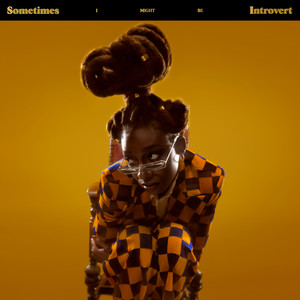 Little Simz — Sometimes I Might Be Introvert (2021). One of the essential British records of the decade.
Simz grew up in Islington, north London, and has been releasing music since 2010, but SIMBI (2021) was the album where her control of large-scale form matched her long-evident technical gifts as an MC. The follow-up, No Thank You (2022), released less than two years later, was equally well-received and demonstrated that SIMBI wasn't an anomaly. She has spent the years since building a live production capable of translating the orchestral scale of the records into a festival context. At Roskilde 2026, she is one of the most compelling acts in the programme.
Kneecap
The Belfast Irish-language hip-hop trio KNEECAP — Mo Chara, Móglaí Bap, and DJ Próvaí — are the most politically charged act in the 2026 Roskilde lineup and, given the political moment, one of the most significant festival bookings in Europe this summer. They rap exclusively in Irish, their lyrics engage explicitly with questions of Irish identity, colonialism, the north of Ireland, and the conditions of working-class communities in Belfast, and their 2024 debut album Fine Art and the 2024 film of the same name have made them arguably the most discussed new act in British and Irish music.
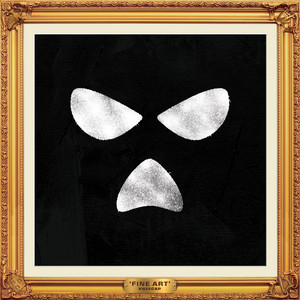 KNEECAP — Fine Art (2024). Belfast's most uncompromising cultural export.
The KNEECAP story is inseparable from the politics it inhabits. The Irish language is a site of sustained political contestation in Northern Ireland, and rapping in it — joyfully, angrily, at festival volume — is an act that carries specific charge in a way that English-language hip-hop rarely does. Their Roskilde appearance is part of a European touring presence that has grown rapidly since the film's international distribution, and they are likely to draw one of the more electrically charged crowd responses of the four main festival days.
Ethel Cain
Hayden Silas Anhedönia, performing as Ethel Cain, released Preacher's Daughter in 2022: a Southern Gothic concept album about a girl from a religious family in rural America, structured as a narrative that moves through love, violence, and transcendence over an hour of music that draws from dream pop, shoegaze, heavy metal, country, and liturgical music simultaneously. It is genuinely difficult to describe without making it sound more pretentious than it is; in practice, it sounds like someone who grew up listening to Lana Del Rey and Type O Negative and Alabama 3 and decided there was no reason those three things couldn't occupy the same record.
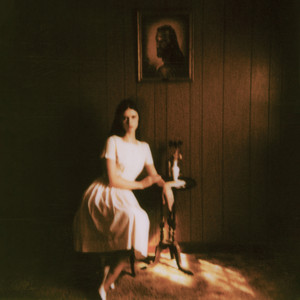 Ethel Cain — Preacher's Daughter (2022). One of the defining debut albums of the 2020s.
Preacher's Daughter has accumulated in cultural significance in the years since its release in the way that a handful of records per decade do: it gets mentioned in conversations about the best albums of its era with a frequency and a consistency that suggests genuine consensus forming. Cain's live performances have become a topic of their own — the scale of the visuals, the commitment of the performance, the way the record's Gothic theatricality translates to a festival stage. At Roskilde 2026, she is one of the acts most likely to generate the "I need to tell everyone about that" response in the audience who comes.
Wolf Alice
Wolf Alice's Blue Weekend (2021) won the Mercury Prize and is the record that moved the London quartet from a well-regarded indie band to something more significant: an album where the songwriting of Ellie Rowsell and the band's collectively achieved musical range produced a work that could hold noise rock ("The Beach"), chamber pop ("The Last Man on Earth"), shoegaze ("Lipstick on the Glass"), and rock radio ("Smile") in a single sequence without the joins showing. The Mercury Prize committee, not always known for adventurous taste, made the right call.
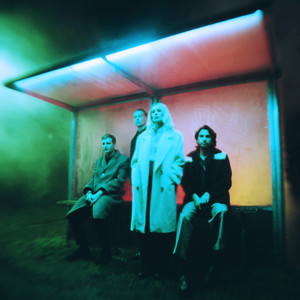 Wolf Alice — Blue Weekend (2021). The Mercury Prize record that earned every word of the praise.
The band's trajectory from their 2013 self-titled EP through My Love Is Cool (2015), Visions of a Life (2017), and Blue Weekend represents a consistent deepening of craft without the genre drift that sometimes accompanies critical success. Rowsell as a songwriter has become more precise and more emotionally direct with each record, and the band as a unit has developed the kind of locked-in collective intelligence that takes years of sustained performance to build. Their Roskilde set will be a late-career document from a band at a peak.
Clipse
Clipse — Pusha T and Malice, the brothers Terrence and Gene Thornton — spent years as the most analytically precise drug-narrative rap group in the world, making records that used cocaine trafficking as a structuring metaphor with the rigour of a novelist rather than the bravado of a rapper. Lord Willin' (2002) was a masterclass; Hell Hath No Fury (2006) is on any serious list of the best rap albums of the 2000s; Til the Casket Drops (2009) maintained the standard through a label dispute that should have broken the group. They went on extended hiatus, both brothers following separate paths, before reuniting.
Let God Sort Em Out (2024) is their comeback record and it is serious: Pusha T's pen hasn't softened, the beats are hard and spare in the way that the best Neptunes production always was, and the dynamic between the brothers — Malice's conversion to Christianity and his theological perspective now in explicit dialogue with Pusha's continuation of the cocaine aesthetic — gives the record a tension that is genuinely interesting rather than merely dramatic.
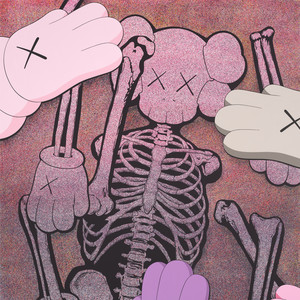 Clipse — Let God Sort Em Out (2024). The return of the most analytically rigorous rap duo in the game.
At Roskilde, they close the festival on 4 July alongside Zara Larsson — the combination of Clipse and Larsson on the same closing night is a characteristic Roskilde juxtaposition, two acts with nothing in common except excellence in their respective modes, sharing a night because the festival doesn't require genre coherence from its programming logic.
David Byrne
David Byrne's career from the Talking Heads through his solo work constitutes one of the most intellectually serious bodies of work in popular music. Remain in Light (1980), made with Brian Eno and applying West African polyrhythmic principles to New York art rock, is the record that most fully realises the Heads' ambition. Fear of Music (1979) got there first. Speaking in Tongues (1983) was the commercial breakthrough. Everything That Happens Will Happen Today (2008), a second collaboration with Eno that took vocal skeletons Eno had recorded twenty years earlier and built gospel and folk-inflected music around them, was the late-career record that reminded everyone paying attention that Byrne's musical curiosity had not abated.
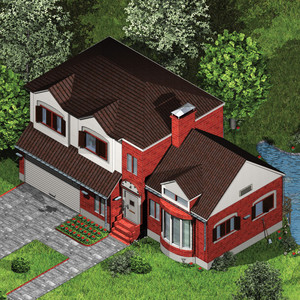 David Byrne — Everything That Happens Will Happen Today (2008). Music that moves.
Byrne's live presentations have consistently been artistic events in their own right: the Stop Making Sense tour (1983–84, filmed by Jonathan Demme) remains the gold standard for what a rock concert can be as a formal performance. His more recent touring productions have featured choreography, percussion ensembles positioned in the audience, and a refusal to treat the concert as a static presentation. At Roskilde, the format is the right one: he has the stage, the audience, and the history.
Napalm Death
Napalm Death's presence at Roskilde 2026 is a curatorial statement about the festival's breadth. The Birmingham grindcore institution — Barney Greenway and Shane Embury as the long-standing core, the band that invented grindcore as a formal genre with Scum (1987) and the two-second track You Suffer (the shortest song ever released on a major label, documented in the Guinness Book of Records) — are not a typical Roskilde booking. But they are confirmed, playing 2 July, and their presence in the same lineup as Gorillaz and Jennie says something important about what Roskilde is.
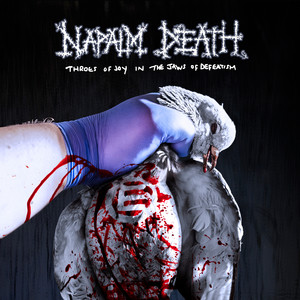 Napalm Death — Throes of Joy in the Jaws of Defeatism (2020). The fastest band in the world, still.
Throes of Joy in the Jaws of Defeatism (2020) is the band's sixteenth studio album, released thirty-three years after their debut, and it demonstrates the same commitment to political seriousness and formal extremity that Scum embodied. The title alone — a paradox that contains the entirety of the human predicament — is Barney Greenway in concentrated form. A festival willing to put Napalm Death on the same weekend as a K-pop headliner is a festival that has a genuine, non-rhetorical commitment to the full range of contemporary music.
Jennie
Jennie (Kim Jennie) is making history at Roskilde 2026: the first K-pop artist ever to headline a Danish festival, and the first solo K-pop act at the level of Orange Stage headliner at a major European festival outside of dedicated pop programming. Her trajectory from BLACKPINK — the group that, between its 2016 debut and its temporary hiatus, became the most commercially successful K-pop group in history and the first to headline Coachella — to her solo debut Ruby (2025) has been one of the most tracked stories in popular music of the mid-2020s.
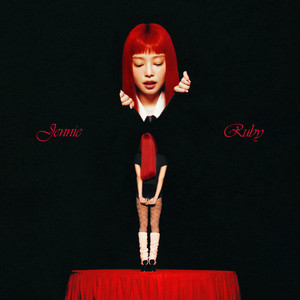 Jennie — Ruby (2025). Making festival history on 3 July.
Ruby (2025) featured collaborations with Dua Lipa, Kali Uchis, and Childish Gambino, and was produced across New York and Los Angeles in sessions that confirmed the solo project as artistically autonomous from BLACKPINK rather than a corporate product of the same machine. The album's commercial success was predictable — the fanbase was already built — but its artistic ambition was not. At Roskilde on 3 July, she becomes a footnote in history: the first. The audience will know it is watching a first.
Lily Allen
Lily Allen's It's Not Me, It's You (2009) is the record that turned her from a sharp-tongued observational pop singer into something more: the album contains "The Fear," a diagnosis of 2000s consumer culture that is more precise and more lasting than almost anything else from that moment in British pop, and "Fuck You," a song directed at George W. Bush with a chorus so cheerful that its viciousness arrives as a delayed reaction. Allen's career since has included various detours — musical theatre, memoir, a public profile that has been both celebrated and brutalised by tabloid attention — but the music from the first two albums is underrated in retrospect. The Roskilde audience will hear it with new ears.
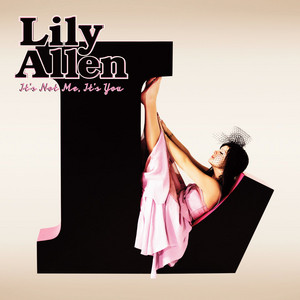 Lily Allen — It's Not Me, It's You (2009). The record that contained "The Fear."
Lykke Li
Sweden's Lykke Li has a particular significance at Roskilde — she is a Scandinavian artist performing at the most important Scandinavian festival, and her audience in Denmark is different from her audience elsewhere, more intimate in its familiarity. Her I Never Learn (2014) is the album where her talent for emotional devastation achieved maximum concentration: seven tracks, forty-three minutes, every song about loss with such formal economy that the record feels simultaneously sparse and overwhelming. "Never Gonna Love Again," "Love Me Like I'm Not Made of Stone," "Gunshot" — these are songs built from the minimum required materials.
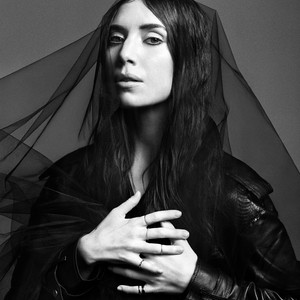 Lykke Li — I Never Learn (2014). Scandinavian precision.
Art Installations, the Cinema, and the Programme Beyond Music
One of the consistent misrepresentations of Roskilde in coverage focused on its music lineup is the reduction of the festival to its concert programme. The 90-plus art and activism projects in 2026 — from more than 30 countries — constitute a parallel programme that is not supplementary to the music but co-equal with it. These are not decorative installations placed between stages to fill space; they are curated works from artists and organisations operating at the intersection of culture and politics, with a specific focus in 2026 on themes of peace, displacement, and community.
The Cinema — returning in 2026 after its absence in recent years — screens Oscar-winning films and documentaries alongside structured debates. The programming logic of the Cinema at Roskilde is different from a commercial film festival or a screening room at a corporate event: the films are chosen to be in conversation with the broader themes of the activism programme, and the debates are designed to continue that conversation with the festival's audience.
The 2026 Roskilde site also introduces a roller disco and organised skateboarding sessions — activities that are, in a sense, the modern iteration of the hippie-era spirit of the 1971 founding. A roller disco does not make money. It makes experience. The non-profit model is what makes that decision simple.
The new stages introduced in 2026 — Fauna and Lagune — are designed with environmental integration that reflects the festival's long-standing commitment to sustainability. By 2017, ninety percent of food sold at festival stalls was organic; the container-deposit system that year recovered more than eight million items. The 2026 edition continues these programmes with the same systemic commitment. None of this is marketing. It is operationally baked into how the festival runs, because the organisation that runs it decided, decades ago, that these things matter and built them into the infrastructure rather than the press release.
The New Stages and the 2026 Site Redesign
The departures from the 2025 site configuration are significant. Three stages that existed in 2025 — Apollo, Avalon, and Gaia — do not return in 2026. Apollo was the dedicated electronic and urban music space; its absence does not eliminate that programming but distributes it across multiple venues, which the festival believes will create better genre integration and more surprising discoveries for audiences moving across the site. Avalon was the mid-sized intimate stage; Fauna, the new covered tent, is explicitly positioned as its replacement, with the same capacity range (2,000 to 5,000 depending on configuration) and the same emphasis on close-audience presentation.
The new Green Area in the northeastern section of the site, where Lagune is located, is the most radical geographic addition: a new neighbourhood built into the landscape, with its own aesthetic identity and a covered stage designed to feel like it grew out of the ground rather than was assembled on top of it. The festival describes this area as blending into the natural landscape with integrated scenography — a landscape architecture approach to stage design that reflects the Scandinavian design sensibility that has always been present in the festival's physical identity.
The Orange Stage redesign is the most consequential infrastructure change of the 2026 edition. The fourth generation of the stage maintains the visual language established in 1978 — orange canvas, curved supports, the immediate recognisability of the structure — while increasing the ceiling height by approximately thirty percent and redesigning the front-of-house area to improve both capacity and experience. The first performance on the new stage is The Cure on 1 July. The choice is appropriate: a band whose career spans almost the entire life of the original Orange Stage, playing on the night that inaugurates its successor.
Roskilde vs. the Festival-Industrial Complex
The European festival landscape in 2026 is dominated by large commercial events that have, over the past two decades, been acquired by media conglomerates, private equity funds, and global live entertainment companies. Glastonbury is the notable exception to this pattern — it remains family-run, non-corporate, with its own complex relationship to charity and non-profitability — but most of the events that attract 100,000-plus attendees are, at some level, assets on balance sheets.
Roskilde is structurally different from all of them, and the difference is not primarily aesthetic. It is financial. The non-profit model eliminates the principal-agent problem that afflicts commercial festival booking: at a profit-seeking festival, a booking decision is constrained by the question "will this return the required margin?" At Roskilde, the question is "is this the right performance for this audience at this moment?" These are different questions, and they produce different lineups.
The result is visible in the 2026 programme. A K-pop headliner alongside grindcore pioneers. Palestinian techno alongside Irish-language hip-hop. A new Cinema showing documentaries alongside a roller disco. Greenlandic artists and Ukrainian musicians in the same programme as global superstars. This is not the product of a booking committee optimising for ticket sales; it is the product of an organisation whose remit is culture and humanism rather than shareholder returns.
The €64 million donated since 1972 is the accumulated proof of this model. It is not a small number. It has funded projects in Denmark and globally, humanitarian work and cultural work, youth programmes and arts organisations. The festival's economic output is not measured in profit extracted but in charitable impact distributed. This is, in 2026, a genuinely unusual proposition in the European entertainment landscape.
The Camping Culture, the Queue, and the Social Physics of 130,000 People
To understand Roskilde fully, you have to understand the camping experience, because the camping experience is where the festival's social identity is formed. The Orange Stage and its headliners are the visible peak of the event; the eighty-hectare campsite is where the event actually lives.
The queuing for prime camping positions begins days before the gates open, with some attendees arriving on the Sunday or Monday before a Wednesday open — sleeping in their cars, managing shift rotations among friend groups, calculating angles of entry and optimal positions relative to shower blocks, food stalls, and stage access routes. When the gate opens, there is a sprint: thousands of people running with their tents and groundsheets to claim positions in a process that resembles, on video, something between a land rush and a very gentle urban stampede. The sprint is a known quantity — it is photographed every year, appears in every documentary about the festival, and has been called one of the most purely joyful spectacles in European festival culture.
The Agora structure that organises the campsite — the neighbourhood hubs with their own food, water, communal space, and services — creates a social geography that the flat grid of a commercial camping operation doesn't. People in the East Agora develop a different relationship to the festival than people in the West Agora, not because the music is different but because the social environment is different. The festival community forms in horizontal slices across the campsite in a way that mirrors how real cities work: by neighbourhood, by proximity, by the repeated encounters that proximity generates.
The Roskilde Festival Radio broadcasting from the campsite throughout the week adds another layer to this geography. The radio is not a commercial station or a marketing vehicle; it is a community institution, programming music and talk and the Naked Run announcements and weather and set-time reminders and interviews with artists and conversations with audience members that constitute a kind of continuous social narrative about what is happening across the site at any given moment. It is a piece of public broadcasting infrastructure that costs money and serves community rather than revenue — another product of the non-profit model's freedom from the obligation to maximise return.
The Roskilde Foundation: Where the Money Goes
The Roskilde Foundation, the non-profit body that receives all profits from the festival, has a formal and specific mandate: "support and strengthen music, culture and humanism." The grant-making process, reformed in 2014 to include participant input, allocates funds to organisations working in these areas globally and domestically.
In practice, the grants have supported everything from Danish youth music education to international humanitarian projects, from arts organisations in the Nordic countries to cultural programmes in the Global South. The 2014 reform — giving festival attendees the ability to nominate and vote on recipient organisations — made the philanthropy participatory rather than purely institutional: the people who come to Roskilde have a direct role in determining where the money goes. This is an unusual model in charitable giving, and it connects the act of attending the festival to the consequences of attending it in a way that most commercial events make no attempt to achieve.
The Foundation also funds the festival's own infrastructure development: the cost of the 2026 Orange Stage rebuild, the new stages, the Cinema — these are long-term capital investments by a non-profit organisation in its own cultural infrastructure. The money comes from previous surpluses rather than from external investors, which means there is no obligation to generate a return on that investment beyond the cultural value of having done it.
What 2026 Means: History Made, History Honoured
The 2026 edition of Roskilde sits at an unusual convergence. The new Orange Stage debuts with The Cure — a band whose career overlaps substantially with the entire history of the original stage. Jennie makes K-pop festival history. The festival reaches 177 artists from 37 countries, its most geographically diverse programme. Two new stages expand the site's geography. The Cinema returns. And the non-profit model that has governed the whole operation since 1972 continues to generate the surplus that gets donated to causes: education, humanism, culture, humanitarian work.
The 2000 tragedy is present at every Roskilde, inscribed in the nine trees and the stone with How fragile we are, and also in the crowd safety architecture that has been built into every subsequent edition. The safety reforms that followed 2000 have not been reversed or eroded; they have been updated and strengthened as the festival has grown and as the technology available for crowd monitoring has improved. The memorial and the architecture exist in the same site, the grief and the response to it coexisting in the physical geography of the Dyrskuepladsen.
What Roskilde has built over fifty-five years — from two high school students with a field and a vision to a 130,000-person non-profit festival that donates all its surplus to charity and programmes music from 37 countries — is not a straightforward achievement. It required, at every point, decisions that a profit-seeking organisation would not have made: booking acts that don't sell tickets because they are the right acts; maintaining a volunteer workforce of 32,000 when a paid workforce would be more controllable; giving participants a vote on where the money goes when an institutional trustee would be more efficient; building a new stage because the old one needed replacing even though the old one was functioning.
The 130,000 people who arrive in Roskilde between 27 June and 4 July 2026 will be, for eight days, the fourth-largest city in Denmark. Some of them will run naked around the campsite. All of them will spend money that ends up, eventually, supporting humanitarian causes they may not know the names of. They will hear The Cure on a new Orange Stage and Jennie making history and Kneecap rapping political fire in Irish and Gorillaz constructing their virtual world at festival scale. And they will do it in a place that has spent fifty-five years insisting that a festival can be something fundamentally different from a commercial entertainment product — and that has the receipts to prove it.
Sources
Roskilde Festival official lineup announcement: roskilde-festival.dk/en/news/full-line-up-and-schedule-revealed
Roskilde Festival 2026 renewals and new stages: roskilde-festival.dk/en/news/renewals-in-the-festival-city-in-2026
New stages 2026 — Fauna, Lagune, Orange Stage rebuild: roskilde-festival.dk/en/news/here-are-the-new-stages-and-the-cinema-returns
Roskilde Festival 2026 final lineup additions (Jennie, Ken Carson, Sama' Abdulhadi): stilllisteningmagazine.com/features/roskilde-festival-completes-2026-lineup-with-jennie-ken-carson-and-more
Roskilde Festival history and Wikipedia overview: en.wikipedia.org/wiki/Roskilde_Festival
Pearl Jam Roskilde tragedy, 25 years on: euronews.com/culture/2025/06/30/how-fragile-we-are-roskilde-festival-tragedy-remembered-25-years-on
Rolling Stone, "Nine Dead at Pearl Jam Concert": rollingstone.com/music/music-news/nine-dead-at-pearl-jam-concert-235167/
Roskilde founding history (Danish): roskildenyt.dk, "Jesper og Mogens lavede den allerførste Roskilde Festival"
Orange Stage history: orangecamp.dk/Eng/html/history.html
The Naked Run tradition: chillisauce.com/blog/post-d1b1c0dc4455fdf809ed
Jambase Roskilde 2026 lineup by day: jambase.com/festival/roskilde-festival-2026
Roskilde Festival volunteer and charity facts: musicfestivalwizard.com/festivals/roskilde-festival-2026
Gorillaz, Cracker Island: open.spotify.com/album/4wtZQMNTC1O79kDxMBsEan
Gorillaz, Demon Days: open.spotify.com/album/0bUTHlWbkSQysoM3VsWldT
The Cure, Disintegration (Remastered): open.spotify.com/album/6DZNOsLXIU2zOQfQDwDpIS
Little Simz, Sometimes I Might Be Introvert: open.spotify.com/album/4xCbgnq65GRQKSAkH1RExU
KNEECAP, Fine Art: open.spotify.com/album/6Wt3uI8G0yhXSvC0jAl9Cg
Ethel Cain, Preacher's Daughter: open.spotify.com/album/3WmujGwOS0ANHkJRnMH6n8
Wolf Alice, Blue Weekend: open.spotify.com/album/1VCTWaze9kuY5IDlbtR5p0
Clipse, Let God Sort Em Out: open.spotify.com/album/17ScNnJ0lSWajodZaRpHdQ
David Byrne, Everything That Happens Will Happen Today: open.spotify.com/album/0mqvus9jydETK3A63iIG09
Napalm Death, Throes of Joy in the Jaws of Defeatism: open.spotify.com/album/4O3oSTv5mauxfXPdMRrayQ
Jennie, Ruby: open.spotify.com/album/1vWMw6pu3err6qqZzI3RhH
Lily Allen, It's Not Me It's You: open.spotify.com/album/2OUL7ZpAvUaWyylZ1lXpe0
Lykke Li, I Never Learn: open.spotify.com/album/4fGqfyineAZmulNxgitERh