Reading & Leeds 2026: Twin Sites, Six Headliners, and Sixty-Five Years of Beautiful Chaos
Reading & Leeds 2026 (27–30 Aug): Fontaines DC, Charli XCX, Florence + The Machine headline the UK's defining youth festival — history, lore, and lineup deep-dive.
By Gabin Fay
Every year, on the August bank holiday weekend, a very particular kind of young person makes a very particular kind of pilgrimage. They descend on Richfield Avenue in Reading and Bramham Park in Leeds — sometimes in wellies already caked from previous years, sometimes for the very first time, fresh from results day, heart still hammering from whatever letter arrived that Thursday morning. A-level results and Reading & Leeds have been calendrically entangled for decades now: the festival falls almost exactly on the Thursday-to-Sunday that follows GCSE and A-level envelope-opening, and for hundreds of thousands of British teenagers, the two events form a single rite of passage — the envelope, the number, the phone call, and then four days in a field that does not care about any of it.
This is not an accident. The festival's position on the calendar — always the bank holiday that falls between mid and late August — was cemented in 2003, and it corresponds almost perfectly with the rhythm of the English academic year. For many attendees, Reading or Leeds is the first festival they ever attend. It is the first time they camp without parents. The first time they hear a band that will matter to them for the rest of their lives. It is also, frequently, the first time they see a proper tent fire, witness a bottle arc toward a stage, or navigate a campsite that has descended into something approximating low-grade bedlam. The festival accommodates all of these things simultaneously and has done so, in one form or another, for over sixty years.
The 2026 edition — running 27 to 30 August at Richfield Avenue in Reading and Bramham Park in Leeds — represents the most significant evolution the festival has undergone in at least two decades. Six main-stage headliners (plus a Thursday headliner exclusively for Leeds), a full rebrand, a brand-new purpose-built dance stage called The Warehouse, and a lineup that consciously breaks from the festival's long-standing rock identity. It is, by design, a new Reading & Leeds. Understanding why that matters — and why it is both bold and inevitable — requires going back to the beginning.
→ Reading & Leeds 2026 — the 50-track lineup playlist (generated by Playgen)
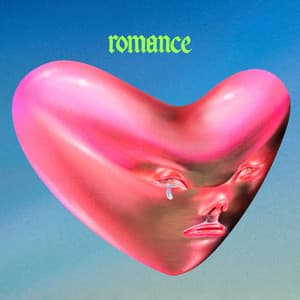
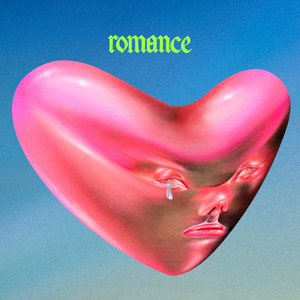 Fontaines D.C. — Romance (2024). The headliner that arrived first.
From Richmond to Reading: The Long Journey to Little John's Farm
The festival that became Reading began as something entirely different: a celebration of British jazz. Harold Pendleton, the founder of the Marquee Club in London's Soho, founded the National Jazz Federation and drew inspiration from the Newport Jazz Festival in Rhode Island, which had been running since 1954. The first National Jazz Festival took place on 26–27 August 1961 at the Richmond Athletic Ground in Surrey — a genteel, affluent south London suburb that bore almost no relationship to the culture that the festival would eventually become. The headline acts were Johnny Dankworth and Chris Barber, pillars of the British trad jazz scene, and the audience was largely composed of jazz enthusiasts who could have been mistaken for attendees at a garden party.
The transformation began immediately and was driven entirely by the music that was happening around the festival rather than within it. In 1963, rhythm and blues acts were added to the bill — including the Rolling Stones, Georgie Fame, and Long John Baldry — and the balance of the festival shifted irrevocably. By 1964, the event had renamed itself the National Jazz and Blues Festival, acknowledging what was happening. By 1965, jazz was being reduced to Saturday and Sunday afternoon slots while the evenings were given over to rock. By 1967, the headliners were Cream, Fleetwood Mac, and Jeff Beck.
The festival moved to Windsor Racecourse in 1966, outgrowing Richmond. It moved again in 1971, to Little John's Farm on the south bank of the River Thames in Reading, Berkshire — the site at Richfield Avenue that it has occupied, with minor boundary adjustments, ever since. The 1971 move was the one that stuck. The infrastructure at Reading — its proximity to the M4, its relationship to the Thames, the flat expanse of the park — made it the permanent home. The festival was now called the Reading Festival, and over the course of the 1970s, it would be transformed from a folk-rock weekend into one of the defining events in British heavy music.
The 1970s Reading Festival was a rock festival in the most specific sense: the crowds were predominantly male, the lineup was predominantly guitar-driven, and the culture was aggressively working class in a way that distinguished it from Glastonbury, which had emerged from a more countercultural, hippie-adjacent tradition. Reading had no mystical farming mythology, no healing fields, no acoustic café. It had a main stage, a tent, very bad sanitation, and increasingly anarchic audience behaviour.
The Canning of 1973 and the Culture of Flying Objects
The bottling tradition at Reading — the practice of hurling half-full beer cans, plastic bottles, and eventually more elaborate projectiles at performers — is as old as the mass rock era of the festival. The first large-scale "cannings" occurred in 1973 and 1974, when audiences who had come to see specific headliners took out their impatience or displeasure on support acts with a physicality that would be unthinkable today. By 1975, it had evolved into something more formalised: a rain of cans after every act, regardless of how well received the performance had been, had become something close to ritual. The "Can Alley" designation for the area in front of the stage was not ironic — it was descriptive.
The tradition reached its most infamous expression in 1977, when the festival officially rebranded as Reading Rock and an almighty downpour created a sea of mud across the site. The mud democratised the throwing: anything could be thrown. Mud clods, bottles, cans, combinations thereof. The Electric Chairs, making the first punk appearance at Reading that year, were pelted comprehensively. The lesson that many performers drew from this — and that festival organisers eventually institutionalised — was that audience approval and audience projectile behaviour had an imprecise relationship. Being hit by a mud-soaked can could signify adoration or contempt with equal probability.
The most notorious single instance of bottling occurred in 1988, when a catastrophic attempt to pivot the festival toward mainstream pop resulted in Meat Loaf, Bonnie Tyler, and Starship facing a crowd that had come expecting hard rock and was entirely unwilling to pretend otherwise. Meat Loaf was forced from the stage twenty minutes into his set after a direct hit from a two-litre cider bottle. Bonnie Tyler received similar treatment. Starship, whose We Built This City was at the time widely considered the worst song ever recorded, survived but had no good time doing so. The 1988 festival is remembered as the nadir of the booking philosophy — and the beginning of a crisis.
The Dark Years: 1984, 1985, and the Near-Death of the Festival
The bottling disaster of 1988 was dramatic, but the Reading Festival had already survived something more existential: it had ceased to exist entirely for two years, not through lack of demand but through political opposition. In 1984, the Conservative-controlled Reading Borough Council effectively banned the festival by designating the site for development and refusing to grant licences for any alternative location in the area. A full lineup had been booked for Lilford Park in Northamptonshire as an emergency alternative — but that council, too, refused the licence at the last possible moment.
There was no Reading Festival in 1984 or 1985.
The festival returned in 1986 after the Labour Party regained control of the Reading Borough Council, with one of its explicit manifesto commitments being to bring the festival back. A lineup was assembled in three months — headlined by The Mission, Alice Cooper, and Status Quo — and the event resumed at fields adjacent to the original site. The two-year absence had a clarifying effect: it confirmed that the festival was not just an entertainment event but something that a significant portion of the population regarded as a civic institution worth fighting for politically.
The Mean Fiddler organisation took over the management of the festival in 1989, bringing Melvin Benn into a role that he would occupy for the next three and a half decades. Benn's first years were marked by a dramatic shift in curatorial direction: the new management pushed toward an indie and goth aesthetic that reflected what was happening in British music at the time but alienated the traditional rock audience that had formed the festival's base. Attendance fell between 1989 and 1991. The festival was still alive, but barely recognisable to fans who remembered the rock-centric editions of the mid-1970s and early 1980s.
1992: Nirvana, a Wheelchair, and the Set That Changed Everything
The recovery began in 1992, and it began with Nirvana.
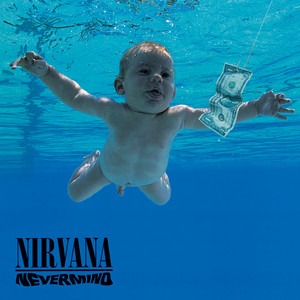 Nirvana — Nevermind. The record they carried into Reading '92.
Nirvana's headlining set at the 1992 Reading Festival on 30 August — which would prove to be the band's last performance on British soil — took place under circumstances that could hardly have been worse. Kurt Cobain had recently become a father. Press reports had been circulating for weeks about his heroin use and the possibility that the band was dissolving. Rumours were so persistent that significant portions of the Reading audience that evening genuinely believed Nirvana might not appear at all. Dave Grohl, decades later, recalled arriving at the site and encountering the rumour machine in full operation: nobody was sure the band would play.
What Cobain did instead was arrive on stage in a wheelchair — pushed by members of the crew, dressed in a blonde wig and hospital gown — and allow the audience's uncertainty to curdle into something that felt, briefly, like horror. Then the band kicked into "Breed," and everything came undone in the best possible way. The set that followed was not the performance of a band on the edge of collapse; it was ferocious, precise, and emotionally overwhelming in ways that the press reports of the preceding weeks had made impossible to anticipate.
Grohl later described it as "a really reassuring, genuinely magical moment of everything coming together at the right time." The Live at Reading album, released in 2009, captured the set in full. The performance remains one of the two or three most discussed events in the festival's entire history — and the context of the subsequent tragedy (Cobain died in April 1994) has given it a weight that makes it nearly impossible to discuss in purely musical terms. But even stripped of retrospective significance, it was the performance that confirmed Reading could accommodate something beyond genre boundaries and marketing categories: it could hold myth.
Festival Republic and the Making of a Twin
Melvin Benn's Mean Fiddler organisation gradually stabilised the festival through the 1990s. The curatorial approach broadened. The audience grew younger and, as the decade progressed, increasingly diverse in its musical taste. Britpop changed the landscape — not just musically but demographically. Reading in the mid-1990s was where Blur, Pulp, Elastica, Sleeper, and their cohort defined what British guitar music could be for a generation that had grown up entirely after punk.
The structural decision that changed the festival most fundamentally arrived in 1999, when Benn created a sister event: the Leeds Festival, held at Temple Newsam in West Yorkshire over the same August bank holiday weekend. The twin-site model was a logistical innovation as much as an artistic one. By mirroring the Reading lineup (with acts playing Reading on Friday night playing Leeds on Saturday, and vice versa), the organisers doubled total capacity without doubling artist fees. The arrangement served audiences in the north of England who had previously been excluded from the festival by geography. It served the artists, who received a second fee for what amounted to a second night on the same tour. And it served the organisation, which now had two sites generating revenue from a single booking infrastructure.
The Leeds edition launched to strong attendance and immediately established its own identity — partly by virtue of its site, which was different in character from the Reading meadow, and partly through the accidents of local culture that always shape festival experiences in ways organisers cannot entirely anticipate. The Leeds crowd had a reputation for being rowdier than Reading's, a perception that became self-fulfilling as word spread and the two sites developed distinct atmospheres.
The first major crisis at Leeds came in 2002, on the final night of the festival at Temple Newsam. Rioting across several campgrounds resulted in 44 injuries, £250,000 in damages, and ten hours of disorder before order was restored. West Yorkshire Police, the festival organisers, and Leeds Council all regarded the event as a catastrophic failure of crowd management. The fallout led directly to the festival's relocation — in 2003, Leeds moved to Bramham Park, northeast of the city, where it has remained ever since. The Bramham Park site, with its more controlled access and different spatial organisation, significantly altered the chaotic character that had defined Temple Newsam.
The Mean Fiddler organisation was rebranded as Festival Republic in the early 2000s, with Benn at its head. The corporate structure evolved further when Live Nation acquired the organisation, giving it the promotional infrastructure of a global entertainment conglomerate while retaining Benn's day-to-day creative control over the booking. This arrangement — creative independence within corporate ownership — has defined the festival's character ever since.
The BBC Radio 1 Effect: How the Festival Makes Stars
No account of Reading & Leeds is complete without a serious examination of the BBC Radio 1 relationship, because that relationship has been one of the primary mechanisms through which the festival has functioned as a star-making machine for three decades.
BBC Radio 1's coverage of Reading & Leeds is not merely promotional; it is editorial. The station has broadcast live sets from the festival for years, and the selection of which sets to broadcast, which to give primetime slots, and which to archive and resurface later constitutes a form of curatorial power that shapes how the festival is remembered and how careers are made within it. An artist who delivers a Reading set that Radio 1 chooses to broadcast to millions has a fundamentally different cultural footprint afterward than one whose set exists only in audience recordings and bootlegs.
The Arctic Monkeys story is the canonical example. The Sheffield band played the Carling Tent at Reading in 2005 — their first appearance at the festival — and delivered a set that already demonstrated the unusual chemistry of a band whose fanbase had preceded their commercial debut through internet distribution and grassroots word of mouth. In 2006, they returned to a slot just below Muse on the main stage, and the performance — described by reviewers at the time as "low on spectacle but high on musical fire" — confirmed their trajectory. By 2009, they were headlining both sites for the first time, supporting their third album Humbug, in what NME described as a set that cemented their status as the defining British band of their generation. They returned to headline again in 2013 and 2022. The Radio 1 broadcasts of those 2009 and later sets are still referenced as formative listening experiences by a generation of British music fans.
The pattern — smaller stage, bigger stage, headline — is not unique to the Arctic Monkeys. It is the standard career arc for artists who make Reading & Leeds their primary UK festival focus: Muse, Kasabian, Florence + The Machine, Frank Turner, and dozens of others have followed versions of the same trajectory. Radio 1's decision to cover those early sets, to replay them, to build documentary and review content around them, is what gives the arc its cultural weight. The festival alone does not make these careers; the broadcast relationship does.
The Under-18 Question: What the Demographic Does to the Lineup
Reading & Leeds is, structurally, a young person's festival in a way that most major European events are not. The A-level results alignment is real: the festival falls in the week that follows GCSE and A-level results day, and the audience skews accordingly. A significant proportion of Reading and Leeds attendees in any given year are between sixteen and twenty — many attending their first festival, many using it as the social event that marks the end of their school years.
This demographic fact has real consequences for the booking. An artist who is enormous among sixteen-year-olds in August may not be enormous among the twenty-five-year-old independent music listener who defines the critical conversation. The programming has to bridge both audiences simultaneously. This is part of why Reading & Leeds has historically maintained a booking policy that would look incoherent if you tried to apply a single genre framework to it: heavy rock and pop punk alongside grime and R&B alongside indie and post-punk. The audience is not a single community but a superimposition of overlapping cohorts, each attending the same event for different reasons.
The under-18 policy — anyone under eighteen must be accompanied by an adult, and the festival does not admit those under thirteen at all — creates a specific kind of social atmosphere. The youngest attendees are old enough to have developed real musical opinions but young enough to be experiencing the physical and social experience of festival-going for the first time. The combination of genuine musical enthusiasm and first-time sensory overload produces the particular energy that defines Reading and Leeds more than any single artist or booking.
2025/2026: The Multi-Headliner Pivot
The 2026 lineup represents the clearest articulation yet of a strategic shift that Melvin Benn and Festival Republic began signalling in the 2024 and 2025 editions: the decision to move away from three rock-adjacent headliners toward a broader, multi-genre approach with six headline slots.
The traditional Reading & Leeds model — three headliners, broadly rock-inflected, sharing the main stage across Friday, Saturday, and Sunday evenings — had served the festival for decades. But it had also created a structural problem. As rock's commercial dominance declined in the streaming era, the pool of credible rock headliners capable of drawing 100,000-person crowds on consecutive nights shrank. The festival's insistence on rock adjacency as the primary booking criterion was limiting the pool of available talent at exactly the moment when the talent pool was most in need of diversification.
The 2026 solution is six headliners across four days (with Leeds getting an additional Thursday headliner in Kasabian), drawn from genres that span the entire contemporary landscape: post-punk (Fontaines D.C.), art-pop (Charli XCX), alternative soul (RAYE), neo-psychedelic orchestral rock (Florence + The Machine), UK hip-hop (Dave), and drum and bass (Chase & Status). It is the first time in twenty-five years that all headliners at Reading & Leeds have been British or Irish. That fact is being foregrounded by the festival as a statement of identity — a return, in some sense, to the roots of a festival whose most historically significant moments have usually involved British artists.
The rebrand goes further than the lineup. A new sponsor (Pepsi), a new visual identity, and the addition of The Warehouse — a purpose-built dance stage with what the festival describes as "cutting-edge sound and state-of-the-art lighting for a fully immersive club experience" — signal a conscious attempt to attract a demographic that has historically gravitated toward Glastonbury, Parklife, or Creamfields rather than Reading. The Warehouse's headline bookings include Skepta b2b Prospa at Reading and Skepta b2b East End Dubs at Leeds, alongside Mall Grab, Hedex, and Silva Bumpa: a credible claim on the electronic music audience rather than a token gesture toward it.
The Six Headliners: What Each Brings
Fontaines D.C. are the headliner that feels most continuous with the festival's history while being genuinely contemporary. The Dublin quintet formed in 2017, released their debut Dogrel in 2019 to Mercury Prize nomination, and have spent the seven years since building a career that has moved from post-punk intensity to something broader and stranger. Romance (2024), their fourth album, is their most sonically ambitious record: produced by James Ford with a scope that encompasses shoegaze, orchestral pop, and baroque arrangements alongside the stripped-back guitar ferocity of their early work. They are headlining Reading & Leeds 2026 as their only UK festival appearance of the year, which is a significant booking.
Fontaines D.C. — Romance (2024). Their first headline festival slot at R&L.
What Fontaines D.C. bring to a main stage is something the festival has always valued: the ability to generate a collective experience that transcends casual fandom. Their songs — "Starburster," "Romance," "Concrete Man," the older "Boys in the Better Land" — are written for crowds. Grian Chatten's vocal delivery, which has evolved from barked punk-poetry to something more theatrical and emotionally exposed, projects at scale in ways that reward the distance of a festival audience as much as the intimacy of a smaller venue.
Florence + The Machine are the closest thing on the 2026 bill to a legacy act — but legacy in the most active sense. Florence Welch's band released their sixth album Everybody Scream in October 2025, and the Everybody Scream tour, which ran through North America in spring 2026, confirmed that the new material translates to arena and festival scale. The album emerged from a period of physical recovery — Welch underwent lifesaving surgery during the Dance Fever tour — and the themes of womanhood, mortality, and spiritual transformation give it a weight that the festival format will struggle to contain but will certainly amplify.
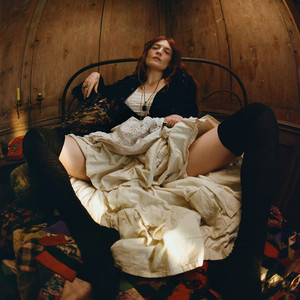 Florence + The Machine — Everybody Scream (2025). The record behind the headline.
Florence + The Machine have headlined Reading before, and the band's relationship with the festival is longstanding. What makes them interesting on the 2026 bill is the specific weight of the new album alongside a back catalogue that contains some of the most festival-proven songs of the past fifteen years. "Dog Days Are Over," "Shake It Out," "Hunger," "You've Got the Love": each of these has been played in front of large outdoor crowds often enough that the crowd participation is now intrinsic to the experience of hearing them. A Florence headline at Reading will be, among other things, a large-scale sing-along mediated by grief and the particular catharsis of outdoor collective music-making.
Dave — the South London rapper born David Orobosa Omoregie — is the headliner whose presence signals most clearly the demographic and genre shift that the 2026 festival represents. His debut album PSYCHODRAMA (2019) won the Mercury Prize and the Brit Award for Album of the Year. His second album We're All Alone in This Together (2021) debuted at number one in the UK with the biggest first-week sales for a UK hip-hop album since 2010. Both records demonstrate the range that makes him an unusual festival headliner: he is a rapper who writes piano-based verse-essays, who has made a string quartet feel essential, who has performed spoken word at the Brit Awards to a mainstream television audience that is rarely asked to sit with that much density of content.
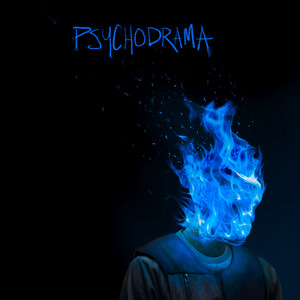 Dave — PSYCHODRAMA (2019). Mercury Prize winner and the foundation of a headline career.
The question for a Dave set at Reading & Leeds is not whether he can fill a main stage — he can — but what a Reading & Leeds audience expects from him. His live performances lean into the theatrical and the emotionally demanding in ways that are unusual for a festival main stage. He is capable of commanding absolute silence in front of 100,000 people and making that silence feel like the right choice. That capacity is rare.
Charli XCX is the headliner whose 2026 festival appearances carry the largest accumulated cultural momentum. BRAT (2024) was, by several measures, the most culturally significant album of its year: it reached number one in the UK, New Zealand, Australia, and Ireland; it influenced a US presidential campaign; it won three Grammy Awards including Best Dance Pop Recording and Best Dance/Electronic Album; and it generated the concept of "brat summer" as a functional cultural category that extended well beyond music into fashion, social media, and politics.
 Charli XCX — BRAT (2024). The record behind the headline.
What makes Charli XCX's Reading & Leeds headline significant is the specific relationship she has with the festival's core demographic. Her audience is overwhelmingly young — precisely the sixteen-to-twenty-four cohort that Reading & Leeds targets — and BRAT is the kind of album that functions as a generational text in ways that transcend individual taste. Whether or not an individual festivalgoer considers themselves a Charli fan, they will likely know the record's most prominent moments by sound. That kind of ambient cultural penetration is what makes a headline set work at a festival the size of Reading.
RAYE — South London singer-songwriter Rachel Agatha Keen — headlining Reading & Leeds 2026 represents perhaps the most improbable career arc in the current UK music landscape. Her debut album My 21st Century Blues (2023), released independently after she spent years as a behind-the-scenes songwriter and co-writer for other artists, was the highest-rated album on Metacritic in 2023. In 2024, it won British Album of the Year at the Brit Awards, where she set the record for the most wins in a single ceremony. The album — which addresses drug addiction, body dysmorphia, and sexual assault with a directness that remains unusual in mainstream pop — spans R&B, jazz, soul, and dance in ways that refuse easy genre classification.
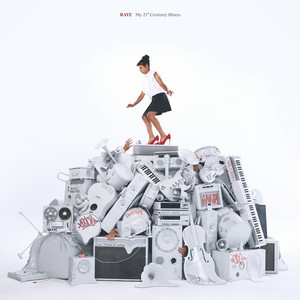 RAYE — My 21st Century Blues (2023). The record that changed everything.
A RAYE main-stage set at Reading will test something interesting: whether her mode of emotional directness — she performs My 21st Century Blues as an emotionally unmediated document, not as a pop performance — translates to a festival audience of predominantly younger people who are hearing her in a social context rather than an intimate one. The evidence from her previous festival appearances suggests it does. The songs are large enough to hold the weight of 100,000 people.
Chase & Status (Saul Milton and Will Kennard) are the headliner who represent the specific drum and bass tradition that has been central to British music since the mid-1990s but has rarely occupied a festival main-stage headline slot at this level. The duo have been performing live since 2008, and RTRN II JUNGLE (2019) — their return to the harder, faster roots of jungle and drum and bass after a period of more mainstream production — demonstrated that their understanding of what makes the genre work at large scale remains intact.
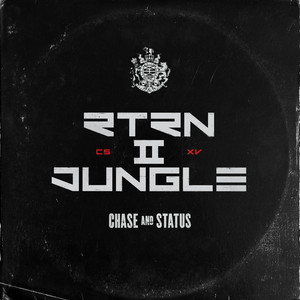 Chase & Status — RTRN II JUNGLE (2019). The record behind the headline.
Chase & Status's Reading & Leeds 2026 appearance is billed as their only live show of the year, which gives it a scarcity that the usual festival logic of catch-them-or-miss-them amplifies considerably. Drum and bass has a specific relationship with outdoor events: the sub-bass frequency that defines the genre's architecture is most fully experienced in outdoor settings with high-end PA systems, which is precisely what the Reading and Leeds main stages provide. The prospect of 100,000 people processing those frequencies simultaneously is not nothing.
The Support Cast: Kneecap, Skepta, Loyle Carner, Geese, and the Rest
Below the six headliners, the 2026 lineup contains some of the more interesting sub-headliner programming in the festival's recent history.
Kneecap — the Belfast Irish-language rap trio Mo Chara, Móglaí Bap, and DJ Próvaí — are the most politically combustible act on the bill. Their debut album Fine Art (2024), produced by Toddla T and featuring a guest appearance from Fontaines D.C.'s Grian Chatten, was a Mercury Prize shortlisted record that managed to be simultaneously a genuine commercial breakthrough and an uncompromised statement of Irish republican identity. They rap in a mixture of English and Irish, they have attracted significant political controversy (including attempts to cancel their festival appearances over political statements), and their Reading & Leeds set will almost certainly be the most contested and discussed of the festival.
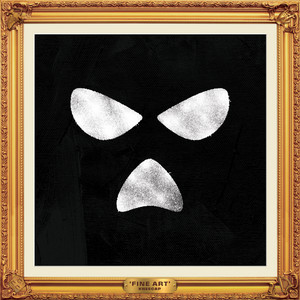 KNEECAP — Fine Art (2024). Their only UK festival appearance that matters.
Skepta carries the weight of a career that spans the entire modern grime era. Konnichiwa (2016) is still the high-water mark — the Mercury Prize-winning album that made grime legible to a mainstream audience without compromising its structural DNA — and his presence at the festival anchors the grime-to-UK rap lineage that runs from Roll Deep to Dave via Boy Better Know and Section Boyz. His b2b sets in The Warehouse with Prospa (Reading) and East End Dubs (Leeds) are separate from whatever main stage appearance he makes, and the dual mode — Skepta as rap headliner and Skepta as club DJ — reflects the particular restlessness that has defined his career post-Konnichiwa.
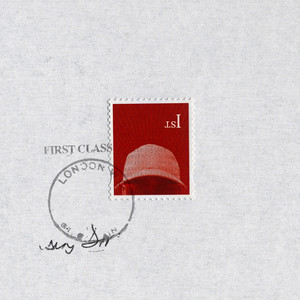 Skepta — Konnichiwa (2016). Still the canonical grime festival moment.
Loyle Carner — Croydon rapper and producer James Ryan Khalil — is a Reading-only exclusive in 2026. His third album hugo (2022), named for his late stepfather, is the most emotionally and musically ambitious thing he's recorded: a record about fatherhood, grief, identity, and the specific conditions of growing up mixed-race in south London, made with a musical palette that incorporates jazz, spoken word, and neo-soul. His festival sets are increasingly acclaimed as examples of what hip-hop can do at outdoor scale when the artist is not afraid of emotional complexity.
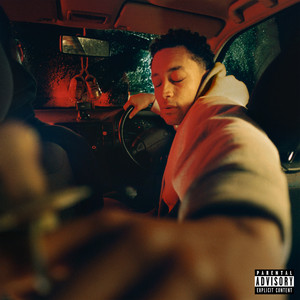 Loyle Carner — hugo (2022). Reading-only exclusive.
Geese — the New York five-piece who have become one of the most genuinely exciting guitar bands operating anywhere in the world — occupy a fascinating position on the 2026 bill. Their second album 3D Country (2023) is an astonishing document: a record that takes the formal traditions of classic American rock — country, Southern rock, Springsteen-adjacent heartland music — and runs them through a post-punk sensibility that makes everything feel simultaneously familiar and completely alien. They are one of the few bands on the bill who are not yet known quantities for most Reading & Leeds attendees, which makes their set one of the ones to seek out.
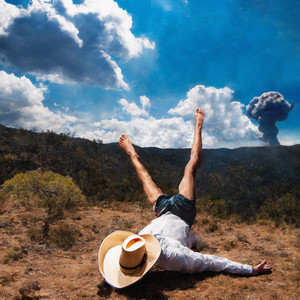 Geese — 3D Country (2023). The act to catch below the headliners.
Declan McKenna has been a Reading & Leeds fixture since appearing in the smaller stages as a teenager. His second album Zeros (2020), produced by Giancarlo Ferreri and recorded during the pandemic, is a glam-influenced art-rock record that confirmed his trajectory from landfill indie to something more formally interesting. His 2026 slot, which follows several years of increasingly prominent festival appearances, positions him as a genuine contender for the headline tier in the coming years.
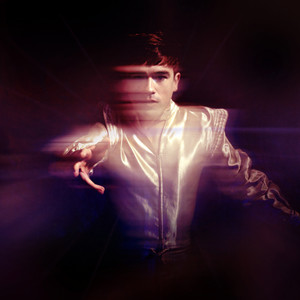 Declan McKenna — Zeros (2020). The Reading & Leeds trajectory continues.
The Warehouse: A New Stage, a New Audience
The addition of The Warehouse as a purpose-built dance stage represents the festival's most concrete acknowledgment that the electronic music audience it has historically failed to serve has become too large and too commercially significant to ignore. Reading & Leeds has always had some electronic presence — from the dance tents of the 1990s through to various electronic bookings in subsequent decades — but nothing that could credibly claim to compete with dedicated electronic festivals.
The Warehouse changes that. It is not a tent or a field stage but a permanent structure, built specifically for the acoustic and atmospheric requirements of club-oriented electronic music. The distinction matters: club sound systems are fundamentally different from festival PA systems, and the decision to build a venue that accommodates those requirements is a significant infrastructure investment.
The bookings for The Warehouse in 2026 reflect a genuine understanding of where electronic music is right now: Skepta's b2b sets (different partners at each site) occupy the grime-to-club intersection; Mall Grab represents the deep house and disco tradition; Hedex represents drum and bass in its UK dance music context rather than its main-stage festival context; Chris Stussy and Kettama represent the techno and house end. These are not compromise bookings designed to gesture at the electronic audience — they are the actual artists that audience attends dedicated events to see.
The Twin Sites: What's Different Where
The Reading and Leeds editions of the festival are nominally identical, but anyone who has attended both knows the differences are real.
Reading's Richfield Avenue site is flat, riverside, and surrounded by the suburban geography of a large county town. The proximity to central Reading means the festival is more integrated with the city than Leeds is with its surroundings — Reading residents are aware of the festival in ways that Bramham Park locals are not. The site layout concentrates the stages in a relatively compact arrangement, and the crowd density at peak moments is among the highest at any UK festival.
Leeds at Bramham Park is a country estate — the grounds of a Georgian country house — and the festival's spatial relationship to the site gives it a character that Reading's flat meadow cannot replicate. The hills and valleys of Bramham Park create natural acoustic pockets and sightline variations that Reading's flatness forecloses. The Leeds crowd, historically and in perception, skews slightly more chaotic — the 2002 riots at Temple Newsam are still part of the institutional memory even twenty-four years later — but Bramham Park's layout and security infrastructure has produced a substantially different atmosphere from the Temple Newsam years.
For 2026, the site-specific differences include Kasabian headlining the main stage at Leeds on the opening Thursday — the first time a Thursday headliner has played the main stage at either site, and a Leeds-exclusive booking that gives the northern edition a distinct event identity. The Lathums and The K's are Leeds-only additions to the broader lineup; Gunna, Men I Trust, and Loyle Carner are Reading-only.
The Mud Lore: Why Rain Is Structural
You cannot discuss Reading or Leeds without discussing mud. The mud is not incidental to the festival experience; it is constitutive of it. The 1977 Reading mud lake in front of the stage established the pattern: every subsequent generation of attendees has a muddy edition as a formative reference point, and the infrastructure the festival has developed to manage it — the duckboarding, the designated routes, the wellies economy — is itself a kind of tradition.
The specific phenomenology of Reading mud is well documented by veterans. It is not Glastonbury mud, which has a romantic, theatrical quality that has been aestheticised in festival photography for decades. Reading mud is functional and often hostile — it accumulates in the paths between stages, at the entry and exit points, and in the campsite corridors where thousands of feet compact the ground into something that defeats ordinary footwear within hours. The physical experience of navigating Reading or Leeds in rain — the suction of each step, the specific smell of churned waterlogged earth mixed with the effluvia of 100,000 people — is something that no documentation fully captures and no first-timer is fully prepared for.
The festival has made various attempts to mitigate the worst of it through ground management, temporary surfacing, and site design. None of them has eliminated it. The mud is too deeply embedded in the identity of the event for its elimination to be either achievable or, arguably, desirable.
2026 and the Question of What the Festival Is
The 2026 rebrand — the new visual identity, The Warehouse, the six headliners, the all-British-and-Irish headline bill, the Kasabian Thursday at Leeds — raises a question that Melvin Benn and Festival Republic have been deliberately and carefully not answering: what is Reading & Leeds for?
For most of its history, the answer has been relatively clear: Reading & Leeds is the rock festival for British teenagers. It is the festival where you see the big guitar bands and the emergent indie acts that define British music culture in any given year, in conditions that are deliberately uncomfortable and socially anarchic enough to generate the shared adversity that live music at its best produces. That identity was never entirely accurate — the festival has always booked hip-hop, dance, and pop alongside its rock core — but it was the dominant narrative, and the dominant narrative shapes what audiences expect and what artists deliver.
The 2026 lineup disrupts that narrative in ways that are hard to reverse. By headlining Chase & Status and Charli XCX alongside Fontaines D.C. and Florence + The Machine, the festival is explicitly claiming that it is not a rock festival but a festival for young British music in all of its current forms. That is a larger and more ambitious claim, and it requires a different kind of programming judgment to sustain over multiple editions.
The risk is that the broadening dilutes the specific identity that made Reading & Leeds matter — the sense that this is where British guitar music is decided and where new bands earn their stripes. The opportunity is that a festival willing to hold post-punk, drum and bass, art-pop, hip-hop, and Irish-language rap in the same weekend without hierarchy might be capable of reflecting where British music actually is in the mid-2020s, rather than where it was in 1992.
The 2026 edition will not answer that question definitively. But it will be the most important data point in the festival's recent history, and the 100,000 people who attend each site — many of them collecting their A-level results the previous Thursday, all of them navigating the mud, the bottles, the tents, the sound systems, and the particular experience of being part of something too large and too various to fully comprehend — will constitute the experiment.
The 2026 Playlist: 50 Tracks From Across the Bill
Any honest attempt to represent Reading & Leeds 2026 through a playlist faces a structural challenge: the festival's best quality is its plurality. There is no single sonic through-line that connects Fontaines D.C. to Charli XCX to Chase & Status to Kneecap to Geese. The connecting tissue is something more like demographic — these are acts that matter to a specific generation of British and Irish music listeners in 2026, regardless of genre.
The playlist that Playgen generated from the 2026 lineup attempts to honour that plurality: one track per artist, drawn from the most representative single moment in each act's catalogue rather than the most commercially familiar. The result is fifty tracks that sit together awkwardly in ways that are deliberate and illuminating — the same kind of productive awkwardness you encounter when you move between stages at the festival itself.
→ Reading & Leeds 2026 — the 50-track lineup playlist (generated by Playgen)