
Mad Cool 2026: Ten Years, Four Nights, and Spain's Biggest Stage in Madrid
Mad Cool 2026 guide: July 8–11 at Iberdrola Music Madrid, Foo Fighters, Florence + The Machine, Twenty One Pilots, Nick Cave headlining the festival's 10th anniversary.
By Gabin Fay
There is a specific kind of discomfort that only a summer festival in Madrid can produce. You arrive at the venue in the late afternoon and the ground radiates heat that absorbed all day through tarmac and concrete and dry soil, and the thermometer still reads somewhere above 35°C even as the sun finally tilts toward the Sierra de Guadarrama to the west. You are in Villaverde, a working-class district in the south of the city that nobody ever told you to visit, standing in front of 185,000 square metres of the most elaborately engineered festival site in Spain, and the heat is structural — it is not weather, it is a condition of the place and the time of year. Every decision that Mad Cool Festival makes about scheduling, staging, shaded areas, water distribution, and capacity is made in negotiation with that heat. Every attendee who comes from northern Europe and hasn't packed sunscreen at factor 50 is going to learn about it very quickly.
Mad Cool Festival turns ten years old in 2026, and the anniversary edition — July 8 to 11, 2026, at Iberdrola Music in Villaverde — is constructed explicitly as a celebration of what the festival has become over a decade that included a catastrophic acrobat death, logistical disasters, a venue relocation, a global pandemic, and a recovery arc that has left it in arguably the best shape it has ever been in. Over seventy artists are confirmed across four nights. Foo Fighters, Florence + The Machine, Twenty One Pilots, and Nick Cave & The Bad Seeds headline one night each. Below the headlining tier, you find Lorde, Pulp, Wolf Alice, Kings of Leon, Halsey, Pixies, The Black Crowes, The War on Drugs, Moby, David Byrne, Interpol, A Perfect Circle, The Last Dinner Party, and another fifty-odd acts that span indie rock, pop, electronic, and alternative country in proportions that tell you exactly what kind of festival Mad Cool has become — and, by contrast, what kind it was when it started.
→ Mad Cool 2026 — the 50-track lineup playlist (generated by Playgen)
 Florence + The Machine — Dance Fever (2022). Thursday night's headliner at Iberdrola Music.
Part One: The Founding — Madrid Gets Its Festival
The year 2016 feels, in retrospect, like a watershed moment for European festival culture. Coachella had been demonstrating for fifteen years that the desert festival model — expensive, logistically demanding, culturally aspirational — could work at scale. Glastonbury had been demonstrating for longer that the field-in-the-rain model could work. Primavera Sound in Barcelona had been demonstrating since 2001 that a Spanish city festival, curated with genuine intelligence and willingness to mix legacy acts with emerging artists, could attract an international audience that flew in specifically for the lineup.
Madrid was watching all of this and remained conspicuously absent from the equation. The capital of Spain had cultural infrastructure — the Reina Sofía, the Prado, world-class dining, one of the great nightlife cultures in Europe — but no festival of genuine European significance anchored in the city and claiming it. The gap was real, and it was large.
Into that gap walked Live Nation Spain, the Spanish arm of the largest live entertainment company on the planet, with a concept and a site and a conviction that Madrid could support something on the scale of Glastonbury or Roskilde. The concept was Mad Cool: a multi-genre, multi-stage festival targeting the pop, rock, indie, and alternative space, with an emphasis on international headliners that would make it worth flying to Madrid in July specifically to attend. The venue was La Caja Mágica — the Magic Box — a multipurpose sports complex in the Manzanares riverside park in the south of the city, designed originally to bid for the 2012 and 2016 Olympics and featuring a retractable-roof indoor arena alongside extensive outdoor grounds.
The inaugural edition ran from June 16 to 18, 2016. The headliners were The Who, Neil Young, and The Prodigy — three acts that covered, respectively, the classic British rock canon, the North American folk-rock-protest tradition, and the British electronic music scene. Below them: Jane's Addiction, Bastille, Two Door Cinema Club, Caribou, Years & Years, Temples. The lineup was not a coherent artistic statement — it was a commercial bet, an assertion that if you put three internationally famous acts in Madrid in June, people would come.
They came. Attendance for the inaugural edition reached approximately 100,000 across three days — a number that validated the concept immediately and established that the gap in Madrid's cultural landscape was exactly as large as Live Nation had estimated. The press coverage was positive. The logistics were workable. The city was capable of absorbing the influx. And critically, the international booking — Neil Young and The Who were not just names, they were events — demonstrated that Mad Cool could play in the first division of European festival bookings from its very first edition.
The second edition in 2017 confirmed the trajectory. Foo Fighters, Pearl Jam, and The Kills headlined. Tickets sold out three months in advance. Attendance climbed to approximately 135,000 across three days. The festival had the momentum of something that was going to keep growing.
Part Two: The Move to Valdebebas — And the Year Everything Went Wrong
The Caja Mágica was a convenient venue for a festival finding its feet, but it had a ceiling. The infrastructure wasn't built for festivals of the scale Mad Cool was becoming, and the logistics of moving 50,000 people per day through a sports complex designed for tennis tournaments and Olympic track events created friction that grew more visible as the attendance grew. By 2017, the organizers were already looking at alternatives.
For 2018, Mad Cool moved to Valdebebas — specifically to the IFEMA trade fair complex on the northern edge of the city, adjacent to the Barajas airport and the new-build residential developments that had sprung up around it in the early 2000s. IFEMA was enormous, flat, and purpose-built for large gatherings. It had been used for trade shows, political congresses, and corporate events. It had not been used for a music festival of Mad Cool's scale.
The first edition at Valdebebas, in July 2018, was where the festival ran into its first serious crisis — and where it suffered something categorically worse than a logistical failure.
The logistical failures came first. On the opening night, thousands of attendees stood in queues to enter the venue for more than two hours in temperatures well above 30°C, with no access to shade or water while waiting. A technical failure in the ticketing system — wristbands that couldn't be scanned smoothly, some requiring ten minutes per person to process — caused queues to back up at a rate that the venue's entry infrastructure couldn't clear. Riot police were dispatched to manage the crowds of frustrated, dehydrated festivalgoers at the gates. Spain's consumer watchdog called the conditions "unacceptable" and urged attendees to demand compensation. A promised Uber-branded dedicated entrance that had been offered as a perk to app users turned out not to exist. Massive Attack pulled from the lineup citing a disagreement over sound issues. The opening night was, by any measure, a disaster.
What happened next was categorically worse. On July 7, 2018, acrobat Pedro Aunión Monroy, 42, was performing a suspended aerial act — inside an illuminated cube hanging approximately 100 feet in the air from a crane — in the period between sets by alt-J and Green Day. Monroy, who had trained at the Royal Conservatory of Dance in Madrid and ran his own company, In Fact Aerial Dance, based in Brixton, London, fell from the apparatus. Emergency workers could not save him. He died from his injuries.
The festival continued. Green Day, who had not known about the aerial performance and did not learn of the accident until after their own set had concluded, later explained that they had been shielded from the news backstage, and defended their decision to play — a decision that was in any case not theirs to make, since the festival organisers made the call to continue programming. The response was immediate and fierce: critics argued that the festival should have been suspended; organisers said that stopping would have created crowd management risks of its own; Spanish authorities opened investigations. No final public verdict on the organisational responsibility for Monroy's death settled the matter cleanly in the immediate aftermath.
Mad Cool 2018 recovered financially — the festival drew its largest audience to that point, and the logistical chaos of the first night did not empty the subsequent days. But the acrobat's death marked the festival indelibly. For a specific cohort of festivalgoers who were there in 2018, the year remains associated first and foremost with what happened before Green Day took the stage.
Part Three: The Scaling Years and the 2022 Collapse
The 2019 edition was notable partly for a set that would, in retrospect, look like a preview of what the festival was becoming: Rosalía, the Catalan singer who had just released El Mal Querer and was in the middle of the transition from acclaimed flamenco experimentalist to global pop phenomenon, delivered a performance that NME would later name one of the ten most iconic sets in Mad Cool's ten-year history. Rosalía at Mad Cool 2019 was the first clear signal that the festival was willing to find space for what was emerging from Spanish popular music itself, rather than purely looking to British and American heritage acts for its identity.
The pandemic years of 2020 and 2021 forced cancellations, as they did for every festival in Europe. When Mad Cool returned in 2022, it was with ambitions that had grown substantially during the enforced hiatus: the festival expanded to five days, with a "Sunset" companion event adding a fifth programming day. The lineup was stacked — Twenty One Pilots, The Killers, Metallica, Muse, Placebo, Interpol, Jack White. The capacity was expanded. The expectations were enormous.
What followed was, in the organisers' own telling, another crisis. The festival had scaled up the programming and the capacity without proportionally scaling up the infrastructure to support the experience. Day-two queues for the women's bathroom facilities were described by attendees as hours long. Basic services — shade, water, rest areas — were insufficient for the crowd size. The 2022 Mad Cool Sunset companion event was eventually cancelled entirely, with full refunds offered to ticketholders. The organisers' public apology acknowledged that the expansion had been too aggressive and too poorly supported.
The pattern of Mad Cool's first seven years was now clear: ambition running ahead of infrastructure, punctuated by genuine disasters. The question was whether the festival had the institutional capacity to learn from the pattern rather than repeat it.
Part Four: Iberdrola Music and the Reinvention
For 2023, Mad Cool made the decision that, in retrospect, changed the festival's trajectory most dramatically. It left Valdebebas — with all of its associations with queues and heat and the 2018 accident and the 2022 collapse — and moved to Iberdrola Music, a purpose-built entertainment and events space in Villaverde, in the south of the city.
Iberdrola Music is, by the standards of purpose-built festival venues, genuinely impressive. The site covers 185,000 square metres — roughly the size of 26 football pitches — and is engineered specifically for large-scale outdoor entertainment events. Its stated capacity of over 100,000 per day is supported by infrastructure designed for that number from the ground up: multiple entry and exit gates, distributed water and food service, shaded rest areas built into the site plan rather than retrofitted. The energy infrastructure is notable: Iberdrola, the Spanish electricity utility that gives the venue its name, powers the entire site on 100% green energy, with electric stages rather than diesel generators — a significant sustainability claim in an industry that has historically been one of the larger producers of festival-specific carbon emissions.
The Villaverde location is, from a pure logistics standpoint, easier than either previous venue. It sits between the M45 motorway and the Colonia Marconi neighbourhood, accessible by metro (line 3, Villaverde Alto station), by bus, and by car. The area is working-class and residential, which means that Mad Cool generates one of the more unusual festival experiences in Europe: you exit the metro station in a neighbourhood that feels nothing like a cultural destination, walk for fifteen minutes through streets of mid-century apartment buildings and corner bars, and then arrive at a site that, for four days in July, becomes the loudest and most internationally populated place in southern Madrid.
The 2023 edition at Iberdrola Music was, by the standards of Mad Cool's previous editions, a quiet success. No logistical catastrophes. No front-page incidents. The infrastructure worked well enough that the conversation shifted back to the music. Queens of the Stone Age delivered a set that NME would later call the seventh most iconic in the festival's history, Josh Homme in the kind of ferocious form that the band has been in during their most recent touring cycle.
2024 built on that. The lineup — Dua Lipa, Pearl Jam, The Smashing Pumpkins, Bring Me the Horizon, Maneskin, Avril Lavigne, Sum 41, Black Pumas — represented a more explicit pivot toward the pop end of the genre spectrum while maintaining enough rock heritage to preserve the festival's identity. Dua Lipa headlining was the clearest signal of how far Mad Cool had drifted from the Neil Young and The Who origins: a pop act, not a rock act, on the main stage, closing the festival's most-attended night. The logistical improvements held: doors opened an hour later to account for the worst of the afternoon heat, more water points were distributed throughout the site, and shaded areas were integrated into the crowd management design in ways that had been absent from the Valdebebas years.
In 2025, Mad Cool reached what the organisers described as the eve of the tenth anniversary "in the best shape in its history" — 200,000+ attendees across the edition, over 100 artists, and a recovery from the 2022 low point that felt, by the final night, genuinely complete. Olivia Rodrigo closed 2025 with a set that NME described as rivalling veteran headliners in energy; fresh from Glastonbury, she had arrived in Madrid carrying the momentum of one of the great pop crossovers of the 2020s.
Part Five: The Tenth Anniversary Lineup — What 2026 Is Saying
The 2026 edition is explicitly framed as an anniversary event, and the lineup choices reflect a deliberate attempt to capture something of what Mad Cool has been across a decade — its range, its contradictions, its pop-rock-indie-electronic hybridity — while making artistic choices that feel considered rather than merely commercially ambitious.
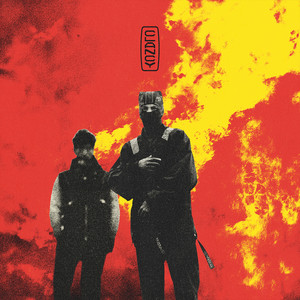 Twenty One Pilots — Clancy (2024). Friday night's headliner.
The four headliners tell four different stories about what Mad Cool has become.
Foo Fighters headlining Wednesday, July 8, is in some ways the most conservative and the most emotionally resonant choice. Dave Grohl and company opened the 2017 edition of the festival. They were announced as 2020 headliners before the pandemic cancelled that edition. They return in 2026 with But Here We Are, the 2023 album that was the band's first record made following the death of drummer Taylor Hawkins in March 2022. The album is grief-stricken, personal, and heavier than anything the band had made in years — and the live shows built around it have been described by reviewers as among the most emotionally charged of the band's career. Opening the tenth-anniversary festival, closing a circle that goes back to 2017, brings a specific weight.
Florence + The Machine headline Thursday, July 9, at 12:30am — the latest slot of any of the four headliners, appropriate for an artist whose most recent album, Dance Fever (2022), was explicitly about the tension between the urge to move and the impossibility of rest. Florence Welch's live shows are theatrical events as much as concerts: the choreography, the mythology, the way she moves through a set as through a ritual. The slot is placed after Lorde, Jennie, and Reneé Rapp — a Thursday that runs from pop to K-pop to indie folk to baroque performance art in roughly six hours.
Twenty One Pilots close Friday, July 10, following Interpol, A Perfect Circle, Kings of Leon, and Halsey. The Columbus duo's Clancy (2024) is the culmination of a seven-album narrative arc that spans a decade of genre-refusing music — songs that sit between pop and rap and rock and electronic music without fully inhabiting any of them, driven by Tyler Joseph's ability to construct hooks that operate in multiple registers simultaneously. Their 2022 slot at Mad Cool, which NME cited as one of the ten most iconic in the festival's history, was the band's first tour with a full live band; the 2026 iteration arrives with the concept record closed and the mythology complete.
Nick Cave & The Bad Seeds close the entire festival on Saturday, July 11, following The Black Crowes and preceded by Pulp's late set. Cave closing Mad Cool 2026 is the most unconventional of the four headliner choices — he is not the kind of artist who typically anchors commercially ambitious summer festivals, and Wild God (2024), the band's latest record, is a record about loss, grief, and unexpected grace that is not obviously crowd-pleasing in the way that Foo Fighters or Florence + The Machine are. But it is perhaps the most interesting choice, and the decision to close the tenth-anniversary festival on a Saturday night with Nick Cave rather than with a pop or rock act signals that Mad Cool, whatever its commercial pressures, retains the artistic ambition that made it interesting from the beginning.
Part Six: The Deep Cuts — Below the Billing
The real texture of a festival's identity lives in the middle of the lineup, not at the top, and Mad Cool 2026's mid-tier is where the festival makes its most interesting arguments.
 Nick Cave & The Bad Seeds — Wild God (2024). Saturday night's headliner and festival closer.
Pulp at 12:40am on Saturday night is, by common consensus, one of the most eagerly anticipated slots of the entire festival. Jarvis Cocker and company released Different Class in 1995 and followed it with This Is Hardcore in 1998 — two of the most fully realised British pop records of the 1990s — then dissolved. Their reunion in 2011–2012 was sporadic; the full reunion that brought them back in 2023, with shows at Glastonbury and a new single, was received as a genuine event. At Mad Cool in 2026, they are playing a major European festival slot for the first time in over a decade, and the question of whether Cocker — now in his early sixties, still one of the most charismatic frontmen in British music — can deliver the full Common People catharsis to a Madrid crowd at 12:40 in the morning is one of the more interesting live-music propositions of the summer.
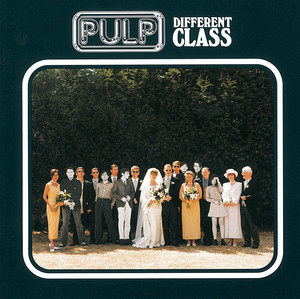 Pulp — Different Class (1995). Closing Saturday night at Mad Cool 2026 after Nick Cave.
Wolf Alice appear on Wednesday night at 8:20pm — a prime setup slot before Foo Fighters. The London four-piece have spent the last eight years building a live reputation that has outrun their already considerable recorded legacy: Blue Weekend (2021) is one of the most acclaimed British rock records of the decade, and their festival sets have grown in scale and confidence to match. Playing before a Foo Fighters crowd in Madrid in July with the weight of a Glastonbury-primed performance behind them is a genuinely interesting proposition.
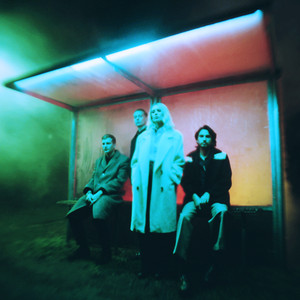 Wolf Alice — Blue Weekend (2021). The setup act for Wednesday's headliner.
The Pixies at 8:30pm on Friday serve as the canonical alternative rock reference point in a lineup that otherwise trends younger — Black Francis and his collaborators' combination of surf-inflected guitars, sudden dynamic shifts, and Kim Deal-era basslines (Paz Lenchantin has been in the role since 2013) remains one of the defining sounds in the genealogy of the festival's entire upper-tier. Doolittle (1989) is the album that most of the Friday night crowd under thirty knows via intermediaries rather than original context; the Pixies' continued ability to play it with authority makes their inclusion feel earned rather than nostalgic.
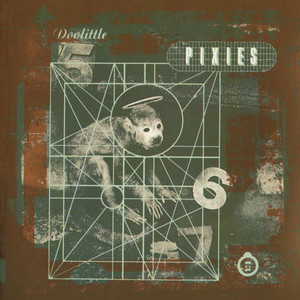 Pixies — Doolittle (1989). Friday night at Mad Cool 2026.
Lorde performs on Thursday at 8:30pm, positioned as the main stage support before Jennie and Florence + The Machine. Solar Power (2021) was a divisive record — a deliberate retreat from the sonic density of Melodrama, built around acoustic guitars and beachside languor, released into a world that was not in the mood for languor — but it has aged better in live context than in critical reception, and Lorde's presence in Madrid connects to an artist who has consistently treated festival slots as artistic statements rather than promotional exercises.
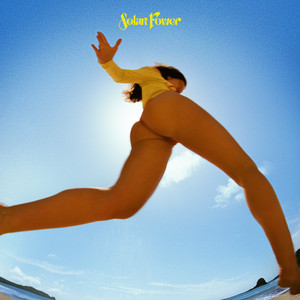 Lorde — Solar Power (2021). Thursday evening setup at Mad Cool 2026.
Kings of Leon at 10:15pm on Friday bring a back catalogue that now spans two and a half decades, from Youth & Young Manhood (2003) through Can We Please Have Fun (2024) — a timeline that encompasses everything from the raw Southern rock of their early records to the stadium-rock pivot of Only by the Night (2008) to the more restrained, textured work of their recent period. In a festival context, they remain one of the most reliable performers of their generation.
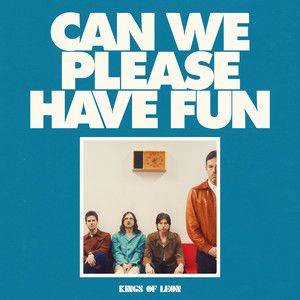 Kings of Leon — Can We Please Have Fun (2024). Friday night support.
Halsey at 7:05pm on Friday occupies a different kind of slot — the early evening main stage position that requires pulling a crowd before the rock and alternative acts that follow. If I Can't Have Love, I Want Power (2021), produced by Trent Reznor and Atticus Ross, was the most critically interesting thing Halsey had made to that point, a gothic industrial concept record that departed radically from the pop infrastructure of the earlier career. The festival slot in 2026 will almost certainly include material from across the discography — the pop hits that built the fanbase alongside the darker later work.
 Halsey — If I Can't Have Love, I Want Power (2021). Friday evening.
The Last Dinner Party, who began 2024 as one of the most hyped guitar bands in British music and closed it as Mercury Prize nominees, appear in the lineup as one of the more interesting emerging-act slots. Prelude to Ecstasy (2024) is a debut album that absorbed decades of baroque pop, glam rock, and theatrical post-punk and synthesized them into something that felt simultaneously like a throwback and a genuinely new proposition. Whether they can hold the same position at a Mad Cool crowd that they held at smaller UK venues is one of the questions the 2026 edition will answer.
 The Last Dinner Party — Prelude to Ecstasy (2024).
The War on Drugs bring a different texture to the lineup — Adam Granduciel's project occupies the intersection of Springsteen-esque heartland rock and shoegaze and Krautrock drone, and I Don't Live Here Anymore (2021) was one of the most warmly received records in that aesthetic in years. In festival terms, they are a band whose music rewards attention more than it demands it — not the kind of act that explodes onto a crowd, but the kind that makes the crowd realize, fifteen minutes into the set, that they've been pulled somewhere they didn't plan to go.
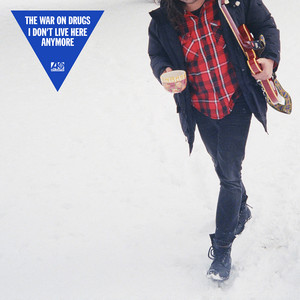 The War on Drugs — I Don't Live Here Anymore (2021).
The Black Crowes open Saturday's main stage at 8pm — a veteran Southern rock band who have spent the last few years performing Shake Your Money Maker in its entirety as a 30th-anniversary set, and whose reunion (following years of feuding between brothers Chris and Rich Robinson) has produced one of the more convincing "actually they still have it" stories in legacy rock. Opening for Nick Cave on Saturday night is a genuinely strange double bill.
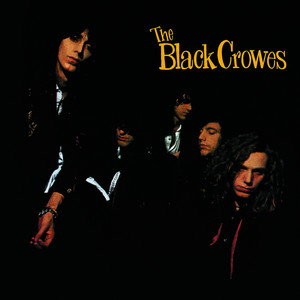 The Black Crowes — Shake Your Money Maker (1990). Opening Saturday at Mad Cool.
Further down the billing: Interpol, performing in the late Friday slot (12:55am at the Orange Stage), are one of the more beloved mid-tier acts in the festival's history — Paul Banks' baritone and the band's Joy Division-adjacent post-punk have made them a fixture at European festivals for over two decades. A Perfect Circle, Maynard James Keenan's project, perform at 11:10pm Friday. Moby and David Byrne occupy the electronic and art-rock ends of the spectrum. Jennie, the BLACKPINK member pursuing a solo career, gives the festival a direct connection to the global K-pop market. Sigrid, Holly Humberstone, CMAT, and Palaye Royale fill out the emerging and second-tier slots. The Mad Cool Talent competition winners — a strand that the festival has used in recent years to surface unsigned Spanish and European artists — also appear on the billing, a practical connection to the festival's aspirations as a launching pad for new music rather than purely a legacy showcase.
Part Seven: The Madrid Heat — What It Means for the Festival
Any complete account of Mad Cool Festival has to reckon seriously with the heat. July in Madrid is not the same as July in Cornwall or July in Brittany or July in the Ardennes. The city sits on a plateau at roughly 650 metres above sea level, which moderates the heat somewhat compared to coastal Spain, but what the elevation cannot moderate is the intensity of the sun in summer, or the persistence of the high-pressure systems that routinely push temperatures above 40°C in the July peak. July 2024 was one of the hottest months ever recorded in the region; the 2026 edition will arrive in a climate context that has made the question of outdoor summer events in Madrid increasingly fraught.
The 2024 edition showed that Mad Cool had learned from the Valdebebas years. Doors opened one hour later than had been standard, pushing the main programming into the cooler evening hours. Water distribution points were multiplied. Shaded rest areas — real shade, not nominal shade — were distributed throughout the 185,000-square-metre site. The 2026 format goes further: the reduction in daily capacity (from the 100,000+ of the pre-2022 era to a reported 50,000–55,000 per day) means fewer people competing for the same shade and the same water. The acoustic redesign of the site means that the stages are positioned for cleaner sound reinforcement, which reduces the need to push at uncomfortable sound pressure levels to compensate for diffusion.
None of this eliminates the heat. It is still going to be very hot in Madrid on July 8, 9, 10, and 11 of 2026. The late start times — the headline acts consistently going on at 10pm or midnight — mean that the most intense programming happens in the cooling evening rather than the brutal afternoon. But experienced Mad Cool attendees consistently recommend the same practical approach: arrive after 7pm rather than at opening, find a fixed base near a water point, build your day around the headliners rather than trying to see everything, and accept that the hours between 3pm and 7pm are better spent in air-conditioned restaurants in Villaverde than queuing for afternoon sets.
Part Eight: Mad Cool in the Spanish Festival Circuit
Spain has one of the richest summer festival cultures in Europe — a consequence partly of climate (the warm evenings that make outdoor events comfortable after 8pm for most of the year), partly of geography (the cities are close enough together that a European tour can string Primavera Sound, Mad Cool, Bilbao BBK, and FIB Benicàssim within a two-week window), and partly of the Spanish music industry's particular relationship to international touring.
Primavera Sound in Barcelona is the festival against which Mad Cool is most often measured, and the comparison is instructive. Primavera Sound was founded in 2001 and built its reputation on curatorial intelligence — a willingness to pair David Bowie with Suicide with Black Dice, to put legendary Japanese noise acts on the same program as Puerto Rican reggaeton stars, to construct a lineup that rewards specialists in any genre with something genuinely relevant to them. It operates from the Parc del Fòrum on the Barcelona waterfront, which gives it one of the more spectacular festival settings in Europe. Mad Cool is larger in terms of production values and tends more mainstream in its bookings; Primavera Sound is smaller and tends more curatorial. In years where both festivals have first-tier headliners, they avoid scheduling conflicts — the two have operated with a degree of diplomatic awareness that prevents direct date competition.
Bilbao BBK Live, perched on the Kobetamendi mountain outside Bilbao, offers something that neither Primavera Sound nor Mad Cool can replicate: a genuinely dramatic natural setting, with the Basque mountains behind the stages and the city below. The lineup tends toward alternative rock and indie with a strong electronic component, and the festival has a reputation for the kind of intimate mountain atmosphere that the 185,000-square-metre industrial site in Villaverde cannot produce. BBK occupies a different emotional register from Mad Cool — smaller, more physically demanding (you are genuinely on a mountain), and with a different relationship to the audience.
FIB Benicàssim is the oldest of the major Spanish summer festivals, dating from 1995, and has historically sat in the pop-rock-indie space that Mad Cool now occupies. FIB's location — the Mediterranean coast near Valencia, with beach camping as an option — gives it an atmosphere that Mad Cool cannot match. In recent years, as Mad Cool has grown and Primavera Sound has expanded, FIB has faced commercial pressure; it remains relevant but no longer dominates the Spanish festival calendar the way it did in the early 2000s.
The competitive dynamic between Mad Cool and its rivals was explicitly acknowledged in a 2024 analysis that described Mad Cool, Primavera Sound, and Bilbao BBK as "competing for the same first-division European festival audience" — a cohort that will fly to Spain for one festival but perhaps not three, and that makes decisions based on lineup strength, logistics, price, and the specific experience each festival offers. Mad Cool's advantages are production quality (the Iberdrola Music site is the most technically capable of the three venues), headliner ambition (the budgets available to Live Nation Spain are larger than those available to independent promoters), and the Madrid location itself, which offers the most internationally connected airport and the most developed city tourism infrastructure.
The disadvantage, always, is the heat.
Part Nine: The Logic of the Tenth Anniversary Format
The decision to reduce capacity for 2026 is the most consequential structural change the festival has made since the move to Iberdrola Music. Coming down from 100,000+ per day to 50,000–55,000 is not a retrenchment — it is a deliberate quality-over-quantity bet, the same kind of bet that Bilbao BBK made when it stabilised its own capacity after a period of expansion.
The reduction also changes the economic calculus. A festival that runs 55,000 per day over four days is different from one that runs 100,000 per day over three. The per-head revenue can be maintained or increased even as the total headcount falls, if the premium experience that the reduced capacity enables commands a higher ticket price. The 2026 ticket pricing has been positioned at the upper end of the Spanish festival market — three-day passes are not cheap by the standards of Primavera Sound or Bilbao BBK — and the logic is that a more comfortable, less logistically fraught festival is worth the premium.
The format change also affects the staging. Fewer overlapping sets, fewer stages running simultaneously, a programme designed to reduce the "I had to choose between two things I wanted to see at the same time" frustration that plagues larger festivals. The 2026 schedule is built around the four headliners anchoring four main-stage nights, with the supporting acts distributed in a way that makes the schedule navigable rather than overwhelming. For an attendee who wants to see eight acts across four days rather than forty acts across four days, Mad Cool 2026 is a better proposition than the Mad Cool of 2022.
This is, in a sense, the festival acknowledging what it has learned. The scaling errors of 2018 and 2022 came from the assumption that bigger was always better — that the path to significance was through capacity and lineup length and supplementary programming. The 2026 format says something different: the path to significance is through the quality of the experience for the people who are there, and the most important thing a festival can do for its tenth anniversary is demonstrate that it has become an event worth attending rather than an event worth surviving.
Part Ten: What to Expect from July 2026
The practical experience of Mad Cool in 2026, based on everything the organizers have communicated and the lessons from 2024 and 2025, will look something like this.
The gates at Iberdrola Music open in the late afternoon. The site fills gradually through the early evening. The first main stage acts — Wolf Alice on Wednesday, Reneé Rapp on Thursday, Halsey on Friday, The Black Crowes on Saturday — begin in the 6pm to 8pm window, when the heat is starting to break but the light is still golden. The festival's design means that by the time the headliners take the stage, the crowd has been there long enough to feel settled but not so long that they are exhausted.
The journey from the Madrid city centre takes approximately 25 minutes by metro — line 3 south to Villaverde Alto — which is one of the more convenient public transport connections any European festival has to a major city. The walk from the station to the site is around fifteen minutes, through streets that are genuinely Madrid: narrow, low-rise, smelling of drains and jasmine and diesel and the specific mineral quality of Castilian air.
Inside the site, the improvements that came with Iberdrola Music hold. Water. Shade. Food at prices that are expensive by local standards and cheap by festival standards. Sound quality that benefits from the acoustic redesign. The reduced capacity means that moving between stages is possible without the aggressive crowd-navigation that defined the Valdebebas years.
Four headliners. Seventy-plus artists. Four nights. The tenth anniversary of a festival that was founded as a bet, nearly broke itself through overreach, and has arrived at its decade marker with something that looks, by the evidence available, like genuine maturity.
The heat will still be there. It is always there. But Mad Cool 2026 is, for the first time in its history, a festival that seems prepared for it.
Mad Cool Festival 2026 runs July 8–11 at Iberdrola Music, Villaverde, Madrid. Day tickets and four-day passes are available at madcoolfestival.es.