Lollapalooza Chicago 2026: From Perry Farrell's Farewell to the Festival That Owns a City
Lollapalooza Chicago 2026 returns to Grant Park July 30–August 2 with Charli XCX, Lorde, The Smashing Pumpkins, The xx, and 170+ acts — a complete guide from Perry Farrell's 1991 origin to 2026.
By Gabin Fay
In the summer of 1991, a singer named Perry Farrell decided to break up his band with a party. Not a small party — a cross-continental, month-long, twenty-city tour that would carry his band Jane's Addiction off the stage for the last time while introducing tens of thousands of people to a collection of musical friends who represented, in one absurdly curated lineup, the full range of what American counterculture sounded like at that precise historical moment. The name he chose was borrowed from a Three Stooges sketch: lollapalooza, meaning something extraordinarily impressive, or something outrageously wonderful. He wasn't being ironic.
Thirty-five years later, what began as a farewell gesture has become the largest urban music festival in the United States, and arguably the most influential music festival format of the last three decades. On July 30 through August 2, 2026, Lollapalooza returns to Chicago's Grant Park for its twenty-second consecutive year as a permanent Chicago institution, with more than 170 acts across eight stages and an expected audience exceeding half a million people over four days. The headliners this year — Charli XCX, Lorde, The Smashing Pumpkins, The xx, Tate McRae, Olivia Dean, John Summit, and Jennie — tell a story about where popular music stands in the mid-2020s: pop maximalism, indie introspection, legacy alternative rock, and the globalisation of the K-pop economy all sharing the same skyline, the same sight lines on Lake Michigan, the same Buckingham Fountain backdrop.
→ Lollapalooza Chicago 2026 — the 50-track lineup playlist (generated by Playgen)
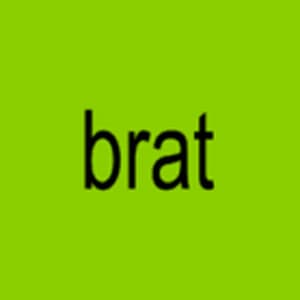
 Charli XCX — BRAT (2024). Friday headliner. The green album that turned a colour into a cultural condition.
Part One: The Origin — Perry Farrell's Farewell Tour That Refused to End
The first Lollapalooza launched on July 18, 1991, at Compton Terrace in Chandler, Arizona. It wasn't supposed to be a franchise. It was supposed to be a goodbye.
Perry Farrell had been working toward Jane's Addiction's dissolution for some time. The band had put out two studio albums — Nothing's Shocking in 1988 and Ritual de lo Habitual in 1990 — and had defined the aesthetic territory of what music journalists were beginning to call "alternative rock," even though the music didn't fit that or any other category comfortably. It was art-punk, glam rock, Southern California bohemianism, heroin romanticism, and political consciousness assembled by a singer who grew up Jewish in New York and Long Island before reinventing himself in the Los Angeles underground. It was also, by 1991, finished. The tensions within Jane's Addiction had reached a point that made dissolution the only honest option. The question was how to mark the ending.
Farrell's answer was characteristically theatrical: throw a party that was also a statement, invite the people you most admire, and give the audience something they would remember long after the band was gone. He worked with partners Ted Gardner, Don Muller, and Marc Geiger on the logistics, and he was drawing on a specific inspiration: Britain's Reading Festival, which had demonstrated that a multi-artist outdoor festival could be both artistically ambitious and commercially viable. But Reading was a fixed location. Lollapalooza would tour — stopping in more than twenty cities across the United States and Canada between mid-July and late August.
The 1991 lineup was chosen as a cultural cross-section. Jane's Addiction would headline. But below them: Nine Inch Nails, at that point a two-year-old industrial project that had released one album (Pretty Hate Machine, 1989) and an EP (Broken, forthcoming) and had developed a live reputation for controlled violence and sensory assault. Siouxsie and the Banshees, the British post-punk band who had been at the centre of the goth aesthetic since 1976 and had just released Superstition, their most pop-oriented record. Living Colour, the Black hard rock band from New York whose Vivid album had won a Grammy and who were, in 1991, one of the most politically charged bands in America. Ice-T, the Los Angeles rapper whose Body Count project was beginning to take shape as a punk-metal band while Ice-T continued his run as one of gangsta rap's founding voices. Butthole Surfers, the psychedelic noise-rock band from Austin whose live sets were simultaneously disgusting and transcendent. Violent Femmes. Fishbone. Rollins Band.
What made the 1991 Lollapalooza historically significant was not just the music. Farrell built in elements that no touring package had thought to include before: an arts and crafts area, information tables for nonprofit organisations, a travelling freak show called the Jim Rose Circus Sideshow whose performers would do things with their bodies that the audiences at the music stages tried not to think about. The festival was positioned explicitly as counterculture infrastructure — a platform for not just entertainment but for the expression of values that mainstream America either ignored or actively opposed. Body piercing booths appeared alongside the food vendors. The American Civil Liberties Union had a table. PETA had a table. Planned Parenthood had a table. This was, in 1991, genuinely unusual.
MTV journalist Dave Kendall covered the first Lollapalooza date in Phoenix and filed a report that ended with the prediction: "Lollapalooza could be the tour of the summer." He was understating it. Lollapalooza became the model for what a summer music festival could be in the United States — a model that all subsequent American festival culture derives from in some form. The 1991 tour sold out in most cities. Nirvana, who had just released Nevermind weeks after the Lollapalooza tour ended, would later cite the tour as a formative influence on their own conception of what alternative music could do in a large-scale commercial context.
Part Two: The Touring Years — 1992 to 1997
Jane's Addiction broke up before the first tour ended, but Lollapalooza continued without them. Farrell retained creative control and built subsequent editions around the same curatorial logic: diverse genres, political consciousness, a refusal to be defined by a single sound.
The 1992 edition brought the Red Hot Chili Peppers, who at that point were still straddling the line between funk-punk cult act and mainstream breakthrough, alongside Ministry (industrial metal at its most confrontational), Soundgarden (grunge's most technically accomplished band), Ice Cube, and the Jesus and Mary Chain. It was a more explicitly guitar-rock lineup than the inaugural year, a reflection of grunge's commercial ascent in the months following Nevermind's release. The tour was the largest Lollapalooza had been, both in terms of cities visited and ticket sales.
1993 was, by most accounts, the tour's aesthetic peak. Pearl Jam headlined — they were at the height of their commercial power and critical prestige, having released Ten and Vs. in consecutive years. Below them were Primus, Alice in Chains, Babes in Toyland, Arrested Development, Dinosaur Jr., and Rage Against the Machine, who were two years old and making their Lollapalooza debut. The second stage that year included the Beastie Boys, Fishbone, and a band called Soul Asylum who would not remain on the second stage for very long. The 1993 tour established the template that Coachella, Bonnaroo, and Pitchfork Fest would later refine: a primary stage for established acts, a secondary stage for emerging ones, and a supporting ecology of food, art, and activism that made the festival feel like an event rather than just a concert.
1994: Smashing Pumpkins, Beastie Boys, George Clinton and the P-Funk Allstars, A Tribe Called Quest, the Breeders, Phish, Nick Cave and the Bad Seeds, L7. Billy Corgan's band was at Siamese Dream peak — the album had come out in 1993 and demonstrated that grunge could accommodate prog ambition and production grandiosity. The Beastie Boys were three years removed from Paul's Boutique; Ill Communication would come out that same year. This was the generation of alternative and hip-hop acts whose music defined the decade.
1995: Sonic Youth, Hole, Beck, Pavement, Cypress Hill, Elastica, Moby. Courtney Love was still in the phase of Love's career where the music was undeniable — Live Through This is one of the essential records of 1994, and Hole on the Lollapalooza main stage in 1995 was an event of some consequence. Beck had released Mellow Gold in 1994 and Odelay was a year away; he was, in 1995, the most immediately exciting new voice in American rock music.
1996: Metallica — who had never played Lollapalooza before and who provoked genuine controversy in the alternative music community for their presence, given Metallica's history of litigation over mixtapes and bootlegs — alongside Soundgarden (for the second time), Rancid, Screaming Trees, the Ramones (in their farewell season), Waylon Jennings (a deliberate piece of provocation from Farrell, who thought the genre segregation of country music from alternative rock was absurd), and the Prodigy. The electronic element was new, and its presence was the first signal that Lollapalooza's multi-genre logic would eventually accommodate dance music in a serious way.
1997: Jane's Addiction had reformed for this edition — a fact that was both poetic and commercially savvy, given the band's role in starting the whole thing. Also on the tour: Orbital, Snoop Dogg, Jewel, Devo. The 1997 lineup was the most eclectic in the tour's history, and it was also the last of its kind. Attendance fell at several dates. The cultural moment that had made Lollapalooza the defining festival of the early 1990s had shifted — alternative rock was no longer emerging, it was established, and what felt urgent in 1991 felt like an institution by 1997.
Part Three: The Hiatus — 1998 to 2004
In 1998, Lollapalooza couldn't find a headliner.
This is the official story, and it's mostly accurate. The acts that Farrell and his partners approached weren't interested, or weren't available, or demanded fees that the touring model couldn't support at the ticket prices the market would bear. Alternative rock's commercial moment had passed — not in the sense that the music was gone, but in the sense that the specific cultural alignment that had made Lollapalooza an event rather than just a tour had dissolved. Spin magazine published a eulogy: "Lollapalooza is as comatose as alternative rock right now."
The cancellation of 1998 was not announced as a cancellation. It was framed as a pause. But the pause lasted five years.
In 2003, Farrell tried to revive it. He reconvened Jane's Addiction — for the second time — and scheduled a new touring Lollapalooza. The model was the same: multiple cities, multiple stages, a lineup that crossed genre lines. The 2003 tour included Audioslave, Incubus, Queens of the Stone Age, and Jane's Addiction. Attendance was poor relative to what the early 1990s editions had managed. Ticket prices had risen significantly, and the market had changed: Warped Tour had captured the punk-adjacent audience, Ozzfest had the metal audience, and Bonnaroo was about to establish itself as the successor to the Lollapalooza touring model at a fixed location in Tennessee.
The 2004 attempt was worse. Farrell planned a two-day format in each city, with Morrissey, Sonic Youth, PJ Harvey, and Flaming Lips headlining. The tour was cancelled in June, before it started, due to weak nationwide ticket sales. The press coverage was not kind. The word "nostalgia" appeared in every review of every announcement. There was a genuine argument to be made, in 2004, that Lollapalooza as a touring festival was simply finished — a relic of a moment that had passed, unable to compete with the new landscape of American festival culture.
What happened next was not revival. It was reinvention.
Part Four: Chicago — The 2005 Rebirth and the C3 Presents Partnership
Perry Farrell met with Capital Sports & Entertainment — an Austin, Texas-based event company that had built the Austin City Limits Music Festival into a significant event — and proposed something different. Not a tour. A destination. A single location, a single city, a fixed annual event. Chicago's Grant Park was the site they identified, and the logic was impeccable: the park sits in the heart of the city, flanked by Lake Michigan to the east and the downtown skyline to the west, accessible via the L train from virtually every neighbourhood, adjacent to the cultural infrastructure of a city that takes its outdoor public life seriously from June through September.
The Chicago Park District agreed. Capital Sports & Entertainment (which became C3 Presents in subsequent years) agreed. The 2005 Lollapalooza was a two-day event with 70 acts across five stages. Despite a heat wave that pushed temperatures to 104 degrees Fahrenheit, the event drew more than 65,000 people. The lineup — Weezer, Primus, Cake, Pixies, Dashboard Confessional, Billy Idol, Liz Phair, the Black Keys, Spoon — was eclectic in exactly the way Lollapalooza had always been eclectic, but without the sense of historical weight that the 1990s touring versions had carried. This was a festival, not an event. That distinction mattered. Events happen once; festivals happen annually.
In 2006, the lineup expanded. The Chicago Park District and C3 Presents agreed to a five-year deal that kept Lollapalooza at Grant Park through 2011. The 2006 headliners were Red Hot Chili Peppers, Kanye West, the Raconteurs, Common, and Queens of the Stone Age. Attendance grew. The festival expanded to three days in 2007, with Muse, Pearl Jam, Daft Punk, Kings of Leon, and LCD Soundsystem — a lineup that marked the first serious electronic presence at the festival and a direct precursor to what Perry's Stage would eventually become.
2008 is the edition most often cited as the moment when the Chicago Lollapalooza became something genuinely significant. Radiohead and Rage Against the Machine headlined — two of the most politically and aesthetically serious bands in rock music, sharing a billing on a festival stage in a city that was, that summer, preparing to host the Democratic National Convention. Kanye West appeared for the second time, performing Homecoming at Grant Park in his hometown. Nine Inch Nails played. The crowds reached 270,000 over three days. Lollapalooza was back — not as a nostalgia exercise, not as a pale echo of 1991, but as a living institution.
In 2012, the festival expanded to its current four-day format, with eight stages and an expected audience of more than 500,000 over the weekend. The deal with the Chicago Park District, which now runs through 2032, gives the festival an extraordinary stability — a level of civic integration that very few music events in any country have achieved.
Part Five: Perry's Stage and the Electronic Music Transformation
The single most significant structural decision in Lollapalooza's Chicago era — more significant than expanding from two days to three to four, more significant than the addition of stages — was the creation of Perry's Stage in 2008.
Perry's Stage was, in its first years, a tent stage dedicated to electronic and dance music. The name honoured Perry Farrell, who had always incorporated electronic elements into Lollapalooza's programming philosophy but who was now getting a dedicated platform for the argument he'd been making since the Orb and Prodigy appeared in 1996: that the boundaries between rock, hip-hop, and electronic dance music were arbitrary, and that a genuinely pluralist music festival should reflect all three with equal seriousness.
The growth of Perry's Stage tracks almost exactly with the mainstreaming of electronic dance music in the United States. In 2008, the stage was a curiosity. By 2012, it was drawing some of the festival's largest single-set crowds. By 2016, the acts booked on Perry's Stage were headlining EDM festivals in their own right — Steve Aoki, Skrillex, Diplo, Daft Punk's collaborators. The stage's capacity had to be expanded multiple times to accommodate demand. In 2024, Dom Dolla broke the Perry's Stage attendance record with a set that was, by multiple accounts, the most physically intense crowd experience at the festival that year.
The 2026 Perry's Stage lineup continues this tradition with full conviction. John Summit, the Chicago-born house DJ who has become one of the most successful electronic acts in the United States — his debut album Comfort in Chaos (2024) and the follow-up CTRL ESCAPE (2026) represent the current peak of American house music's commercial moment — headlines on Thursday night. Major Lazer on Friday, Disco Lines on Saturday, The Chainsmokers on Sunday. These are not secondary acts on a secondary stage. At a festival like Lollapalooza 2026, Perry's Stage pulls crowds that rival the T-Mobile Stage for certain sets, and the genre crossover is complete enough that the same festivalgoer who watches Lorde headlining on Thursday might spend half of Friday afternoon in front of the Perry's Stage DJ booth.
John Summit headlining his hometown festival is a specific narrative in 2026. He grew up in Chicago, came up through the city's electronic music scene, and has spoken publicly about Lollapalooza as a formative experience from his adolescence. The fact that he is now headlining it is one of those arc-completion moments that festivals occasionally produce.
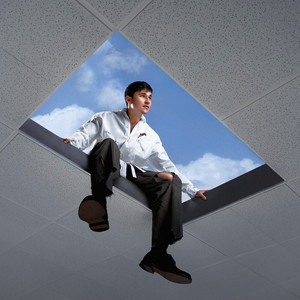 John Summit — CTRL ESCAPE (2026). Thursday, Perry's Stage. The prodigal son returns.
Part Six: Global Lollapalooza — From Grant Park to Every Continent
The Chicago festival proved something important: that the Lollapalooza format — curated multi-genre programming, urban location, civic partnership — could work as a permanent institution. The question that followed was whether it could work elsewhere.
The answer, it turns out, is yes — on six continents.
Chile (2011–present): The first international Lollapalooza launched in Santiago in April 2011, with Jane's Addiction, the Killers, and the Flaming Lips. Chile has consistently drawn among the largest crowds of any international edition, reflecting the country's position as Latin America's most developed live music market. The Santiago edition typically takes place in Parque Bicentenario de Cerrillos.
Brazil (2012–present): The São Paulo edition launched at the Jockey Club in April 2012 and eventually moved to the Autódromo de Interlagos — the Formula 1 circuit — giving it one of the most distinctive festival sites in the world. The Brazilian edition has hosted Guns N' Roses, Travis Scott, the Strokes, and Kendrick Lamar among its headliners, and reflects the extraordinary depth of Brazil's contemporary music market.
Argentina (2014–present): The Buenos Aires edition at the Hipódromo de San Isidro has run annually since 2014. The Argentine music market has produced a generation of artists who have moved from the international editions of Lollapalooza into global touring circuits — a function the festival performs in every country it operates in.
Germany (2015–present): The Berlin edition launched at Tempelhof Airport in 2015 and moved to Olympiapark Berlin in 2018. The German edition is the most distinctive of the international versions, because Olympiapark is a UNESCO World Heritage Site — the complex built for the 1972 Munich Olympics. Watching a headline act perform in front of the Olympic architecture with the stadium behind the stage is unlike any other festival experience in the world.
France (2017–present): The Paris edition launched at the Hippodrome de Longchamp — the historic racetrack in the Bois de Boulogne — with Red Hot Chili Peppers and The Weeknd as headliners. The French edition is notable for its site: Longchamp is one of the great landscapes of Paris, visible from the Eiffel Tower, surrounded by forest. The 2026 Berlin Lollapalooza is confirmed for July 18–19, with a separate lineup from the Chicago edition.
India (2023–present): The newest international Lollapalooza launched in Mumbai at Mahalaxmi Racecourse in January 2023, with Imagine Dragons, the Strokes, and Diplo. The Indian edition represents a significant bet on the development of the South Asian live music market — a market that has been growing rapidly through the streaming era and that has produced a generation of artists who are now beginning to appear on international festival stages.
Sweden (2019, 2022–2023): The Stockholm edition had a shorter run, drawing 70,000 attendees in its 2022 iteration before entering an indefinite hiatus.
The global proliferation of Lollapalooza is not simply a branding exercise. Each edition has its own booking team, its own curatorial logic, its own relationship to local music culture. The Berlin edition programs more German-speaking acts than the Chicago edition would ever need to consider. The Brazilian edition reflects the specific character of Brazilian popular music in ways that a Chicago programmer couldn't replicate. The festival has maintained its identity across these contexts not by homogenising its programming but by applying the same philosophical commitment to genre pluralism and cultural ambition in each local context.
Part Seven: The 2026 Lineup — Four Days, Eight Stages, 170+ Acts
Lollapalooza Chicago 2026 runs July 30 through August 2 at Grant Park, with eight stages: the T-Mobile Stage, Bud Light Stage, Airbnb Stage, Allianz Stage, Perry's Stage, BMI Stage, Tito's Stage, and Kidzapalooza. The first acts take the stage at noon each day; headliners close at 10pm. Here is the full breakdown.
Thursday, July 30 — Lorde and John Summit
LORDE closes the T-Mobile Stage on Thursday night. The New Zealand singer-songwriter is one of the most significant pop artists of the last decade — Pure Heroine (2013) redefined what commercially successful pop music could sound like aesthetically and lyrically, and Melodrama (2017) pushed further into the emotional and production ambition that has characterised her entire career. The 2026 Lollapalooza performance is part of a touring cycle that has been one of the most discussed in pop music this year: Lorde performing as a headline act at major festivals represents a specific kind of artistic confidence, the kind that comes from having made records that don't require apology.
Earlier on Thursday's T-Mobile Stage: 5 Seconds of Summer, Sombr, Haute & Freddy, MUNA, and The Neighbourhood. The Neighbourhood headlining a secondary slot is notable given the Los Angeles band's run of consistency across their catalogue; their dark pop has maintained an audience through multiple album cycles.
The Bud Light Stage on Thursday runs Empire of the Sun and Little Simz in the evening positions, with Blood Orange in the afternoon. This is one of the more distinctive stage lineups in the four-day festival — Empire of the Sun's theatrical, synth-driven spectacle-pop, Little Simz's dense, politically charged London hip-hop, and Blood Orange's genre-fluid R&B-meets-art-pop occupying the same afternoon-into-evening progression. Dev Hynes (Blood Orange) has been one of the most quietly influential figures in the last decade of popular music, writing for Solange, Florence and the Machine, and Carly Rae Jepsen among others, and his own records — Freetown Sound, Negro Swan, Celia — are as formally interesting as anything in contemporary R&B.
John Summit closes Perry's Stage on Thursday, preceded by Kettama, Boris Brejcha, and Boys Noize. The Perry's Stage lineup on Thursday is explicitly house-oriented, reflecting the specific flavour of electronic music that has dominated the stage in recent years.
The Allianz Stage Thursday lineup includes SB19, the Filipino pop group who are one of the biggest K-pop-adjacent acts in Southeast Asia and whose presence at Lollapalooza 2026 reflects the genuinely global character of the 2026 lineup. Wet Leg, the Isle of Wight indie rock duo whose self-titled debut was one of the most acclaimed records of 2022, plays in the evening position. Bad Nerves rounds out the Thursday Allianz billing.
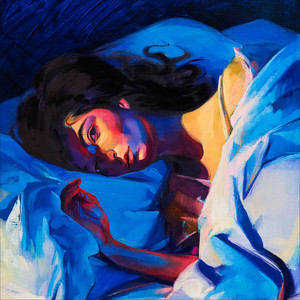 Lorde — Melodrama (2017). Thursday headliner. The party that never really ended.
Friday, July 31 — Charli XCX and The Smashing Pumpkins
Friday is the day of maximum contrast and maximum density.
CHARLI XCX headlines the T-Mobile Stage on Friday. BRAT, released in 2024, is the album that crystallised what Charli had been working toward since the mid-2010s: a version of pop music that is simultaneously maximalist and rigorous, deeply engaged with the aesthetics of underground dance music while remaining structurally pop. The album's lime-green cover became one of the most reproduced images of 2024. "Apple," "365," "Von dutch" — the singles from BRAT landed in a cultural moment that was receptive to exactly the kind of confident, slightly alienated, production-forward pop Charli has been making since Sucker (2014). The 2026 live set will presumably draw heavily from BRAT and from the remix album Brat and it's completely different but also still brat, which featured the most celebrated guest appearances in pop music that year.
THE SMASHING PUMPKINS close the Bud Light Stage on Friday. The Pumpkins are one of the most interesting legacy acts in contemporary festival programming because their relationship to their own catalogue is complicated in ways that most legacy acts' is not. Siamese Dream (1993) and Mellon Collie and the Infinite Sadness (1995) are genuinely important albums — the former is a meditation on depression and ambition that sounds more relevant now than it did when it came out, the latter is the most technically accomplished double album of the 1990s alternative era. Billy Corgan's post-millennial output has been uneven but not dishonest; he continues to make records that reflect his specific preoccupations rather than his commercial expectations.
The Friday Bud Light Stage also carries Yungblud in the evening position before the Pumpkins, and The Story So Far and High Vis in earlier slots. Yungblud has built one of the most devoted fanbases in contemporary rock-adjacent pop music through a combination of social media presence, consistent touring, and records that speak directly to the anxieties of a specific generation. His self-titled third album (2022) was his most commercially successful.
Also on Friday: Lil Uzi Vert occupies a prime T-Mobile Stage slot in the early evening. Pink Tape (2023) was one of the most discussed rap albums of its year, notable both for its length and for the specific aesthetic of hyper-melodic trap that Uzi has pushed further than anyone else in his lane. His live performance style — high energy, physically committed, the kind of crowd interaction that comes from years of practice — makes him a natural festival headline act even in a supporting position.
Zara Larsson and I-dle also appear on the T-Mobile Stage Friday, with I-dle's K-pop representing another entry point for the global audience that Lollapalooza 2026 is explicitly courting.
Freddie Gibbs closes the Airbnb Stage on Friday night — a notable booking given the Airbnb Stage's position as the festival's home for independent hip-hop and left-field pop. Gibbs is one of the most consistently excellent rappers of the last decade, with a body of work that includes Pinata (2014, with Madlib), Alfredo (2020, with The Alchemist, a Grammy nominee), and $oul $old $eparately (2022) — each of them landmarks in the intersection of West Coast gangsta aesthetics and East Coast production sophistication. His Lollapalooza performance will draw an audience that is very different from the Charli XCX crowd on the main stage and that will not be less intense for it.
Major Lazer closes Perry's Stage on Friday.
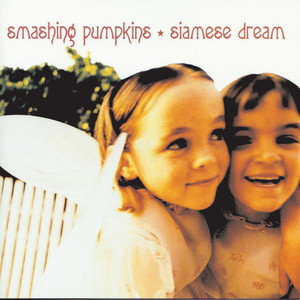 The Smashing Pumpkins — Siamese Dream (1993). Friday headliner. The guitar album that shouldn't have worked and absolutely does.
Saturday, August 1 — Olivia Dean and Jennie
Saturday belongs to two artists whose careers represent very different paths to international prominence.
OLIVIA DEAN headlines the T-Mobile Stage on Saturday night. The London singer-songwriter's debut album Messy (2023) announced her as one of the most distinctive voices in contemporary British soul — drawing on Etta James, Amy Winehouse, and Chet Baker while remaining entirely her own thing. She is twenty-three years old. She is headlining Lollapalooza. The fact that Messy peaked at number four on the UK Albums Chart despite being a record that doesn't make a single concession to commercial pop logic is a statement about the current appetite for music with actual emotional weight. Her vocal delivery — precise, warm, sometimes devastatingly casual — carries more information per syllable than most contemporary artists manage per song.
JENNIE of BLACKPINK headlines the Bud Light Stage on Saturday. Jennie's solo career has been one of the most carefully managed in the K-pop economy — a single debut project, a collaboration with Zico on "Spot!" (2024), and a body of public presence that has kept her at the centre of global pop culture without the constant release cycle that most pop acts use to maintain relevance. Her Lollapalooza set is one of the most anticipated performances of the 2026 Chicago festival, and her presence reflects the extraordinary cultural reach that K-pop has achieved in North America. The audience in front of the Bud Light Stage on Saturday evening will be one of the most diverse in Lollapalooza's history by nationality.
Also on Saturday: Clipse — the duo of Pusha T and No Malice, who formally reunited in 2024 after years of separate careers — occupies a prime Bud Light Stage slot in the afternoon. Hell Hath No Fury (2006) is on any serious list of the ten most important rap albums of the 2000s, and the reunion has produced new material that operates in the same aesthetic space: cocaine rap as formal exercise, luxury references as cultural critique, Pharrell Williams beats as the only appropriate frame. Their presence at Lollapalooza 2026 is one of the weekend's most welcome surprises.
Ethel Cain plays the Bud Light Stage on Saturday evening, before Jennie. Preacher's Daughter (2022) is one of the most distinctive debut albums of the decade — a Southern Gothic concept record about religious trauma, violence, and transcendence that has acquired an almost cult status since its release. The fact that Ethel Cain is on a major festival stage in 2026 represents the mainstreaming of an aesthetic that was genuinely underground two years ago.
Wolf Alice appears on the Bud Light Stage in the afternoon — the London band's three albums (My Love Is Cool, Visions of a Life, Blue Weekend) represent one of the most consistent artistic progressions in British guitar rock of the last decade. Geese, the Brooklyn post-punk band, closes the Allianz Stage Saturday with some of the most urgent and formally interesting guitar music being made by any act under twenty-five.
Disco Lines closes Perry's Stage on Saturday.
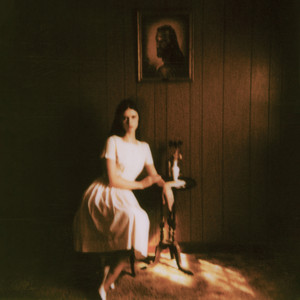 Ethel Cain — Preacher's Daughter (2022). Saturday afternoon. The underground goes above ground.
Sunday, August 2 — Tate McRae and The xx
Sunday closes the festival with a pairing that represents two different generations of emotionally precise pop music.
TATE MCRAE headlines the T-Mobile Stage on Sunday. The Calgary-born pop artist has had one of the most rapid commercial ascents of the mid-2020s: THINK LATER (2023) produced three singles that simultaneously dominated streaming and radio, and her live show — built around her background as a competitive dancer — has developed into one of the more technically polished in contemporary pop. She is twenty-one years old. She is closing Lollapalooza. The arc from a YouTube cover artist to the Sunday headliner of one of the world's largest music festivals in five years is extraordinary, and the specificity of THINK LATER's emotional register — obsession, regret, the particular cruelty of young heartbreak — connects to its audience in ways that more calculated pop rarely does.
THE XX close the Bud Light Stage on Sunday. The London trio — Romy Madley Croft, Oliver Sim, and Jamie xx — are one of the most influential bands in music of the last fifteen years. Their self-titled debut (2009) established an aesthetic language — sparse, intimate, late-night, the sound of two people in a room that is too quiet — that has been borrowed by more artists than any of them would acknowledge. Coexist (2012) refined the template. I See You (2017) expanded it toward something more structurally adventurous. Their live performances are among the most formally precise in popular music: the light design is integral to the set, the pacing is deliberate, and the effect of certain songs (Hold On, Islands, On Hold) in a live context is disproportionate to their instrumentation. Closing Lollapalooza 2026 on Sunday night, with the Grant Park skyline behind them and Lake Michigan to the east, is a specific proposition that only The xx can make work in exactly that way.
Also on Sunday: Turnstile plays the Bud Light Stage in the prime pre-headliner slot. The Baltimore hardcore band has had one of the most improbable careers in recent music — starting from the hardcore underground and, through Glow On (2021), achieving a level of critical acclaim and crossover audience that almost no band in their genre has managed. Their live show is physically overwhelming in ways that festival settings often can't replicate, but Turnstile have proved in recent years that they can translate their pit-physics energy to any scale.
aespa — the SM Entertainment K-pop group — plays the T-Mobile Stage on Sunday evening before Tate McRae. Their presence at Lollapalooza, along with Jennie and I-dle earlier in the weekend, signals clearly how seriously the festival takes the global K-pop audience in 2026. beabadoobee plays an evening T-Mobile Stage slot with her particular brand of shoegaze-influenced bedroom pop; Beatopia (2022) and the albums that have followed it represent the most pop-literate engagement with 1990s guitar aesthetics in contemporary music.
Yoasobi, the Japanese duo, plays the Bud Light Stage on Sunday, continuing Lollapalooza's deliberate expansion into East Asian pop markets. Hot Mulligan, the Michigan emo band, close the Tito's Stage on Sunday — one of the few moments of punk/emo in the 2026 lineup, which leans more heavily toward pop, hip-hop, and electronic music than any previous edition.
The Chainsmokers close Perry's Stage Sunday.
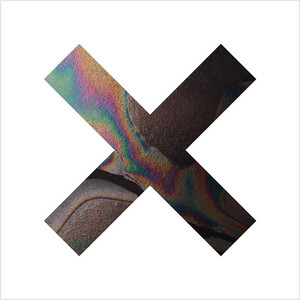 The xx — Coexist (2012). Sunday closer. Seventeen thousand people in the dark, listening.
Part Eight: Grant Park — The Setting That Makes Everything Different
Lollapalooza is not simply a music festival. It is a specific experience of a specific place, and that place is Grant Park.
Grant Park is 319 acres of public green space on the eastern edge of downtown Chicago, bounded by Lake Shore Drive to the east (and Lake Michigan beyond it), by Michigan Avenue to the west, and by the Chicago River to the north. It is not a park in the pastoral sense — it is a civic park, designed for the public life of a city, with Buckingham Fountain at its centre and the Art Institute of Chicago on its western edge. The park was designed according to Daniel Burnham's 1909 Plan of Chicago, which proposed the lakefront as a perpetually public space — no private development, no exclusion, open to everyone. Burnham called it "the front yard of Chicago."
For four days at the end of July, this front yard becomes the most concentrated music environment in the United States.
The logistical reality of putting a 500,000-person music festival in the middle of a city's civic park is extraordinary. The stages are positioned across the park's different zones — Grant Park is not one continuous open space but a collection of lawns, promenades, and formal gardens arranged around Buckingham Fountain's central axis. The T-Mobile Stage, which hosts the headliners, sits near the southern edge of the park with the downtown skyline rising directly behind it. At night, with the city's towers lit and the headliners performing against that backdrop, it is one of the most visually spectacular settings in festival music.
Buckingham Fountain itself — one of the largest fountains in the world, built in 1927 and designed after the Bassin de Latone at the Palace of Versailles — sits roughly in the centre of the festival grounds. Between sets, it becomes a gathering point, a landmark, a background for photographs. During peak daytime hours on Saturday and Sunday, the crowds around the fountain are dense enough that navigating between stages requires planning. The lake is never entirely invisible from any part of the park — it sits to the east of everything, occasionally audible when the wind is right, always present as orientation.
Chicago in late July is specifically Chicago: warm but not oppressive, the lake moderating the heat in a way that makes the park's proximity to water genuinely functional rather than merely scenic. The city extends in every direction. Neighbourhoods begin where the festival ends. The L runs constantly, carrying attendees from Hyde Park and Wicker Park and Logan Square and Rogers Park into the festival and back out again. Lollapalooza is not isolated from its city the way rural festivals necessarily are. It is inside the city, embedded in its daily structure, operating as an extension of Chicago's summer public life rather than a departure from it.
This integration has a history. Chicago in 2008 was the city where Obama's election night rally happened — in Grant Park, the same park where the headliners close Lollapalooza each year. The city's relationship to public gathering is long and sometimes painful (the 1968 Democratic National Convention's protests and their police response happened partly in Grant Park), and Lollapalooza's occupation of that space for four days each summer carries its own layer of cultural sediment.
Part Nine: The Festival Economy — From Farrell's Free-Show Ideal to $400+ Passes
The distance between the first Lollapalooza in 1991 and the 2026 edition can be measured in many ways. The most straightforward is price.
In 1991, Lollapalooza tour tickets cost between $25 and $35 per show. The festival was explicitly positioned as an accessible event — part of Farrell's politics of counterculture was the belief that cultural events should be within financial reach of the people they were intended for. The information tables for nonprofit organizations, the second stage for emerging artists, the arts and crafts area: these were not afterthoughts but commitments to a specific idea of what a festival should be.
In 2026, a single-day general admission ticket to Lollapalooza Chicago costs $185. The four-day general admission pass — sold out and on waitlist, as of the date of this writing — costs approximately $400. VIP packages add significantly to those figures; multi-day VIP passes with access to premium viewing areas, dedicated entrances, and hospitality can exceed $1,200.
The economics of the modern festival are not mysterious: production costs have risen continuously, artist fees have risen continuously, and the cost of insuring and staffing a 500,000-person event in an urban public park is substantial. The Chicago Park District deal, the permits, the sound infrastructure, the stage equipment, the security — none of these are cheap. The festival manages its logistics across eight stages simultaneously and coordinates with city services that are necessarily involved in managing the traffic and transit impact of half a million visitors to a single location.
What is genuinely changed from 1991 is not just the price but the audience. Lollapalooza in 1991 was attended primarily by young people who were there specifically for the music — for the specific artists on the specific stages, for the political statement the event represented. Lollapalooza in 2026 is attended by a demographic cross-section that includes music listeners across multiple generations, festivalgoers who come as much for the experience as for any individual act, families with children in the Kidzapalooza area, and tourists who book Chicago trips around the festival dates. The festival has become, over twenty-one years, a piece of Chicago infrastructure — as much a part of the city's summer identity as the Blues Festival in June or the Air and Water Show in August.
That infrastructure has value. It supports Chicago's hotel economy, its restaurant economy, its transit economy. The city's relationship to Lollapalooza is not simply tolerance of a noise event; it is active participation in something that generates significant economic activity and significant civic pride. The Chicago Park District's deal through 2032 is not just a concert permit. It is a long-term investment in a cultural institution.
Part Ten: The Surprise Set Tradition and Lollapalooza's Unofficial History
Every large music festival develops its own mythology, its own collection of moments that get retold and re-examined in the years after. Lollapalooza has accumulated a substantial archive of these.
Kanye West at Lollapalooza 2008 is the most cited. Kanye was performing Homecoming, the Chicago anthem from Graduation, in his hometown, in front of the largest crowd of his career at that point. He stopped the performance. He spoke to the crowd. He said things that were, at the time, read as grandiosity and that now read, in retrospect, as something more complicated. The performance was not perfect, and its imperfections were specifically the imperfections of an artist trying to be present for an event that meant something unusual to him.
Florence + the Machine at Lollapalooza 2012 is the performance that multiple critics identified as the set of that year. Florence had cancelled shows the previous month due to vocal issues. She performed at Lollapalooza having not been on stage in weeks, and delivered what by multiple accounts was the most physically and emotionally committed set of the weekend, including the first ever live performance of "Breath of Life." The set circulates on YouTube with the consistency of a document people want to be part of even retroactively.
Outkast at Lollapalooza 2014 is a more complicated story. The duo's reunion after a decade of effective dormancy was one of the most anticipated festival bookings in years. The early shows of the reunion tour were, by multiple accounts, awkward — the chemistry that had made Outkast one of the great live acts of the early 2000s was not immediately present, and both André 3000 and Big Boi seemed to be working through the geometry of the relationship onstage in real time. The Lollapalooza set, which came mid-tour, was when things clicked. People who saw it describe the shift that happened when the band found their register again.
Paul McCartney at Lollapalooza 2015 brought the most famous living Beatle to a festival that had never positioned itself as classic rock territory. He brought Brittany Howard from Alabama Shakes onstage for "Get Back," which remains one of the most watched clips from any Lollapalooza performance.
The 2026 edition will produce its own. With a lineup this large and this diverse, across four days and eight stages, the probability of an unannounced appearance, a spontaneous collaboration, or a set that becomes the one people talk about for years is effectively certain. The question is where it will happen. Freddie Gibbs' Airbnb Stage set on Friday has the atmosphere of a set with guest potential — his network of collaborators (Madlib, The Alchemist, Pusha T, Anderson .Paak) is large enough that any of them might appear. The Clipse set on Saturday has the same quality. Turnstile, playing the Bud Light Stage before The xx on Sunday, operates in a scene where surprise appearances are structurally normal.
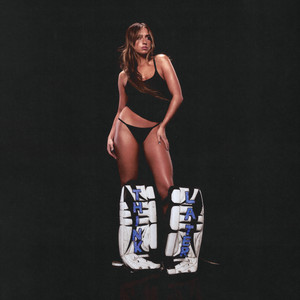 Tate McRae — THINK LATER (2023). Sunday headliner. The most precise pop record about imprecise feelings.
Part Eleven: The Breakout Acts — Who to Watch Beyond the Headliners
Turnstile (Sunday, Bud Light Stage) is the name most likely to appear on best-of-day lists after the festival. Glow On (2021) is the album that crossed the band from hardcore cult act to critical mainstream consensus; the follow-up material has continued in that direction. Their live set is one of the most physically committed in music, and the contrast of Turnstile's energetic chaos with The xx's studied minimalism — both on the Bud Light Stage on Sunday — will be one of the most discussed consecutive programming decisions of the weekend.
Little Simz (Thursday, Bud Light Stage) is one of the most critically acclaimed rappers in Britain and has been so for the better part of a decade without achieving the American commercial breakthrough her talent deserves. Sometimes I Might Be Introvert (2021) won the Mercury Prize and was shortlisted for the Mercury Prize the year before with Grey Area — a run of critical recognition that is almost without parallel in British hip-hop. Her Lollapalooza performance is a real opportunity for the American audience to encounter an artist who, on the merits, should already be playing headlining slots.
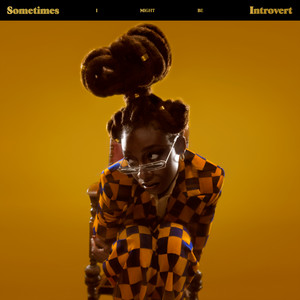 Little Simz — Sometimes I Might Be Introvert (2021). Thursday, Bud Light Stage.
Ethel Cain (Saturday, Bud Light Stage) is the most interesting story in the 2026 lineup from a music industry perspective. Preacher's Daughter (2022) built its audience almost entirely through word-of-mouth and streaming, without significant radio or commercial promotion. The fact that it has led to a Lollapalooza billing in 2026 is a demonstration of what patient, streaming-era audience building can achieve.
beabadoobee (Sunday, T-Mobile Stage) is one of the most consistently underrated artists in the 2026 lineup. Beatopia (2022) is a more ambitious and stranger album than its immediate accessibility suggests — beneath the shoegaze-pop surfaces are structural experiments that reward attention. Her live set has developed significantly since her breakthrough years, and the T-Mobile Stage slot represents a real step up.
Blood Orange (Thursday, Bud Light Stage) is the project of Dev Hynes, a British musician who has produced some of the most interesting popular music of the last decade from a position of deliberate critical and commercial semi-obscurity. Negro Swan (2018) is his most thematically ambitious record, dealing with Black joy, vulnerability, and identity in ways that popular music rarely attempts. His Lollapalooza afternoon set on Thursday is the kind of performance that creates devoted new listeners.
Yungblud (Friday, Bud Light Stage) is likely to be the loudest non-headlining performance of the day on Friday — his fanbase is among the most devoted in contemporary rock-pop, and his live shows are specifically calibrated to generate the kind of crowd energy that becomes a festival talking point.
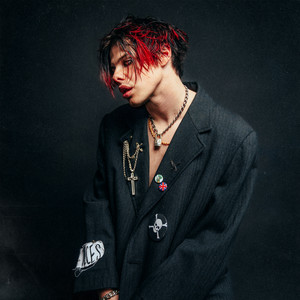 Yungblud — YUNGBLUD (2022). Friday afternoon. The pit, the crowd, the commitment.
Lil Uzi Vert (Friday, T-Mobile Stage) is the most complex booking in the 2026 lineup to evaluate. Pink Tape (2023) was a genuinely interesting artistic statement — a long, sometimes chaotic record that demonstrated the breadth of Uzi's aesthetic interests at the cost of the commercial focus that had made Eternal Atake (2020) such a successful mainstream moment. Live, Uzi's performances vary significantly in their coherence and energy. The Lollapalooza slot has the potential to be one of the most talked-about performances of the weekend for either very good or very complicated reasons.
SB19 (Thursday, Allianz Stage) is the Philippine pop group whose global fanbase (the A'TIN, as they're known) is among the most active in the K-pop-adjacent world. Their Lollapalooza slot represents a significant step in their American market development and will draw a crowd that is demographically unlike any other at the festival on Thursday.
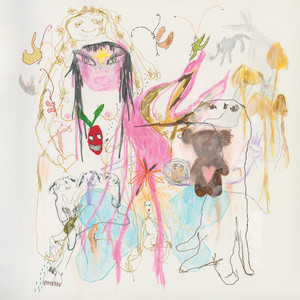 beabadoobee — Beatopia (2022). Sunday evening. The shoegaze aesthetic for a streaming generation.
Part Twelve: The 2026 Edition in Context — What Lollapalooza's Lineup Tells Us About Where Pop Music Is
The headlining tier of Lollapalooza 2026 — Charli XCX, Lorde, The Smashing Pumpkins, The xx, Tate McRae, Olivia Dean, John Summit, Jennie — is a useful document of the moment.
The Smashing Pumpkins are the only legacy act in the headlining tier, and they headline the Bud Light Stage rather than the T-Mobile Stage. This is not a demotion — the Bud Light Stage is a major stage with a major capacity — but it is a structural choice that reflects where the festival's programming centre of gravity sits in 2026. The legacy-rock headliner who would have been the unquestioned main-stage closer in any year between 1991 and 2010 is now one of eight headliners, and not the primary one.
The primary headliners — Charli XCX on Friday, Lorde on Thursday, Tate McRae on Sunday — are all women making pop music that is formally ambitious, production-forward, and resistant to easy genre categorisation. This is not a coincidence. The best pop music of the early 2020s has been disproportionately made by women, and the festival circuit has begun to reflect that reality more accurately than it did in previous decades. The Lollapalooza headlining tier is also, by historical standards, extraordinarily young: Tate McRae is twenty-one, Olivia Dean is twenty-three.
John Summit's Perry's Stage headliner slot represents the completion of electronic music's integration into the festival's formal structure. Perry's Stage no longer exists as an alternative space for a niche audience; it is one of the festival's main attractions, capable of drawing crowds that rival the rock stages for certain acts.
Jennie's Saturday headline represents the K-pop economy's arrival at full parity with Western pop music at the commercial level. BLACKPINK performed at Coachella in 2019. aespa, I-dle, and SB19 are on the 2026 Lollapalooza roster alongside Jennie. The Korean pop industry has moved from curiosity to structural presence in the global festival circuit in less than a decade, and the Lollapalooza 2026 lineup reflects that shift explicitly.
The xx closing on Sunday is the most unexpected headlining choice — the band has been relatively quiet since I See You (2017), and their return to headline festival status reflects the durability of their aesthetic position rather than a new commercial moment. They are the headliners who will make the Sunday night experience feel genuinely different from the other three nights.
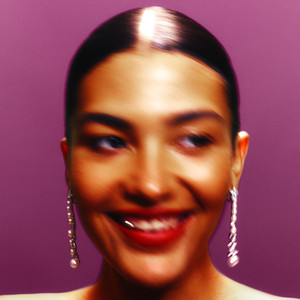 Olivia Dean — Messy (2023). Saturday headliner. Twenty-three years old, headlining Lollapalooza.
Part Thirteen: Practical Lollapalooza — What the Festival Actually Feels Like
First-time attendees often have a specific shock on arrival: Grant Park is large, but not as large as the number of stages implies. Eight stages, 500,000 people over four days, but the park is walkable — stage-to-stage transitions are measured in minutes rather than tens of minutes, which means the decision to leave one set for another is less painful than at geographically sprawling festivals. This is one of Lollapalooza's specific structural advantages: the festival is dense rather than dispersed, and the density creates a specific kind of energy.
The heat is real. Late July in Chicago is not London's Glastonbury or California's dry-season festivals; it is Midwestern summer heat, which can reach the low 90s Fahrenheit with humidity that makes it feel higher. The lake moderates it somewhat, but festivalgoers who have only attended European festivals sometimes underestimate the weather. Water stations are positioned throughout the park. The Bud Light Stage's afternoon hours are the worst for heat exposure; the Perry's Stage tent provides some shade, and the smaller stages have tree coverage at their edges.
The food is genuinely good. "Chow Town," the festival's dedicated food section, has been a serious food event since its early editions — Chicago is a restaurant city, and the festival has consistently booked vendors who represent the actual range of Chicago's food culture rather than the generic festival concessions that most events offer. Eating at Lollapalooza is not a degraded experience.
The transportation situation is specific to Chicago in ways worth understanding. The L trains that serve the park — the Red Line and Green Line both have stops near the park's edges — run with significant capacity during festival hours, but they are busy. The festival recommends arriving before 2pm on any given day to avoid the worst of the transit congestion. Rideshares are functionally unreliable during peak hours due to the volume of demand. The most experienced Lollapalooza festivalgoers take the L.
Accommodation in the surrounding neighbourhoods — the South Loop, River North, the Loop itself — books up months in advance and prices surge significantly in the weeks before the festival. The city's hotel infrastructure is substantial, but 500,000 festival attendees plus the city's regular summer tourist population puts pressure on it. If Chicago is new to you, Lollapalooza week is also an excellent time to stay in one of the city's residential neighbourhoods — Logan Square, Pilsen, Andersonville — and take the L downtown.
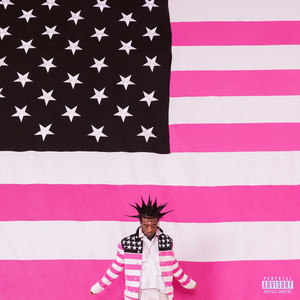 Lil Uzi Vert — Pink Tape (2023). Friday evening, T-Mobile Stage.
Part Fourteen: The Playlist — One Track Per Act, Fifty Artists, Four Days of Lollapalooza Chicago 2026
The fifty-track playlist below is designed to give you the full range of what Lollapalooza 2026 sounds like — one canonical track per confirmed act, moving through the festival's genres and moods in roughly the same order the stages do. Start with Lorde on Thursday evening. Follow through to The xx on Sunday night.
The playlist was generated using Playgen's AI-powered generator, working from the confirmed lineup and selecting one iconic track per artist — the song that best represents what each act brings to the festival stage. The result is a fifty-song argument for why this particular weekend, in this particular park, with this particular set of artists, matters.
Headliners. Breakout acts. The Perry's Stage selectors. The legacy rock institution. The K-pop global economy. The British soul prodigy who is twenty-three years old and headlining. The xx, closing the whole thing on Sunday night with a set that will make the skyline look like a stage set.
→ Lollapalooza Chicago 2026 — the 50-track lineup playlist (generated by Playgen)
Part Fifteen: Why Lollapalooza Keeps Mattering
Perry Farrell conceived Lollapalooza as a farewell. He has spent thirty-five years proving that the thing he said goodbye to was not actually finished.
The festival has outlived every version of itself: the touring iteration of the 1990s, the attempted revival of 2003, the financial uncertainty of the early Chicago years. It has outlived the genre that defined its original conception — "alternative rock" is a category that no longer means what it meant in 1991, if it means anything at all — and replaced it with a curatorial philosophy that is capacious enough to accommodate Charli XCX and The Smashing Pumpkins and John Summit and Jennie and Turnstile on the same four-day bill without the lineup seeming incoherent.
What has not changed is the commitment to the idea that music across genre lines, presented with genuine editorial care, in a public space that belongs to everyone, is worth doing. The nonprofit tables that lined the Lollapalooza midway in 1991 are gone. But the Kidzapalooza stage, the local food vendors, the free city park, the L train that anyone can take from any neighbourhood — these are the 2026 expression of the same underlying argument.
The argument is that music is public life. That a festival in the front yard of Chicago is making a claim about what cities are for. That when half a million people assemble in a park to hear two hundred acts across four days, they are doing something that is more than entertainment — they are participating in the collective experience of being alive at a specific cultural moment.
Lollapalooza began as a farewell. It has become, over thirty-five years, one of the most durable arguments for why that kind of gathering continues to matter.
Grant Park. July 30 through August 2. The skyline behind the stage. The lake to the east. Buckingham Fountain in the middle of it all.
Sources
Lollapalooza 2026 official dates and headliners: lollapalooza.com
Lollapalooza 2026 full daily lineup by stage: festivaldust.com/festivals/lollapalooza-2026-chicagoil/lineup
Lollapalooza 2026 headliners confirmed: timeout.com/chicago/music/lollapalooza-lineup
Lollapalooza 2026 announcement coverage: cbsnews.com/chicago/news/lollapalooza-2026-daily-schedule-released
Lollapalooza 2026 lineup including K-pop acts: bandwagon.asia/articles/lollapalooza-chicago-2026-reveals-stacked-lineup
Lollapalooza history, founding, and touring years (1991–1997): en.wikipedia.org/wiki/Lollapalooza
Lollapalooza 1991 lineup and Perry Farrell origin: floodmagazine.com/64772/otd-the-very-first-lollapalooza-tour-launched-in-1991
Lollapalooza 30th anniversary interview with Perry Farrell: variety.com/2021/music/news/lollapalooza-30-years-perry-farrell-ice-t-1235029830
Lollapalooza 2005 Chicago rebirth and C3 Presents partnership: chicago.suntimes.com/lollapalooza/2025/07/25/lollapalooza-history-chicago-20-years
C3 Presents history and Austin City Limits connection: en.wikipedia.org/wiki/C3_Presents
Lollapalooza headliner history 2005–2010: timeout.com/chicago/music/ranking-every-lollapalooza-lineup-from-2005-to-today; wmmr.com/2025/07/18/lollapalooza-history-headliners-notable-acts
Lollapalooza global expansion (Chile, Brazil, Argentina, Germany, France, India): en.wikipedia.org/wiki/Lollapalooza
Perry's Stage history and electronic music at Lollapalooza: edm.com/news/dom-dolla-breaks-attendance-record-lollapalooza-perrys-stage
Dom Dolla attendance record at Perry's Stage: edm.com/news/dom-dolla-breaks-attendance-record-lollapalooza-perrys-stage
Lollapalooza memorable moments and surprise performances: billboard.com/music/music-news/lollapalooza-rewind-10-awesome-moments-5343643
Grant Park history and Burnham Plan: choosechicago.com/articles/festivals-special-events/lollapalooza
Charli XCX — BRAT: open.spotify.com/album/2lIZef4lzdvZkiiCzvPKj7
The Smashing Pumpkins — Siamese Dream: open.spotify.com/album/4UVERYsIzs6xbDYO8srlqd
Lorde — Melodrama: open.spotify.com/album/6tBpgZG9bV76nSuiz42RbA
Tate McRae — THINK LATER: open.spotify.com/album/0OUOx6rJXtL66AzTnP9KUE
Olivia Dean — Messy: open.spotify.com/album/5YlBA1tCY0M8DDs75RB2LY
The xx — Coexist: open.spotify.com/album/2cRMVS71c49Pf5SnIlJX3U
John Summit — CTRL ESCAPE: open.spotify.com/album/3M5cmrMP6IkqcrpHKOwO6e
Turnstile — GLOW ON: open.spotify.com/album/2NrYPcMmQBlbBxopc2XlzS
Ethel Cain — Preacher's Daughter: open.spotify.com/album/3WmujGwOS0ANHkJRnMH6n8
Lil Uzi Vert — Pink Tape: open.spotify.com/album/2ua5bFkZLZl1lIgKWtYZIz
Freddie Gibbs — $oul $old $eparately: open.spotify.com/album/10qigSD1XwjZL29fv36nU3
Little Simz — Sometimes I Might Be Introvert: open.spotify.com/album/4nOym5RKE8Opauf3rMxPAW
Blood Orange — Negro Swan: open.spotify.com/album/7bvmGyFDwpHNRRRZJ0AHvn
beabadoobee — Beatopia: open.spotify.com/album/2rhNQbqRNxiNQkDXTffe1V
Yungblud — YUNGBLUD: open.spotify.com/album/2GAUucDcKgkmeo3ol5sZ7r
Major Lazer — Music Is The Weapon: open.spotify.com/album/0xJyM0DFwty067hIBH5fql