Fuji Rock 2026: Lightning, Mud, and the Most Beautiful Festival on Earth Returns to Naeba
Fuji Rock 2026 returns to Naeba Ski Resort, Niigata, July 24–26: The xx, Massive Attack, Khruangbin headline Japan's legendary mountain festival — complete guide to lineup, history, stages, and the 1997 typhoon origin story.
By Gabin Fay
On the morning of 26 July 1997, most of the thirty thousand people who had slept on the slopes of Tenjinyama — a ski resort a few hours southwest of Tokyo, at the base of Mount Fuji — woke up cold, soaked, and wondering whether anyone was ever going to get them out. The previous day, Typhoon Rosie had made landfall on Japan's Pacific coast. By mid-afternoon, the festival site had been transformed. Tents were gone. Equipment was ruined. Anthony Kiedis, with a broken arm from an earlier accident, had played the Red Hot Chili Peppers' headline set in horizontal rain and winds that topped 89 miles per hour — the kind of performance that survives into festival mythology because it is objectively insane. Hundreds of people were treated for hypothermia. There weren't enough buses. There never are enough buses.
The second day, which would have been sunny, was cancelled.
The man responsible for all of this was Masahiro Hidaka, a music promoter from Tokyo who ran a company called Smash Corporation and who had spent years attending festivals in the UK — Glastonbury, Reading, the Isle of Wight — and thinking about what Japan did not have. Japan had excellent concert halls. Japan had a highly developed music industry. What Japan did not have, in 1997, was a place where you could bring a tent and sleep in a field and watch rock music for three days, the way people had been doing in Somerset since 1970. The first Fuji Rock Festival was Hidaka's attempt to build that thing. It was nearly the last thing he ever did professionally.
The typhoon almost ended everything. It should have ended everything. Hidaka was criticized by the press, by local authorities, and by the festival's own attendees for being unprepared — for the weather, for the transport, for the basic logistics of thirty thousand people on a mountain in a storm. The organizers were left with an enormous debt and a reputation for catastrophe. Most promoters would have folded.
Hidaka did not fold.
→ Fuji Rock 2026 — the 50-track lineup playlist (generated by Playgen)
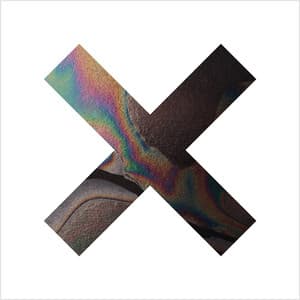
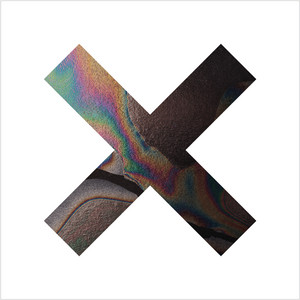 The xx — Coexist (2012). Friday Green Stage headliner.
1997: The Typhoon That Built a Festival
The story of how Fuji Rock survived its first year is, depending on your perspective, either a cautionary tale about Japanese stubbornness or one of the most extraordinary acts of institutional faith in the history of live music.
The 1997 festival had been planned for two days: August 2nd and 3rd. The site was Tenjinyama Ski Resort in Yamanashi Prefecture, close enough to Mount Fuji to justify the name that Hidaka had chosen — a name that would become permanent even after the festival moved hundreds of kilometers away from Fuji itself. The lineup was genuinely impressive for a debut: the Red Hot Chili Peppers headlining, Foo Fighters, Beck, Massive Attack, The Prodigy, Rage Against the Machine, The Beastie Boys among the announced acts. Hidaka had used his connections in the international music industry, built over years of promoting shows in Japan, to put together a bill that would have been competitive at any festival in the world.
The weather forecast was bad in the days before the festival opened. Not bad enough to cancel — Japan in early August is always warm and humid, and rain is common. What the forecasters didn't model correctly was the trajectory of Typhoon Rosie, which made landfall further north and faster than predicted. By the time the festival's first acts were performing on August 2nd, the wind was already tearing at the stage equipment. By early afternoon, it was clear that something was seriously wrong. The rain came horizontally. Temperature dropped. People who had come to a summer festival in shorts and t-shirts found themselves on a mountain at night in a typhoon.
The Red Hot Chili Peppers played. This is the part of the story that veterans of the 1997 edition tell with a specific reverence: Kiedis, unable to play guitar because of the broken arm he was already carrying, fronting a set in conditions that would have justified cancellation several times over. The Chili Peppers played because — according to accounts from the day — they decided that the thirty thousand people on that mountain deserved to see what they'd come to see, regardless of the circumstances. The performance has the quality of those festival sets that become more significant in retrospect than they were in the moment: proof that the musicians cared enough to stay.
The second day was cancelled. The sunny second day, as attendees have been pointing out for nearly three decades, when the weather had cleared completely and the mountain was quiet and the buses still weren't running. The logistical failure was as significant as the meteorological one: there wasn't enough transport to move thirty thousand people off Tenjinyama quickly, and the hours spent waiting were as uncomfortable, for many, as the typhoon itself.
Hidaka held a press conference. He apologized. He promised to do better. He announced that the festival would return.
This was not universally believed.
1998: The Toyosu Interlude
The 1998 edition was held at Toyosu, on Tokyo's waterfront — a logistically safer choice but aesthetically unconvincing. The move was necessary: Tenjinyama was not an option after the typhoon damage, and Hidaka needed to demonstrate that the festival could happen without a mountain and a disaster. The 1998 edition was commercially successful. It was also extremely hot. Tokyo in August at a flat, concrete-adjacent site, without the altitude and forest shade that Tenjinyama had offered, was closer to an endurance event than a music festival. Attendees remember it as fine but wrong — not the festival that Hidaka had described, not the thing that the 1997 disaster had gestured toward before the weather arrived.
The search for a permanent home led north, into the mountains of Niigata Prefecture.
1999: Naeba and the Festival's True Beginning
The Naeba Ski Resort sits in a valley in the mountains of Niigata, roughly two and a half hours from Tokyo by shinkansen and shuttle. At altitude, the summer temperature is ten degrees cooler than the capital — a meaningful difference when you are sleeping in a tent and spending three days walking between stages across a landscape of rivers, forest paths, and alpine meadows. The site is enormous: the Green Stage, the festival's main arena, can hold nearly fifty thousand people. The walk from the campsite to the Field of Heaven stage, the most remote of the main performance areas, passes through forest, over wooden boardwalks built above the stream, and up gradients that are genuinely challenging with a weekend pack.
Hidaka found Naeba in the months after the 1998 Toyosu edition, through the same combination of persistence and instinct that had led him to create the festival in the first place. The resort's management, initially skeptical, was persuaded. The first Naeba edition ran in 1999. It rained then too — it almost always rains at Fuji Rock, which is part of the festival's character — but the rain at Naeba is different from the typhoon at Tenjinyama. It is mountain rain, expected, manageable, incorporated. The site is designed for it.
Since 1999, the festival has returned to Naeba every year except two. The pandemic cancelled the 2020 edition entirely — Hidaka and Smash put together a YouTube broadcast of archival performances, which was watched by hundreds of thousands of people who had been hoping to go. The 2021 edition ran in a reduced capacity form, with limited international attendance because Japan's border restrictions prevented non-residents from entering the country. Both years were painful in specific ways: 2020 because there was nothing, and 2021 because there was something, but not the thing.
The 2022 return — the first genuinely open festival since 2019 — was documented by attendees as having the specific emotional weight of reunion. People who had been going to Fuji Rock for a decade without interruption had now been away for three years. The sound of the Green Stage, the smell of the forest, the walk to Field of Heaven in the dark with candles lighting the path — these things hit differently after an absence.
Masahiro Hidaka and Smash Corporation: The Philosophy Behind the Festival
What makes Fuji Rock structurally different from most major festivals is the degree to which it reflects the sensibility of a single person. Hidaka built the festival in his own image — or more precisely, in the image of the British festivals he attended in the late 1980s and early 1990s, filtered through a Japanese conception of what a well-run outdoor event should look like.
The corporate model that most major festivals have adopted — where sponsors are visible everywhere, where brand activation tents compete for attention with the stages, where the festival experience is partly a delivery mechanism for marketing — is explicitly refused at Fuji Rock. Hidaka and Smash Corporation do not court corporate sponsors in the conventional sense. There are no promotional handouts, no flyers, no product campaigns in the festival's public spaces. The commercial relationships that do exist are managed so that they don't intrude on the experience. Brands are present in the practical sense — the event has to be funded somehow — but they are not loud about it.
This is, in the context of a festival that costs tens of millions of dollars to run, an unusual position to maintain. It requires the festival to be financially self-sustaining through ticket sales and the direct commercial activities on site: food vendors, merchandise, the camping infrastructure. It also requires trust on the part of the audience — a shared understanding that the ticket price reflects the actual cost of the thing, rather than a subsidized price that comes with an expectation of being marketed to all weekend.
The curation philosophy that Hidaka has articulated in interviews is similarly distinct. He programs the festival the way he would programme a mix tape for someone he respects: with an attention to the relationship between artists, to the logic of sequencing, to the importance of discovery alongside the comfort of familiarity. International headliners — the kind of acts that anchor any major festival's commercial argument — sit alongside Japanese bands that most of the international attendees have never heard of. Electronic acts share a programme with indie rock bands, with jazz-influenced instrumental groups, with artists from West Africa and Latin America. The genre logic is not the tight curation of a specialist festival but the capacious taste of someone who listens to everything and believes that proximity creates conversation.
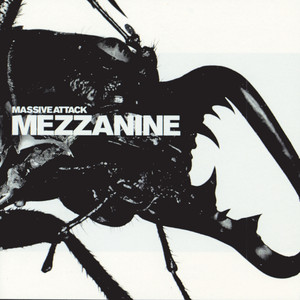 Massive Attack — Mezzanine (1998). Sunday Green Stage closer, sixteen years after their last Fuji Rock headline.
The Site: A Festival You Navigate With Your Legs
Understanding Fuji Rock requires understanding the site, because the site is not incidental to the festival — it is the festival. The stages are not arranged for convenience. They are arranged for experience.
The Green Stage is the main arena, positioned at the base of the valley with the mountain behind it. Capacity of almost fifty thousand. This is where the headliners play, where the crowd is largest, where the production is most elaborate. But the Green Stage is also surrounded by woodland and open sky in a way that no urban festival can replicate: the backdrop is mountains, and the backdrop is real.
The White Stage sits further up the valley, accessed by a walk that takes fifteen minutes at a brisk pace. It is the second-largest stage, where the festival's secondary bookings perform — acts that would headline most other festivals but appear mid-bill at Fuji Rock. The White Stage has its own independent identity: the audience that self-selects for it tends to be more genre-adventurous than the Green Stage crowd, more willing to spend an afternoon with an artist they discovered the week before.
The Red Marquee is the only covered stage, a large tent that extends its programming until five in the morning on certain nights. As at Hellfest's Warzone, the indoor setting creates a different physics: the sound bounces, the heat accumulates, the crowd is compressed. The Red Marquee is where the festival's most intimate moments happen — where a band with a cult following plays to an audience that knows every word, in a space that feels specifically chosen for that encounter.
The Field of Heaven is the stage that defines the Fuji Rock aesthetic more than any other. It is the most remote, requiring the longest walk from the campsite — a walk through forest, over streams, past food stalls and art installations, through spaces that have been decorated with lights and candles after dark. The stage itself is set in an open field surrounded by trees, with a deliberately different programming logic from the Green and White stages: mellower, more eclectic, more likely to feature acts from outside the Western rock and electronic tradition. The Field of Heaven is powered by biodiesel. It is lit with candles at night. It is the place where people who have been at the festival for two days without sleeping find themselves at three in the morning, having wandered there without a plan.
The Gypsy Avalon stage, introduced in 2021 to replace the earlier Café de Paris, sits at the festival's perimeter and operates as both a performance space and a refuge — quieter than the main stages, oriented toward folk, world music, and experimental acts, with food vendors and places to sit and recover from the walk. Like Field of Heaven, it reflects a curatorial decision to give space to music that doesn't fit the main stage logic.
The Day Dreaming stage operated for several years at the top of the mountain, accessible via the Dragondola — Japan's longest aerial gondola, a round trip that cost ¥2,000 and took you to a performance space with no parallel in the festival world. In 2025, this stage was closed. Its absence is noted by regular attendees as a genuine loss: the experience of arriving at a mountain-top concert via cable car, with the valley and the main stages visible below, was unlike anything else in the festival circuit.
The walk between stages — particularly the forty-minute round trip between the campsite and Field of Heaven — is not incidental to the Fuji Rock experience. It is the experience. You pass people coming the other way. You stop at food stalls. You lose your friends and find them later at the wrong stage. The topography forces the kind of serendipitous encounters that flat-site festivals, however well-designed, cannot manufacture.
 Khruangbin — A La Sala (2024). Saturday Green Stage.
The Cleanest Festival in the World
The phrase is Hidaka's own. "The cleanest festival in the world" is the stated ambition, repeated in every official communication, enforced through a system of waste management that is as elaborate as any of the festival's musical programming.
The practical mechanics: waste is sorted into five categories at disposal points throughout the site. Smokers carry personal ashtrays — small tin containers, available at the festival and sold as merchandise — rather than using the ground as a receptacle. The food vendors use biodegradable containers. The toilet facilities — a point of particular pride, and particular skepticism from first-time attendees — are maintained throughout the festival at a standard that is not typical of three-day outdoor events.
The deeper explanation for the cleanliness is cultural. Japan has one of the most sophisticated waste management systems in the world. The separation of garbage — burnables, recyclables, glass, cans, and plastic, organized into different collection days and handled through community-level systems — is something that Japanese children learn at school and maintain throughout their lives. The Fuji Rock festival doesn't have to import a cleanliness ethic from outside the culture; it is channeling and formalizing something that its core audience already practises.
The Fuji Rock Forest Project extends this commitment beyond the festival site itself. In collaboration with local communities in Niigata Prefecture and Yuzawa Town, the project creates products — utensils, stationery — from locally sourced cypress wood, and invests in the maintenance of the forests through which the festival paths run. The festival exists in a relationship with its landscape rather than simply occupying it.
For international attendees — particularly those who have experienced major European or American festivals — the cleanliness is one of the first things they remark on, and one of the things that becomes part of their advocacy for the event. The argument is not only aesthetic: it is practical proof that the "natural disorder" of a large outdoor gathering is not inevitable, that with a specific cultural context and the right systems, it can be otherwise.
Japan's Only Major Festival on the International Circuit
There are large music festivals in Asia. There are festivals in South Korea, in China, in Singapore, in Thailand. What there is not, at the level of Fuji Rock, is another Asian festival that is systematically included in the conversation when international artists, agents, and booking teams think about their touring itinerary.
The reasons for this are multiple. The logistical complexity of touring in Asia — the visa requirements, the diverse regulatory environments, the distances between markets — means that most major touring acts treat Asia as a separate consideration from their European and North American touring. Fuji Rock occupies a unique position: it offers the guarantee that comes from twenty-eight years of consistent operation under the same management, from a track record of paying its artists, from an infrastructure that functions reliably. These are not trivial considerations. Festivals in other Asian markets have come and gone; Fuji Rock has come and stayed.
The lineup history reflects this position. The Strokes, LCD Soundsystem, Radiohead, Björk, Neil Young, Frank Ocean, Kendrick Lamar, Jack White — acts that structure the European summer festival circuit have routinely added a Fuji Rock date to their touring plans in a way that they have not done with other Asian events. The festival is not a consolation prize for acts that can't get Glastonbury. For many artists, the Naeba date is specifically chosen — a different kind of experience, a different audience, a different landscape, worth the logistical investment.
The Japanese music industry's relationship with international acts is also a factor. Japan has historically been one of the most commercially significant markets for Western music — the physical media market remained robust in Japan long after streaming had displaced it in Europe and North America, and Japanese audiences have a reputation for intense devotion to the artists they adopt. Being popular in Japan matters commercially in a way that being popular in some other Asian markets does not.
What Hidaka created in 1999 — when he finally had a site that matched his vision — was the infrastructure for Japan to participate in the international festival conversation on its own terms. Fuji Rock doesn't try to replicate Glastonbury in Japan. It does something that could only have been built here, in this landscape, with this cultural context.
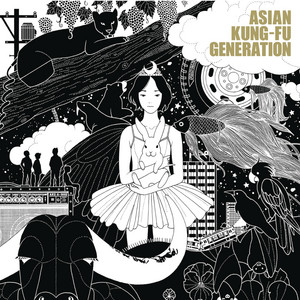 Asian Kung-Fu Generation — Fanclub (2006). Saturday White Stage.
2026 Lineup: The Headline Architecture
Fuji Rock 2026 runs from Friday 24 July to Sunday 26 July at the Naeba Ski Resort. The three-day pass is priced at ¥62,700 (approximately £330 or $430 USD at mid-2026 exchange rates) — meaningful context for the comparison with Western equivalents: Glastonbury's weekend ticket for 2026 is priced over £350, and major US festivals routinely exceed $400 for equivalent access, without the camping infrastructure and food quality that Naeba offers.
The headline structure is as follows.
Friday 24 July — Green Stage: The xx
The xx are headlining the Green Stage on Friday in what the festival is describing as their fourth appearance at Fuji Rock — a relationship that goes back to the band's early career, and that has a specific meaning given how central the Japanese market has been to the xx's international success. xx (2009) and Coexist (2012) were received in Japan with the kind of sustained attention that their minimalist aesthetics — guitar, bass, voice, silence, and the understanding that silence is an instrument — repay over time. The more recent I See You (2017) showed a band expanding their sonic vocabulary without losing the specific intimacy that made the first two records so effective.
The xx headlining Friday at Fuji Rock is a booking that feels specific rather than generic: it fits the festival's aesthetics, its audience's sensibilities, and the band's own history with the event.
Saturday 25 July — Green Stage: Khruangbin
Khruangbin's A La Sala (2024) is their sixth album and a record that consolidates what the Houston trio have been building since The Universe Smiles Upon You in 2014: a sound that references Thai funk, dub, West African psych, Tex-Mex, and jazz without belonging definitively to any of them, held together by Laura Lee's bass playing, Mark Speer's guitar tone, and Robert Leaning's drumming. They are a live band whose studio records function as documents of what the live experience sounds like when translated to fixed form.
At Fuji Rock's Green Stage, with an audience of tens of thousands spread across a mountain valley, the Khruangbin sound — wide, unhurried, built for spaces that have air in them — is the right thing.
Sunday 26 July — Green Stage: Massive Attack
The most historically weighted booking of the 2026 weekend. Massive Attack headlined the inaugural 1997 Fuji Rock — the typhoon festival, the disaster year — and have not returned to the top of the bill since. Their Sunday 2026 headline slot is a closing of a loop that has been open for twenty-nine years.
Mezzanine (1998) is the album most people point to when they want to describe what Massive Attack do at their highest register: the record that contains "Teardrop," "Angel," "Risingson," and "Man Next Door," each of them a different approach to the same problem of how to make music that contains both beauty and menace. Robert Del Naja's live productions in the 2020s have been increasingly elaborate as visual events — the political text and imagery that accompanies the music is as considered as the music itself.
Sunday closing at Fuji Rock, under the Naeba mountains, twenty-nine years after the typhoon — this is a genuinely significant performance date.
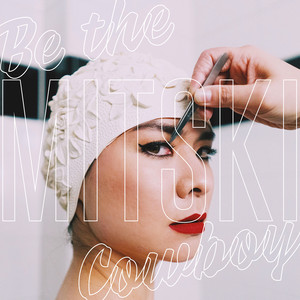 Mitski — Be the Cowboy (2018). Sunday White Stage.
The White Stage and Red Marquee: Where the Lineup Opens Up
ASIAN KUNG-FU GENERATION headlining the White Stage on Saturday is the Japanese rock summit of the weekend. The Yokohama band formed in 1996 and have built the longest sustained career in contemporary Japanese indie-rock: fifteen albums, twenty-eight years, a sound that evolved from fast, melodic punk-influenced rock toward something more atmospheric and compositionally ambitious without ever losing the energy of its early records. They are, for a specific generation of Japanese music listeners, the equivalent of what Radiohead or the Strokes are for their Western counterparts — the band that proved what local rock could do on its own terms.
MITSKI on Sunday White Stage represents the festival's most significant booking of a Japanese-American artist. Born in Japan, raised across multiple countries, Mitski Miyawaki has built one of the most critically regarded singer-songwriter catalogues of the 2020s with records that operate somewhere between indie rock, pop, and art song. Be the Cowboy (2018) is the album that broke her internationally; Laurel Hell (2022) and subsequent work showed someone continuing to develop without settling into a comfortable mode.
For Japanese audiences, the resonance of Mitski at Fuji Rock has a specific quality — the encounter with an artist whose biography includes Japan but whose career was built elsewhere, returning in a context that the Japanese music world understands as its own.
TURNSTILE on the Green Stage Friday are the most unexpected booking in the 2026 lineup — a hardcore band from Baltimore whose GLOW ON (2021) crossed over into mainstream rock in a way that no hardcore record has managed in decades. The album produced "Mystery" and "Blackout," both of which were played on radio stations that had never played a hardcore-adjacent record before. Live, Turnstile are chaos: the pit energy of hardcore, the melodic payoff of pop-rock, and a visual presentation that takes both seriously. Fuji Rock, with its tradition of booking acts from the edges of genre before they become obvious choices, got here early.
HYUKOH at the Red Marquee is the South Korean indie rock band whose mix of lo-fi aesthetics and melodic sophistication has made them one of the most beloved acts on the East Asian independent circuit since their 2015 debut. They have a devoted following in Japan that predates the international K-indie wave; their Fuji Rock appearances have been consistent over the last several years.
AMERICAN FOOTBALL at the Red Marquee represent the emo-adjacent end of the festival's Western indie programming. The Champaign, Illinois group reunited in 2014 after a fourteen-year hiatus and have continued releasing records (LP2 in 2016, LP3 in 2019) that exist in conversation with their self-titled 1999 debut — one of the most influential records in the history of American indie rock, responsible for the specific tone of introspective guitar music that has been called emo, post-rock, and various other things, and that does not need a name because the influence is obvious.
MOGWAI on Sunday Green Stage are the Glasgow post-rock band whose As the Love Continues won the Mercury Prize in 2021 — recognition that arrived twenty-four years into a career that had redefined what instrumental guitar music could do. They have been part of the Fuji Rock conversation since their early career; the Sunday slot acknowledges the weight of the catalogue.
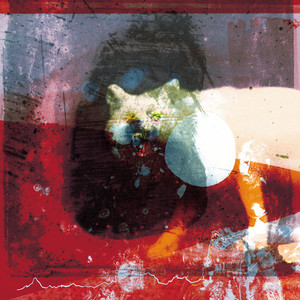 Mogwai — As the Love Continues (2021). Sunday Green Stage.
The Field of Heaven: The Festival's Soul
The Field of Heaven is where the global music scope of Fuji Rock becomes most explicit, and where the festival's curation philosophy — the Hidaka mix-tape instinct — is most fully realized.
TINARIWEN are the Tuareg guitar band from the Sahara Desert whose career trajectory is one of the most remarkable in any genre: formed by musicians who learned to play in refugee camps and resistance movements in Mali and Libya, who released their first internationally distributed album in 2001, and who have since built a devoted global following while continuing to make music that is rooted in the specific culture and landscape of the Sahara. Amatssou (2023) is their most recent record: desert blues, with the specific cadences of Tamasheq and the guitar drone that defines the Tuareg tradition.
Tinariwen at Field of Heaven, in a valley in the mountains of Niigata, with the festival lights in the trees and the music carrying over open ground — this is the kind of encounter that Fuji Rock's site makes possible and that no indoor venue can replicate.
BADBADNOTGOOD are the Canadian instrumental jazz group whose Talk Memory (2021) showed them operating in territory that their early career — instrumental hip-hop covers, math-jazz, the kind of thing that YouTube algorithm-surfaced in the early 2010s — had only hinted at. The album, featuring contributions from Laraaji, Terrace Martin, and string arrangements by Arthur Verocai, is one of the most formally ambitious jazz records of the decade, constructed from improvisation but carefully shaped in the edit.
KOKOROKO are the London Afrobeat collective whose self-titled 2023 album demonstrated that the legacy of Fela Kuti and Tony Allen can be inhabited by a new generation without being imitated — that the musical ideas are large enough to contain different cultural contexts and still generate something fresh.
LETTUCE, GOGO PENGUIN, and ALTIN GÜN round out a Field of Heaven programme that moves from funk to jazz to Turkish psych-rock in a way that makes the argument for the stage's curatorial purpose: this is where you come when you want to be surprised.
 Turnstile — GLOW ON (2021). Friday Green Stage.
The J-Rock and Japanese Music Dimension
One of the commitments that distinguishes Fuji Rock from other international festivals is its consistent investment in Japanese artists. Not as a token gesture, not as a concession to the domestic market, but as a genuine curatorial position: the festival programs Japanese acts at every level of the bill, from headliner slots to smaller stage appearances, with the understanding that the Japanese music scene is as rich as any national scene in the world.
MY HAIR IS BAD on the Green Stage Friday are the Niigata-based rock band — specifically from Niigata, the prefecture where the festival takes place, a local band headlining the main stage of their regional festival, which is a kind of narrative symmetry that doesn't require elaboration. They have been one of the most significant Japanese indie-rock bands of the last decade, known for lyrics that address emotional intimacy and young adulthood with a directness that has built them an extremely devoted domestic following.
GRAPEVINE, at the Red Marquee, are the Osaka rock band that formed in 1993 and have maintained a consistency and creative restlessness over thirty-plus years that puts them in conversation with the very best of any national indie-rock tradition. They are less known internationally than their quality warrants; the Fuji Rock slot is the kind of context in which that gap gets corrected.
TEMPALAY are the Tokyo psychedelic rock band whose recordings have been some of the most formally adventurous in Japanese indie music of the 2020s: the intersection of krautrock, shoegaze, and J-pop that operates in a space that is specifically their own. The Fuji Rock audience — international attendees with broad listening habits, domestic listeners who follow the festival as a guide to what's worth discovering — is the right audience for what Tempalay does.
FUJII KAZE on the Green Stage Saturday is the most commercially significant of the Japanese domestic bookings — a pop and R&B artist from Okayama whose LOVE ALL SERVE ALL (2022) sold massively in Japan and whose live performances have the scale and ambition of stadium pop, brought to the mountain setting of Naeba. Kaze's music sits outside the genre framework that most international festival bookers use to evaluate Japanese acts; he is not J-rock, not electronic, not the kind of thing that Western audiences automatically recognize as having a genre equivalent. He is, in the most interesting sense, a Japanese phenomenon — the kind of artist whose success is grounded in a cultural context that doesn't translate simply.
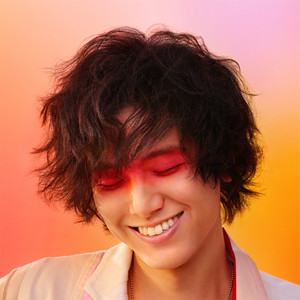 Fujii Kaze — LOVE ALL SERVE ALL (2022). Saturday Green Stage.
The Electronic and Experimental Strand
Fuji Rock has never been primarily an electronic festival, but it has always made space for electronic music at every scale — from large-stage bookings to the small-hours Red Marquee programming to the ambient sounds that drift through the forest paths at night.
BASEMENT JAXX on the Green Stage Friday are the Brixton duo — Felix Buxton and Simon Ratcliffe — whose Remedy (1999) and Rooty (2001) were among the most joyful records of the late-nineties dance explosion: house, garage, funk, soul, and a kitchen-sink eclecticism that was as influenced by global party music as by the UK club scene. They have not lost the energy. A Basement Jaxx live set is still one of the most effective delivery mechanisms for collective joy available to a festival audience, which is why they continue to be booked at major festivals twenty-five years after their commercial peak.
The Sunday Session programme — which runs alongside the main stages but at a different pace, oriented toward DJs and more experimental electronic acts — features Wata Igarashi, Soichi Terada (the Japanese electronic musician whose Reef (1996) has become one of the most beloved ambient electronic records in Japan, rediscovered internationally in the 2010s), TAKKYU ISHINO, and KELLY LEE OWENS. This strand is the part of the festival that most explicitly acknowledges the relationship between Fuji Rock and Japanese club culture — a relationship that has existed from the beginning but that the headline structure tends to obscure.
LOYLE CARNER on Friday's Green Stage represents the festival's engagement with British hip-hop: the South London MC whose Hugo (2022) is the most emotionally direct hip-hop album of its year, dealing with ADHD, race, class, family, and the geography of South London with a precision that earns the word literary.
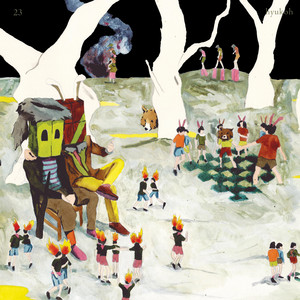 HYUKOH — 23 (2017). Red Marquee.
The 2026 Global Context: What This Lineup Says About Where the Festival Stands
Fuji Rock 2026 is the twenty-eighth edition of the festival in its current form, and the fourth since the pandemic interruption. The lineup composition — The xx, Massive Attack, Khruangbin headlining; Asian Kung-Fu Generation, Mitski, Mogwai, Turnstile in the tier below; Tinariwen, BadBadNotGood, Kokoroko at Field of Heaven; Japanese artists at every level — reflects a specific and consistent curatorial position that has not significantly changed since Hidaka established it in the late 1990s.
The festival is not trying to be Glastonbury. It is not trying to be Coachella or Primavera Sound or any other reference point in the Western festival conversation. The aesthetic identity is its own: the mountain site, the cleanliness, the mix-tape logic, the investment in Japanese music alongside international names, the early-morning Red Marquee sets, the walk to Field of Heaven in the dark.
For international attendees — and their numbers have recovered fully since the post-pandemic reopening, with some years showing record international attendance — the appeal of Fuji Rock is precisely that it is different from the festival experience that Europe and North America offer. The logistics are more complex: you need a Japan Rail Pass, you need to book accommodation months in advance, the language barrier at the site is real even though the festival provides English-language signage and staff. What you get in return is a festival that exists in a landscape that no European or American ski resort can replicate, organized by a team whose commitment to the experience is evident in every detail, at a ticket price that is, in real terms, competitive with the Western alternatives.
The ticket price comparison is worth stating explicitly. At ¥62,700 for three days — roughly £330 or $430 at current exchange rates — Fuji Rock is not cheap by any absolute measure. But it is cheaper than Glastonbury, competitive with Coachella, and significantly cheaper than many European festivals when you factor in the quality of the food, the cleanliness of the facilities, and the absence of the corporate noise that inflates the price without improving the experience.
The camping infrastructure is extensive: dedicated campsite areas with showers, food vendors, and shuttle links to the stages. The food at the festival is, by consistent report, exceptional — Naeba has a genuine food culture, with vendors serving regional Japanese cuisine alongside international options, at prices that are reasonable relative to the festival context. This is another thing that doesn't translate in description but becomes obvious in person: a festival where the food is actually good, not merely functional.
 BadBadNotGood — Talk Memory (2021). Field of Heaven.
KNEECAP, SNAIL MAIL, and the International Indie Current
KNEECAP are the Belfast trio who perform exclusively in Irish, who released Fine Art in 2024 to reviews that ranged from rapturous to outraged, and who have been polarizing in the most productive sense: they make music that is politically engaged, formally unconventional, and extremely funny in a way that can be heard as threatening, depending on your political commitments. Their Fuji Rock appearance is the kind of booking that suggests Hidaka or someone at Smash has been paying attention to what is actually happening in music, not just to what is commercially safe.
SNAIL MAIL at the Red Marquee is the project of Lindsey Jordan, whose Valentine (2021) is one of the best American indie-rock albums of the decade: direct, emotionally exposed, formally controlled, the product of a songwriter who understands that simplicity is harder to achieve than complexity.
THE LEMON TWIGS are the Long Island brothers whose A Dream Is All We Know (2024) showed them completing a transition from precocious art-rock pastiche into something with genuine emotional weight — power pop with ambitions, the kind of music that the late 1970s Anglophile tradition of Big Star and Todd Rundgren produced and that has been dormant long enough to sound fresh again.
GEORDIE GREEP at the Red Marquee is the former Black Midi guitarist whose The New Sound (2024) is the most technically demanding solo debut in recent British music — a record that requires jazz, prog, Latin, and avant-garde as prior knowledge and combines them in a way that is both serious and mischievous. The Fuji Rock audience is exactly the audience for this.
ARLO PARKS on the White Stage Friday is one of the discoveries of the early 2020s: Collapsed in Sunbeams (2021) introduced a songwriter whose combination of neo-soul production, confessional lyric writing, and calm, precise delivery felt immediately distinctive. She is twenty-four years old in 2026 and is already accumulating a body of work that suggests a long career.
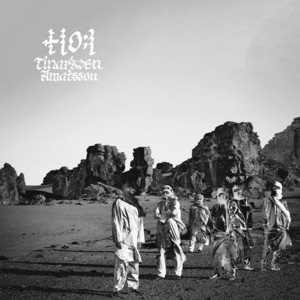 Tinariwen — Amatssou (2023). Field of Heaven.
The Hike to Field of Heaven After Dark
There is a specific Fuji Rock experience that does not appear in any official festival guide and cannot be planned: the walk to Field of Heaven after midnight.
You leave the main campsite in the dark. The path is marked by lights, but the trees are close and the ground is uneven, and the sound of whatever is playing at the main stages fades behind you as you walk. There is a bridge over a small river, and below the bridge the water catches the light. There are food stalls that have been open since morning and are still open now, serving hot soup and grilled things. There are people going the same direction and people coming back, and you talk to some of them because at this point in the festival the normal social calculations have dissolved.
Then the Field of Heaven itself: an open space after the forest, with the stage at one end and the trees at the edges and the sky above, and candles arranged through the grass that move slightly in the mountain air. Whatever is playing — jazz, folk, ambient electronic, something without a genre — is audible throughout the space, not at the volume of the Green Stage but at the volume of music in a place designed for listening. The audience is sitting down, mostly. There are people who have been there for hours and people who have just arrived, and both groups are in the same state of attention.
This is the thing that Hidaka built. Not the headliners — the headliners are the argument that gets people to buy the ticket. The walk through the forest after midnight to Field of Heaven, in the mountains of Niigata, with the candles and the rivers and the specific temperature of a Japanese summer night at altitude — this is the thing.
It is also the thing that explains why the festival has survived everything: the typhoon, the bankruptcy threat, the pandemic, the years of criticism, the relentless logistical challenge of running a major event in a mountain environment. The festival has survived because the experience it offers is not available anywhere else.
 Arlo Parks — Collapsed in Sunbeams (2021). White Stage Friday.
Practical Guide: Getting There, Getting Around
From Tokyo: The standard route is the Joetsu Shinkansen from Tokyo Station to Echigo-Yuzawa, followed by the festival shuttle bus to the Naeba site. The train journey takes approximately seventy minutes; the shuttle takes another thirty to forty minutes, longer during peak arrival periods on Friday morning. The shinkansen is straightforward — reserved seats are available and recommended for festival weekend travel.
International visitors who are not based in Tokyo should factor in additional connection time. The Japan Rail Pass covers the shinkansen leg; the shuttle bus to Naeba is typically covered by the festival ticket or available as a separate add-on.
Accommodation: Camping is the default option and is, by the accounts of everyone who has done it, the correct way to experience the festival. The campsite requires a separate ticket and provides designated tent areas, shower facilities, and shuttle access to the stages. The camping infrastructure is organized with the same attention to logistics that characterizes the rest of the event.
Hotel options exist in Echigo-Yuzawa, reachable by shuttle, but the commute adds time and removes the ability to stay late at the Red Marquee without managing transport logistics. Most regular attendees camp.
Weather: July in Naeba is warm but variable. Rain is common and should be assumed rather than feared. The essential packing list: a waterproof layer that covers head and shoulders, waterproof boots or sturdy shoes with good grip, a tent that has been tested in the rain before you trust it in Niigata. The temperature at altitude is cooler than Tokyo — typically in the low-to-mid twenties during the day, dropping to the mid-teens at night.
Food: The festival food situation is genuinely good, which makes it different from most outdoor events of comparable scale. Regional Japanese cuisine sits alongside international food options; the vendors are mostly independent rather than franchise operations. Budget accordingly — festival food is not cheap, but quality-to-price is competitive with any comparable event.
Connectivity: Mobile data works at the festival, though coverage can be patchy in some of the more remote stage areas. A Japanese SIM card or eSIM is recommended for international visitors.
 GoGo Penguin — v2.0 (2014). Field of Heaven.
The Full 2026 Lineup by Stage
GREEN STAGE: The xx (Friday), Khruangbin (Saturday), Massive Attack (Sunday), Fujii Kaze (Saturday), Hi-STANDARD (Friday), Basement Jaxx (Friday), Mogwai (Sunday), Loyle Carner (Friday), Turnstile (Friday), IO, Kneecap, My Hair is Bad, Trueno, Donavon Frankenreiter, Route 17 Rock'n'Roll Orchestra, Bialystocks, Hirai Dai.
WHITE STAGE: Asian Kung-Fu Generation (Saturday), Mitski (Sunday), Arlo Parks (Friday), XG (Saturday), Tempalay, Toro y Moi, Joey Valence & Brae, Geordie Greep, Yo-Sea, Kroi, Sofia Isella, Son Rompe Pera, Bohemian Betyars, Grapevine, Kotori, Riddim Saunter, Raisan.
RED MARQUEE: HYUKOH (programming TBC by day), Sunny Day Service, American Football, Snail Mail, Thurston Moore Group, Friko, TESTSET, cero, the cabs, SORRY, The Beths, The Lemon Twigs, w.o.d., Quadeca, Asai Kenichi, Six Lounge, Angine de Poitrine, Brandy Senki, Aooo. Red Marquee extends to 5am on select nights.
FIELD OF HEAVEN: Lettuce, BadBadNotGood, Never Young Beach, Tinariwen, Kokoroko, GoGo Penguin, Ogre You Asshole, OAU, The Breaks, Altin Gün, La Lom, Plini, Kimyou Reitaro Band, Yuuf, Tal Fry, Chappo, Shibata Satoko, noon.
SUNDAY SESSION: maya ongaku,唾奇, US, Toro y Moi (DJ), Kelly Lee Owens (DJ), Lausbub, Wata Igarashi, Soichi Terada, Kirara, Ichiro Yamaguchi, Takkyu Ishino.
Note: Japanese Breakfast, originally scheduled for Sunday, cancelled their appearance in April 2026.
Why This Festival Endures
Twenty-nine years after Typhoon Rosie stranded thirty thousand people on a mountain near Mount Fuji, the festival that Masahiro Hidaka built from that disaster is one of the most significant music events in the world.
The significance is not merely commercial. Other festivals are commercially larger. Glastonbury accommodates more people; Coachella generates more revenue; various electronic festivals attract more international mainstream attention. Fuji Rock's significance is curatorial and cultural: it has consistently demonstrated that the mix-tape logic — the idea that a great festival programmes like a great DJ, following instinct rather than genre charts, creating conversations between artists rather than simply presenting them in sequence — is viable at scale.
The mountain setting imposes humility on the event in a way that flat-site festivals cannot replicate. The walk to Field of Heaven is not a design feature — it is a consequence of the landscape. The cleanliness is not primarily a marketing position — it is a cultural practice. The corporate-free aesthetics are not nostalgia — they are a deliberate choice that Hidaka has renewed at every stage of the festival's financial history, including the stages where the alternative would have been easier.
What you get at Fuji Rock 2026 is three days in a valley in the mountains of Niigata, with two hundred artists playing across six stages, in an environment that has been built over twenty-eight years to do one thing well: to make music worth experiencing.
The buses are better now. They are not perfect, but they are better.
Masahiro Hidaka did not fold.
Sources
Fuji Rock Festival 2026 official lineup: en.fujirockfestival.com/artist/index
Fuji Rock 2026 dates and headliners: timeout.com/tokyo/music/fuji-rock-festival
Fuji Rock 2026 artist announcements: niewmedia.com/en/news/2602fujirock/
Fuji Rock 2026 Japan Times coverage: japantimes.co.jp/culture/2026/02/20/music/fuji-rock-2026-lineup/
Fuji Rock Festival history (1997 typhoon): en.wikipedia.org/wiki/Fuji_Rock_Festival
1997 Typhoon Rosie at Fuji Rock: mtv.com/news/eh5b55/typhoon-rosie-cuts-short-fuji-rock-fest
1997 RHCP performance: mtv.com/news/5mlmmh/typhoon-rosie-overpowers-chili-peppers-at-fuji-fest
Masahiro Hidaka and Smash Corporation: artistandfan.com/festivals/promoters/read/785
Masahiro Hidaka interview: japaninc.com/article.php?articleID=1162
Fuji Rock cleanliness and sustainability: zenbird.media/fuji-rock-festival-introduces-sustainability-into-this-years-festival/
Fuji Rock eco reputation: thenationalnews.com/business/fuji-rock-japan-s-clean-green-and-safe-16-year-spectacle-1.605631
Stage guide: fujirock.com/?p=2199
Fuji Rock 2026 ticket prices: timeout.com/tokyo/music/fuji-rock-festival
Fuji Rock 2020 cancellation: japantimes.co.jp/culture/2020/06/05/music/fuji-rock-festival-2020/
The xx, Coexist: open.spotify.com/album/2cRMVS71c49Pf5SnIlJX3U
Massive Attack, Mezzanine: open.spotify.com/album/49MNmJhZQewjt06rpwp6QR
Khruangbin, A La Sala: open.spotify.com/album/1PeC1ckDJSzYHkwo6JHbP2
Asian Kung-Fu Generation, Fanclub: open.spotify.com/album/4mmFmhKczezIsRi1YS0Za9
Mitski, Be the Cowboy: open.spotify.com/album/42cH7mrkfljkqkxA2Ip9Xq
Mogwai, As the Love Continues: open.spotify.com/album/7a6DbfLdir3tz1U8xmCzaM
Turnstile, GLOW ON: open.spotify.com/album/2NrYPcMmQBlbBxopc2XlzS
HYUKOH, 23: open.spotify.com/album/2VDNZYzubQxFNOR3qD1K9B
BadBadNotGood, Talk Memory: open.spotify.com/album/594yqwr1MOvVX0UBnOWftY
Tinariwen, Amatssou: open.spotify.com/album/6midUauH9WLxQllqEAvqhM
Fujii Kaze, LOVE ALL SERVE ALL: open.spotify.com/album/6VJwkUQXD3DnqqUUaxqDzH
Arlo Parks, Collapsed in Sunbeams: open.spotify.com/album/42joEEymK7EIHODfNB4yug
GoGo Penguin, v2.0: open.spotify.com/album/0ZvyleSEIlDbklGZ995APl